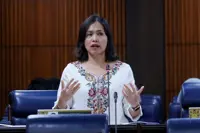
KUALA LUMPUR: The government will maintain the existing credit mechanism for surplus electricity generated by residential solar panels, as increasing incentives could shift costs onto households without such installations, says Datuk Seri Fadillah Yusof.
The Energy Transition and Water Transformation Minister said proposals to increase Solar Accelerated Transition Action Programme (Atap) credits to 75% or 100% of the retail electricity tariff would need a comprehensive assessment of the financial implications and impact on other consumers.
"Such an assessment must take into account the cost implications for the electricity system as well as the risk of cost shifting between solar users and non-solar users," he said in a written parliamentary reply on Wednesday (Oct 29).
Aminolhuda Hassan (PH-Sri Gading) had asked if the government intended to revise Solar Atap credits to at least 75%, or preferably 100%, of the retail electricity tariff to encourage residential solar adoption and improve household savings.
Fadillah, who is also Deputy Prime Minister, explained that Solar Atap was designed primarily to encourage rooftop installations for self-consumption, rather than electricity generation for export to the national grid.
"Under the current mechanism, surplus energy exported to the grid can be used as an offset, subject to the rates and conditions stipulated in the programme guidelines," he said.
For domestic users, Fadillah said the existing offset rate is based on the energy charge component of the electricity tariff, rather than the full retail tariff.
He said this distinction was necessary because retail tariffs also covered other expenses associated with maintaining the national supply system.
"The retail tariff includes other cost components related to the provision and use of the supply system, including grid infrastructure and services that solar users continue to require when solar generation is insufficient," he said.
"For now, the government will continue implementing Solar Atap based on the established mechanism while monitoring programme performance, consumer participation and its impact on the grid system.
"Any future improvements will be based on implementation data and appropriate technical and economic studies," he said.
Fadillah also highlighted the introduction of the SuRIA Home initiative to help households manage the upfront costs of residential solar installations.
"This approach enables the government to improve the people's ability to install solar without placing the entire cost of incentives on other electricity users," he said.