KUALA LUMPUR: No governance violations similar to those uncovered in past scandals have been identified in government-linked entities so far, says Datuk Seri Anwar Ibrahim.
The Prime Minister cited past cases involving 1Malaysia Development Bhd (1MDB), Lembaga Tabung Haji (TH) and the Federal Land Development Authority (Felda), saying the breaches in those cases had been extensive and difficult to defend.
“Looking at past experience, there have certainly been strengths as well as weaknesses.
“These matters have been reported in the Royal Commission of Inquiry (RCI) findings and task force reports, as well as the White Papers on 1MDB and Felda, and the cases involving TH.
“I can only give the assurance that, thus far, we have not identified any violations comparable to those we inherited in the companies I mentioned earlier.
“Hopefully, we will be able to keep this under control, although it will not be easy,” he said during Prime Minister’s Question Time in the Dewan Rakyat on Tuesday (Oct 27).
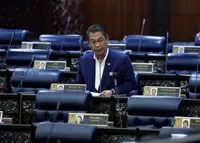
He was responding to Syahredzan Johan (PH-Bangi), who asked what measures Putrajaya was taking to strengthen corporate governance in government-linked investment companies (GLICs), government-linked companies (GLCs) and statutory bodies to prevent a recurrence of past scandals.
Anwar said it was important to take immediate steps to improve governance and administration.
He said the government had also proposed the Government-Owned Entities Bill, which is expected to be tabled by this year, as part of its efforts to improve governance and administration.
“This is not just about governance, but also about establishing clear provisions in regulations and laws to prevent companies and sometimes agencies from becoming involved in such matters.
“Agencies can have subsidiaries and regulating those subsidiaries is certainly not as straightforward as it may seem without clear rules and provisions to ensure proper oversight,” he said.
He acknowledged, however, that tightening controls could face resistance from political and business elites accustomed to operating with fewer restrictions.
“The elites, whether in politics or business, are sometimes accustomed to a certain way of doing things.
“So, when restrictions and constraints are introduced, there is strong resistance and opposition, and this requires political will to determine how we can overcome it.
“Sometimes, people talk about principles and such, but when it comes to these matters, there are many compromises, as we sometimes see in parliamentary debates.
“That is why I believe the proposed legislation on government-owned entities should establish strict rules,” he said.
He added that governance requirements for GLICs must be tightened, the limits of their powers clearly defined, and those appointed to lead them made more accountable.
“They must not treat these entities as their own property or as the personal possessions of their families,” he said.