KUALA LUMPUR: The government is preparing proposed amendments to Syariah civil procedure laws in the Federal Territories to strengthen enforcement against those who fail to comply with court-ordered maintenance (nafkah) payments.
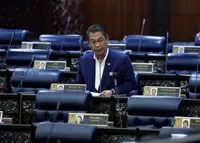
Deputy Minister in the Prime Minister's Department (Religious Affairs) Marhamah Rosli said the Syariah Judiciary Department Malaysia (JKSM) and the Federal Territories Syariah Court were working on the proposals, which would include reviewing existing enforcement provisions and procedures.
"The proposed amendments will also address non-compliance with maintenance orders issued by the Syariah Court.
"This includes examining areas where existing provisions and enforcement procedures can be improved to ensure more effective action against those who deliberately disregard court orders," she told the Dewan Rakyat on Monday (Oct 26).
She was responding to Zulkifli Ismail (PN-Jasin), who sought clarification on measures to address prolonged Syariah Court proceedings, particularly cases involving outstanding spousal and child maintenance claims.
Marhamah said JKSM was also looking into improvements to its maintenance advance scheme and financial assistance provided through the Family Support Division (BSK).
She said eligible recipients could receive financial assistance that did not require repayment, but stressed that such support would not release those responsible for paying maintenance from their legal obligations.
Responding to a separate supplementary question, Marhamah said failure to honour a maintenance order was a serious matter as it constituted non-compliance with a court directive.
“Syariah Court has several enforcement options depending on the circumstances of each case, including judgment debtor summonses, seizure and sale of assets, hiwalah proceedings and imprisonment.
“The court could also enforce maintenance payments through income attachment orders, allowing deductions to be made directly from the defaulter's salary through their employer,” she said.
However, Marhamah said that enforcement measures, particularly imprisonment, could not be imposed automatically by BSK.
She said such action must undergo the judicial process and be authorised by the court after considering the facts and circumstances surrounding each case.