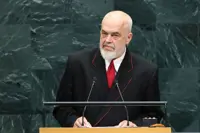
PUTRAJAYA: Despite rising global crude oil prices and cost of living pressures, this administration remains capable of managing Malaysia’s economy, says the Prime Minister.
Datuk Seri Anwar Ibrahim said the government also had to balance its commitment to easing the people’s financial burden with responsible management of public funds.
He cited the increase in global oil prices from the US$70 (RM285) per barrel assumption used in the previous year’s projections to between US$110 (RM449) and US$120 (RM490) per barrel, saying the government had to manage the resulting pressures while continuing to support the people.
Nonetheless, he said, allocations for Sumbangan Tunai Rahmah (STR) and Sumbangan Asas Rahmah (Sara) had increased to RM15bil, compared with only RM8bil when he took office.
“Responsible government means you only borrow what you have to in order to manage the economy,” he said at the Finance Ministry’s monthly assembly.
Anwar, who is also Finance Minister, defended subsidy rationalisation as a difficult but necessary measure to reduce wastage and ensure public funds were used more effectively.
“Is this necessary? In my view, it is necessary to ease the people’s burden,” he said.
Anwar also said economic development must benefit all segments of society, and its ambitions in advanced technologies, including artificial intelligence and quantum computing, must go hand in hand with addressing the everyday concerns of ordinary Malaysians.
Addressing the ministry’s staff, the Prime Minister said civil servants must reciprocate the government’s efforts to improve their welfare by working harder, curb ing leakages and rejecting corruption.
Anwar said the success of Budget 2027 depended not merely on the policies drawn up but on the government’s ability to implement them effectively.
“If wages have been increased, fuel prices have been lowered and the economy is doing well, but our work remains sluggish and slow, and a letter that should receive a reply in one day takes two weeks, that is a problem,” he said.
He called on department heads to ensure that programmes were implemented efficiently.
“Civil servants should also remain focused on their responsibilities despite criticism,” he said.
On institutional reforms, Anwar cited the Fiscal Responsibility Act and the Parliamentary Services Act as examples of efforts to strengthen accountability and democratic oversight.