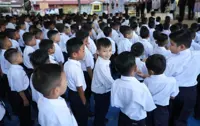
PETALING JAYA: The Education Ministry (MoE) should have a contingency plan for students who are unable to go to school due to their health being affected by the haze, say parents.
A parent who wished to be known as Anis said the MoE should come up with a plan to ensure children who have health issues, due to the haze, do not fall behind in their lessons.
She said it is not enough for them to say parents can keep their child at home.
“What about their lessons? It is not right for them to fall behind their classmates because being out in this haze is making them sick,” she said when contacted.
Anis was commenting on the MoE’s decision to reopen schools yesterday despite the Air Pollutant Index (API) readings hovering around 200 on Wednesday.
Anis, who has an 11-year-old daughter studying in Klang, said she understands that many parents have no choice as their workplaces do not offer flexibility to allow them to be at home with their children.
“But that should not mean children who fall sick should be deprived of learning,” she said, adding that her child has been coughing all week due to the haze.
Majlis Gagasan Malaysia chairman Dr Manivannan Rethinam, who is also a father, said decisions regarding school attendance should not be left solely to the discretion of families without clear directives.
“The notion that parents can simply choose not to send their children to school if they are concerned about their health might seem reasonable.
“In practice, however, this can place families in a dilemma,” he said.
He added that parents may worry that their children will be exposed to the haze if they attend school.
At the same time, he said they may fear that their children will fall behind in their studies, miss important lessons or face issues regarding attendance and examination preparation if they stay at home.
Recognising that not all parents can work from home or supervise their children during home-based teaching and learning (PdPR), Melaka Action Group for Parents in Education chairman Mak Chee Kin said the MoE should explore practical alternatives, including supervised learning in safe, clean-air facilities where feasible.
He also said the ministry should consider postponing important assessments such as the Academic Session Final Test, pointing out that affected students should not be unfairly disadvantaged.
Mak said the government should review the criteria with health experts and relevant agencies, and the chosen thresholds must be scientifically justified, clearly communicated and consistently implemented nationwide.
For families who cannot supervise PdPR, Parent Action Group for Education chairman Datin Noor Azimah Abdul Rahim said the MoE should consider safe supervised learning arrangements, appropriate learning materials and flexible attendance requirements.
“No child should have to choose between protecting their health and keeping up with schoolwork,” she added.
She also said an SOP is meaningful only if it is followed.