KUALA LUMPUR: Experts say that in encouraging innovation, the authorities face a difficult task of ensuring an environment that protects users and intellectual property rights holders.
With the increasingly popular use of artificial intelligence (AI), the question that constantly needs to be asked is who actually owns the copyright of an intellectual property and who is responsible for ensuring that copyright is kept safe.
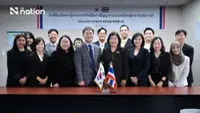
This was the subject of the “AI, Media and Intellectual Property: Who Owns, Who Is Responsible?” forum on the sidelines of IP Confex 2026 in Kuala Lumpur here Tuesday (Oct 6).
The forum, jointly organised by MyIPO and the Malaysian Press Institute (MPI), was moderated by Sayed Munawar Sayed Mohd Mustar.
Also present in the audience was MPI president Datuk Yong Soo Heong.
Intellectual Property Corporation of Malaysia (MyIPO) director-general Yusnieza Syarmila Yusoff explained that the agency's task was not to stop technological progress.
“When AI is used to create something, who owns the resulting work?
“If someone takes my dataset, my system or my work and uses it to produce something new, does that person need my permission?
“We do not want legislation to become so restrictive that it prevents innovation. Intellectual property law is also meant to facilitate trade. We do not want our laws to become so restrictive that they make Malaysia less attractive for business and investment.
“Even when we talk about AI-generated works, we still have to consider the extent of human intervention involved in creating the work,” said Yusnieza.
She said that as Malaysia is still not an IP-owning country like developed nations, the country pays billions in royalties and licensing fees every year
“Civil litigation is costly and time-consuming, which is why we need a more effective process for negotiating and resolving intellectual property disputes. Only by challenging and testing the legal framework will we know whether the protection we have for intellectual property is actually sufficient.
“With AI, we cannot continue thinking about copyright in exactly the same way as before. The technology has changed, and our legal framework needs to catch up.
“Take music, for example. If a machine creates a song using material from multiple sources, we may still be able to identify where the original work came from. That brings us back to the question of copyright and royalties.
“The bigger question is - who decides how much content should be given to AI systems as training data, and what is considered fair?
“With AI, we cannot continue thinking about copyright in exactly the same way as before. The technology has changed, and our legal framework needs to catch up,” said Yusnieza.
Domestic Trade and Consumer Affairs Ministry enforcement unit deputy director of operations Shamsul Nizam Khalil said that when copyright is infringed on in cyberspace, processing the case as a cybercrime takes time.
“We need to conduct intelligence work and gather evidence to identify the parties involved.
“The burden of proof in these cases is not easy because, unlike physical evidence that we can see and handle, evidence in the digital world requires technology and intelligence to trace.
“The law needs to be continuously improved so that it keeps pace with technological developments and the changing times.
“The key issue is identifying the copyright owner. Once ownership is established, enforcement action can be taken, whether through civil or criminal proceedings,” said Shamsul.
Shamsul Nizam said that for online copyright infringement, an immediate step is to lodge a complaint with MCMC so that the infringing video or livestream can be taken down as quickly as possible.
On the issue of fair-use of an intellectual property, Shamsul said that interpretations of fair use should not be so restrictive that even a single sentence cannot be used for legitimate purposes.
“The rules on copyright usage are broadly similar around the world; what matters is how we apply them in practice.
“We should look at how other countries deal with these issues and learn from their approaches, while improving our own system,” said Shamsul.
New Straits Times senior editor Robin Agustin said that the question of how much of an intellectual property can be shared or used by media is not defined in law.
“There is no definitive formula for fair use - there is no rule saying two minutes is acceptable, ten minutes is acceptable, or six minutes is unacceptable. It is highly subjective,” said Agustin.
He, however, called on others to put themselves in the shoes of content creators before sharing copyrighted content without permission.