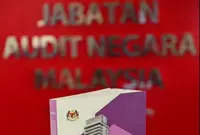
PETALING JAYA: The billions in loans that have yet to be collected over decades must be subjected to a comprehensive review, say civil society groups.
Stronger recovery measures must also be taken against persistent defaulters flagged in the Auditor-General’s Report, they say.
Each significant account should have a clear recovery strategy covering previous restructuring, available securities or guarantees, recovery action taken and realistic prospects of repayment, said Transparency International Malaysia (TI-M) president Dr Raymon Ram.
“When substantial public debt remains unresolved for such long periods, including some with multiple loan restructuring, legitimate questions arise about the effectiveness of monitoring, restructuring and enforcement.
“Persistent defaults should trigger stronger recovery measures, while substantial write-offs must be supported by a clear audit trail showing that reasonable recovery avenues were exhausted.”
Centre to Combat Corruption and Cronyism senior researcher Bryan Cheah stressed the importance of strengthening monitoring and enforcement, tightening risk assessments and re-evaluating the effectiveness of loan restructuring.
“This further reflects the importance of institutional reforms to remedy such issues, such as the legislation of the Freedom of Information Act and Ombudsman Act,” he said.
Universiti Teknologi Mara economist Dr Mohamad Idham Md Razak said strengthening monitoring and recovery mechanisms must be prioritised much earlier in the lending cycle.
“There could be greater use of integrated data systems to identify accounts showing early signs of repayment difficulties.
“This is while applying different recovery approaches depending on whether borrowers are genuinely unable to pay or simply failing to meet obligations.”
Improving collection efficiency, he said, would allow public funds to be recovered and potentially channelled into priority areas.
Sunway University economics Prof Yeah Kim Leng said low loan repayment impedes the government’s ability to extend similar financial aid to a larger pool and leads to deficit spending and higher borrowings.
On the delays in the Littoral Combat Ship (LCS) project, TI-M’s Raymon called for a credible and independently verifiable recovery plan.
He said it should also cover systems integration, trials, weapons, training, certification and full operational readiness.
The broader concern was whether repeated audit findings actually resulted in accountability and institutional reform, he said.
“Auditor-General reports should not become an annual catalogue of weaknesses that are acknowledged but subsequently recur.”
Where public funds are involved, persistent weaknesses or repeated failures should trigger corrective action and recovery of funds.
If negligence, misconduct or wrongdoing is established, transparent explanations and consequences are necessary.
On another matter, Bank Muamalat Malaysia chief economist Dr Mohd Afzanizam Abdul Rashid proposed MyKad-based eligibility to retarget fuel subsidy recipients based on factors such as income to maintain sustainability of government finances.
“That way, more savings can be derived which then can be channelled back to those who are in the middle to low income brackets,” he said.