



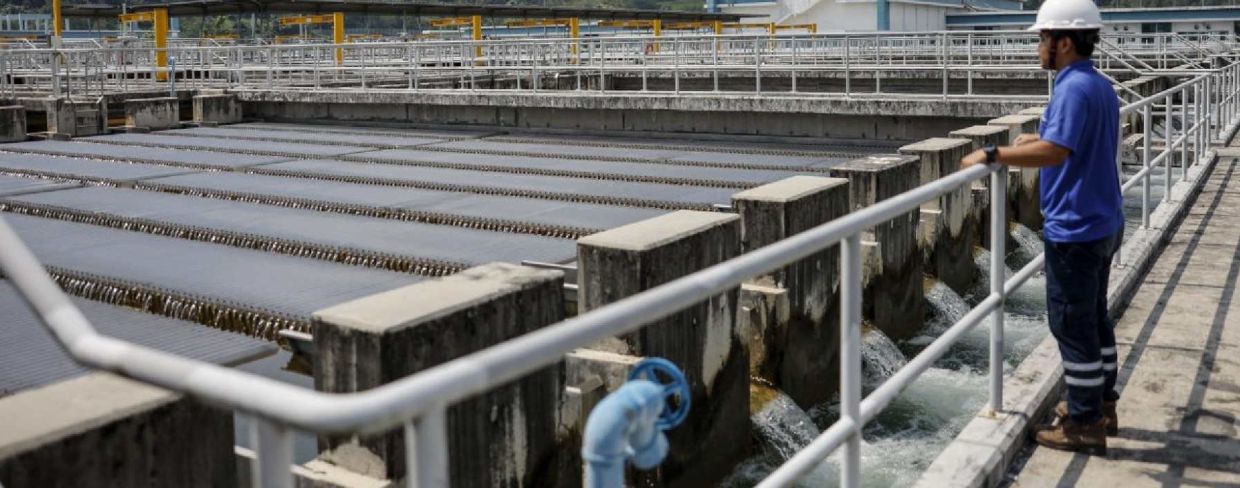
First of a two-part report focusing on the history of the restructuring of Malaysia’s water industry since 2005, the role of Pengurusan Aset Air Berhad (PAAB), and the Full Cost Recovery (FCR) Roadmap 2050.
On social media, many have voiced their dissatisfaction over water tariff adjustments, comparing current rates with those imposed several years ago.
At the same time, however, consumers appear to be less aware of the significant improvements in water supply services in recent years.
Complaints about rusty water have become increasingly rare, except in certain districts in some states, while unscheduled supply disruptions caused by leaking pipes have also declined.
These improvements are the result of the restructuring of the water industry since 2005, which saw the establishment of Pengurusan Aset Air Berhad (PAAB) in 2006, a wholly-owned company of Minister of Finance (Incorporated), as one of the agencies responsible for implementing the National Water Services Industry Restructuring.
REFORMING THE NATIONAL WATER SUPPLY STRUCTURE
Commenting on the matter, PAAB Chairman Datuk Seri Ir Jaseni Maidinsa said the reality was that the water industry was a strategic service requiring substantial investment to ensure a sustainable supply of treated water to millions of users every day.
He said the previous model, whereby the entire water industry came under the jurisdiction of state governments and state water operators, was deemed incapable of guaranteeing a continuous supply of clean water due to the states’ limited financial capacity.
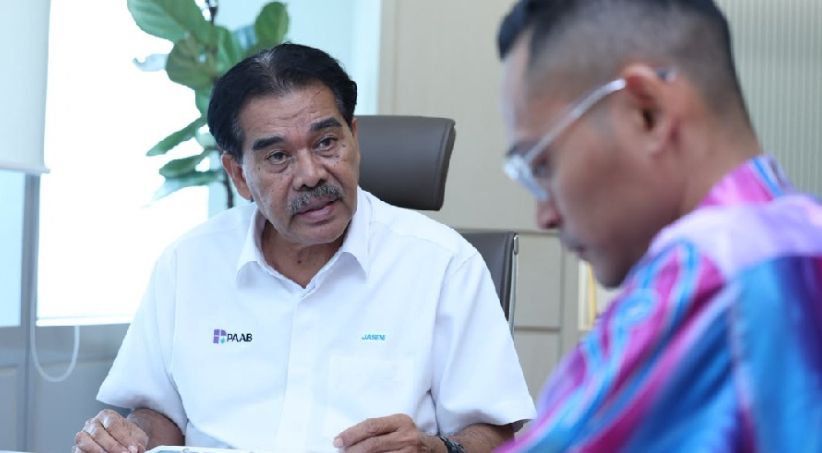
“The main problem arose when water tariffs were insufficient to cover operating expenditure (OPEX) as well as capital expenditure (CAPEX).
“In fact, the practice by some operators of using short-term loans to finance long term projects placed considerable pressure on their cash flow, causing their debt burden to continue mounting,” the PAAB chairman told Bernama in a recent interview.
Jaseni said that under the restructuring, water catchment areas and raw water resources remained under the jurisdiction of state governments, while assets along the treated water supply chain -- from water treatment plants to distribution pipelines -- became Federal Government assets through PAAB.
(The initiative was made possible through an amendment to the Federal Constitution in 2005, which transferred “water supply and services” from the State List, under the full jurisdiction of state governments, to the Concurrent List, where responsibility is shared between the Federal and state governments. This was followed by the establishment of PAAB on May 5, 2006, and the National Water Services Commission (SPAN) in March 2007, before the Water Services Industry Act 2006 came fully into force in January 2008.)
“PAAB functions as a water asset holding company, while also providing CAPEX financing to water operators at the most competitive cost,” he said, adding that the restructuring had clearly defined the respective jurisdictions of the parties involved in the water industry.
“The Ministry of Energy Transition and Water Transformation (PETRA) is responsible for policy formulation and review, SPAN serves as the industry regulator, PAAB acts as the asset holder and financier, while state operators remain responsible for providing services to their respective customers,” he added.
To date, 10 states have joined the restructuring programme. Melaka and Negeri Sembilan were the first to do so in 2008, followed by Johor, Perlis, Penang, Perak, Selangor, Kelantan, Pahang and, most recently, Kedah in 2021.
Explaining further, Jaseni said that through debt restructuring, PAAB took over water assets such as water treatment plants and pipelines, as well as state government loans or debts related to water supply, before leasing the assets back to the respective states.
“For example, when a state has a RM600 million debt with the Federal Government, its water assets valued at RM600 million will be taken over by PAAB. We then lease the assets back to the state water operator so that operations can continue and they repay the lease over 45 years.
“PAAB will settle the repayment of the state government’s loans to the Federal Government and commercial banking institutions according to the financing structure in place,” he explained.
According to Jaseni, from its establishment until Dec 31, 2025, PAAB had financed the takeover of water industry loans from the participating states amounting to RM23.04 billion, in addition to providing RM23.84 billion in financing for various water infrastructure projects, bringing total financing to RM46.88 billion.
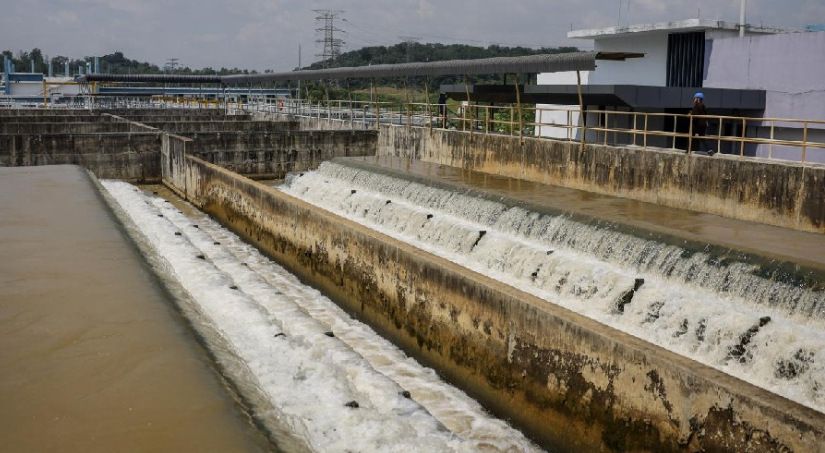
To date, PAAB owns 2,228 water infrastructure assets nationwide, comprising 1,513 storage tanks, 408 pumping stations, 143 intake structures, 142 water treatment plants, 11 dams and 11 other supporting assets, including canals, tunnels and administration buildings. In addition to these assets, PAAB also has 35,108 km of water distribution pipes.
Apart from taking over debts and assets, PAAB also finances and carries out the construction of new assets before handing them over to water operators, also through 45-year leases.
“Why 45 years? This period is based on the average lifespan of water assets, which is estimated at around 50 years, with the additional five years serving as a financial and operational buffer,” he explained.
The 45 years payment period helps to solve the water operators cash flow problems, reduce water tariff increases and assists them to achieve full-cost recovery.
TOWARDS SELF-SUFFICIENCY
Elaborating further, Jaseni said the ultimate goal of restructuring the national water services industry was to ensure that the industry could finance its own operational and infrastructure development needs, or, simply put, achieve financial sustainability through the PAAB Full Cost Recovery (FCR) Roadmap 2050.
He explained that implementation of the roadmap was divided into four phases -- Migration (2008-2020), Stabilisation (2021-2030), Consolidation (2031-2040) and Full Cost Recovery (2041-2050). Each phase represent a progressive shift towards financial autonomy, operational excellence and sustainability.
“During the migration phase, operators were given room to strengthen their financial positions as they were no longer required to bear the burden of long-term debt. During this period, operators carried out regular tariff reviews.
“The stabilisation phase, which is the current phase, focuses on upgrading and developing infrastructure and assets to ensure that the water supply system is fully capable of meeting users’ needs, while improving operational efficiency,” he said, adding that the phase required substantial investment.
During the consolidation phase, the focus would be on improving the efficiency of assets and infrastructure that had been upgraded or developed during the previous phase.
“During this phase, operators are expected to achieve greater cost efficiency in their operations, optimise resource utilisation and subsequently strengthen their financial position,” he said.
By the full cost recovery phase, operators are expected to be able to finance their asset investment needs using internal funds rather than loans or external financing, while ensuring continuous, quality services for consumers.
Nevertheless, Jaseni stressed that the full cost recovery phase did not mean consumers would face sudden increases in water tariffs.
“The approach is to ensure that tariffs are reviewed gradually based on the actual cost of services, which includes operators’ remuneration, electrical, chemicals cost, maintenance of their entire water treatment and distribution systems (OPEX) plus cost to develop new water assets to meet future water demands (CAPEX).
“In this way, consumers will not view tariffs merely as the price they have to pay for water, but as part of a shared responsibility to ensure that the entire water supply system is efficient and sustainable,” he added.
Ultimately, consumers will enjoy better-quality, more consistent water services that are more resilient to supply disruptions, as a result of the replacement of ageing pipes, which will also help reduce the Non-Revenue Water (NRW) rate, as wellas the construction and upgrading of assets such as water treatment plants.
EMBRACING THE LATEST TECHNOLOGY
In realising the objectives of the FCR Roadmap 2050, Jaseni said PAAB was adopting the latest technologies, including green technology, in the construction and upgrading of water supply assets and infrastructure.
“To ensure that water infrastructure assets are built quickly, accurately and with greater resilience, PAAB integrates various modern technologies throughout the development process.
“For example, the use of Building Information Modelling (BIM) enables three dimensional (3D) simulations of plant designs to be carried out at an early stage to prevent structural and construction errors.
“It can then be integrated with the Geographic Information System (GIS) to digitally map locations and analyse spatial data on pipeline networks, while the Industrialised Building System (IBS), based on prefabricated components manufactured in advance at factories, can be used to speed up construction at project sites,” he said.
Apart from technology in the physical development of assets, he said PAAB was also strengthening information management through Information of Water Asset (i-WA), a digital system used to organise, manage and monitor water asset data.
The system has also been extended to state water operators, including Syarikat Air Johor, Syarikat Air Negeri Sembilan (SAINS) and Pengurusan Air Pahang (PAIP), to facilitate more systematic asset management.
This technology-driven and data-modernisation approach enables aspects such as design, location, costs, energy consumption and project implementation to be assessed in a more systematic manner, thereby helping to reduce the risk of wastage, delays and errors during construction.
More notably, efforts to strengthen water asset management through digitalisation and governance received international recognition when PAAB was awarded the ‘Malaysia e-Governance Project of the Year – Utilities’ at the GovMedia Conference and Awards event in Singapore on 9th July 2026.
The award recognised the effectiveness of its digitalisation efforts through an innovative platform known as the i-Declare System.
Jaseni described the recognition as evidence that PAAB’s various efforts to modernise asset management and service delivery were not only creating value for the country’s water industry but were also attracting global attention.

