
Products sold online carry risks, enforcement action
PETALING JAYA: The sale and use of artificial insemination home kits in Malaysia carry significant health risks and fall under strict regulatory scrutiny.
The Medical Device Authority (MDA) warns that unregistered devices sold online may be subject to enforcement action.
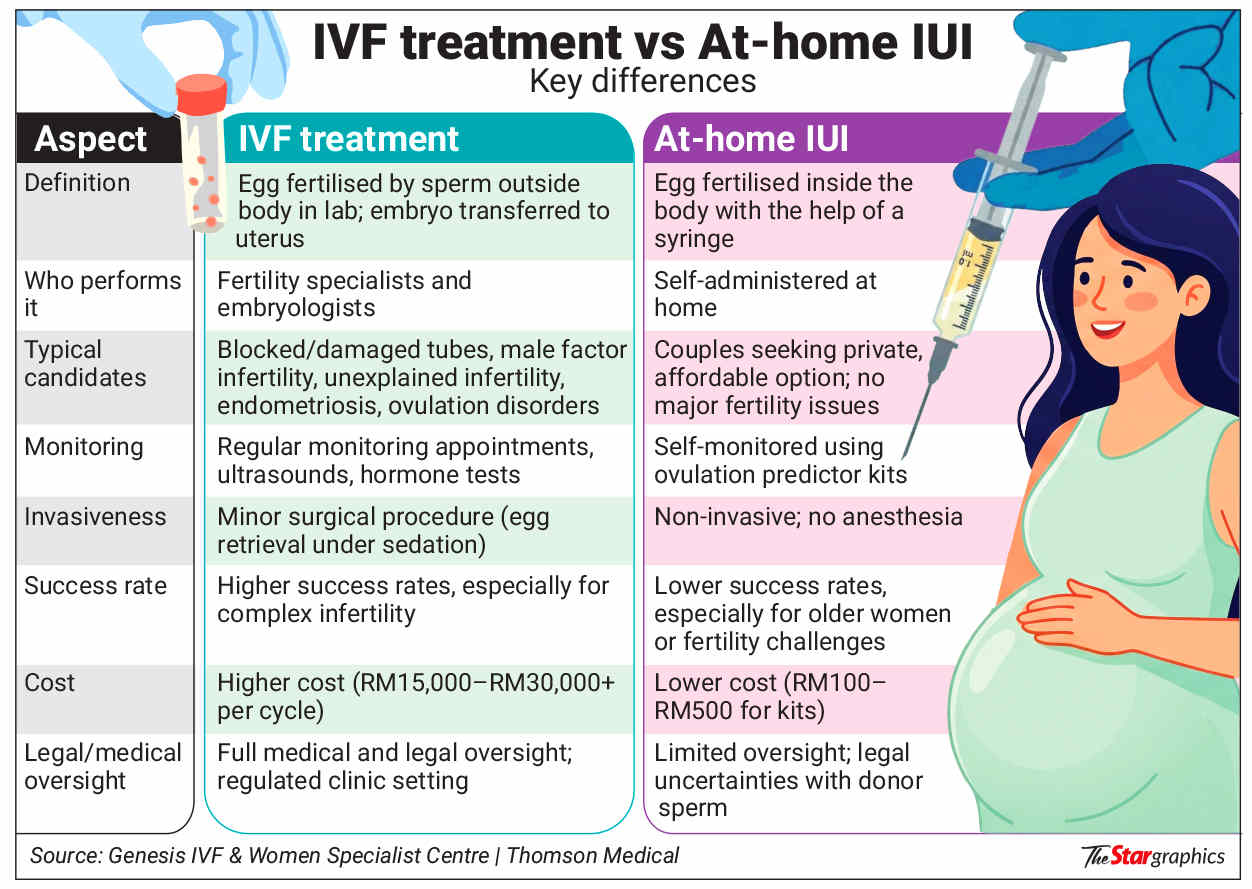
While such kits are marketed on local e-commerce platforms as convenient and cheaper alternatives to in-vitro fertilisation (IVF), health authorities said using them without medical supervision bypasses critical health screenings and infection controls.
The MDA said it takes a serious view of the sale and advertising of unregistered medical devices, including those intended for professional use that are openly offered to the public on online and e-commerce platforms.
“MDA continuously monitors such activities and will take firm enforcement action against any party found to be in breach of the Medical Device Act 2012 (Act 737).
“Such action may include removing or taking down online sales links and advertisements, inspections, investigations, seizures and other enforcement measures, subject to the findings of the investigation and the applicable provisions of the law.”
Under Act 737, medical devices in the Malaysian market must be registered and advertisements must comply with the applicable legal and regulatory requirements.
“MDA remains committed to protecting public health and ensuring that only compliant medical devices are available on the Malaysian market,” it added.
On infection risks, the MDA said it is important to distinguish home insemination from clinical intrauterine insemination (IUI).
“Home insemination devices are generally intended to introduce semen into the vaginal canal, typically in the vicinity of the cervix.
“In contrast, IUI is a clinical procedure in which processed sperm is introduced directly into the uterine cavity by a healthcare professional,” the MDA said.
Sperm preparation or “washing” is commonly performed as part of clinical IUI because the prepared sperm is introduced directly into the uterus.
“These fertility kits do not involve the same route of administration. Contamination of semen, the device or collection accessories as well as poor hygiene or improper handling, may present infection risks.
“Users should follow the manufacturer’s instructions and appropriate hygiene practices,” it said.
The MDA also said there are potential risks associated with improper use, contamination or failure to follow the manufacturer’s instructions.
“Potential risks may include vaginal irritation, discomfort or minor injury during insertion, infection resulting from poor hygiene practices or contamination of the device or collection accessories, user error arising from incorrect use of the device and delayed consultation with healthcare professionals for underlying fertility conditions.”
Manufacturers are required to identify reasonably hazards, evaluate associated risks, implement risk control measures and determine whether the residual risks are acceptable.
“For devices intended to be used by laypersons in a home environment, the manufacturer should also provide appropriate labelling, instructions for use, warnings and precautions, and demonstrate usability to support safe and effective use,” it said.
On registration status, the MDA said it is aware that certain home insemination products are registered as medical devices.
“Registration under Act 737 indicates that the manufacturer has demonstrated compliance with applicable regulatory requirements relating to safety, performance, quality management systems, risk management, labelling and the device’s intended purpose and use.”
However, registration should not be interpreted as a guarantee that the device is entirely risk-free.