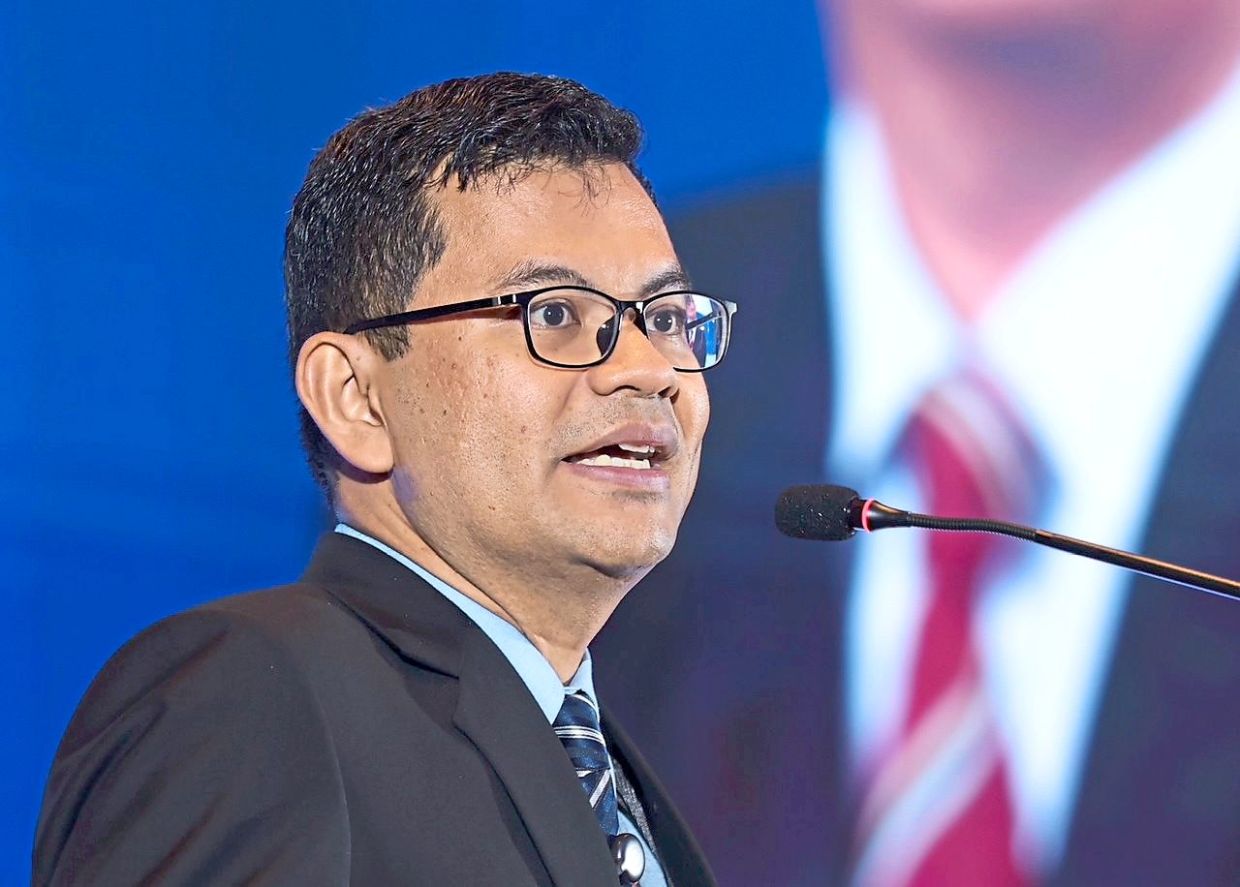
SUBANG JAYA: Malaysia expects electricity demand to continue rising as hotter weather increases the need for air-conditioning and cooling, says Economy Minister Akmal Nasrullah Mohd Nasir (pic).
He said electricity demand was already on an upward trend, driven by population growth and increasingly energy-intensive users such as data centres, with warmer conditions expected to add further pressure.
“In terms of the projection for demand on energy, definitely we see a pattern of increase,” he told reporters after officiating the Energy Regulatory Insights 2026 here yesterday.
“The weather or climate that tends to increase the need for cooling systems or air-conditioners will change the energy demand,” he added.
Akmal was responding to a CIMB Securities warning on Monday that El Nino could put greater pressure on Malaysia’s electricity and water systems into 2027.
The research house said hotter and drier conditions could spike electricity demand for cooling while worsening water shortages.
Malaysia’s peak electricity demand is projected to rise to 33.5GW by 2035 from 21.3GW in 2026, while data centres could account for 31% of Peninsular Malaysia’s electricity demand by then, according to CIMB.
Akmal said managing demand through greater energy efficiency and conservation would therefore become as important as expanding supply.
“Looking ahead, managing demand for energy will become as crucial as managing the energy supply,” he said.
Earlier in his speech, Akmal said Malaysia is determined to build an energy system that is secure, affordable and sustainable while remaining resilient and flexible enough to support higher-value economic growth.
“Our priority is not simply to produce more energy.
“It is to build an energy system that is secure, affordable and sustainable, with the resilience and flexibility needed to support a higher-value economy,” he said.
Under the National Energy Transition Roadmap, renewable energy is targeted to account for 40% of installed capacity by 2035 and 70% by 2050.
Akmal said the immediate challenge was implementation, including bringing new capacity onto the grid, modernising infrastructure and ensuring regulation kept pace with technology and investment.
He cited the LSS Petra 5+ programme, which is expected to add almost 2GW of large-scale solar capacity, mobilise about RM6bil in investment and create around 12,000 jobs as projects come onstream from 2027.
“The energy transition will not be won by megawatts alone. It will be won by whether the grid can connect, balance and deliver those megawatts reliably,” he said.
Akmal said Malaysia would also place greater emphasis on energy efficiency, with NEEAP 2.0 targeting an 11.6% reduction in energy demand against the business-as-usual scenario by 2035.
“Energy efficiency is not about asking industry to grow less. It is about producing more economic value from every unit of energy consumed,” he said.