FOR decades, architects have designed homes around space, structure and aesthetics.
SA Architects Malaysia director Tony Mak believes the next generation of homes will also be judged by something else – how well they support the people who live in them.
Speaking to more than 2,200 architects and built-environment professionals at Kuala Lumpur Architecture Festival (KLAF) 2026, Mak said artificial intelligence (AI) should not be viewed simply as another technology to install, but as a design consideration that shapes the home from the outset.
Mak believes the homes of the future will increasingly be judged by four qualities that matter to families – comfort, convenience, care and community.
Comfort is about creating homes that quietly adapt to daily routines instead of expecting residents to adjust technology themselves. Convenience comes from removing complexity, allowing different intelligent systems to work together behind the scenes.
Care, he believes, may ultimately have the greatest impact. AI and compatible wellness technologies could help families look after ageing parents while allowing them to remain independent for longer.
Beyond the home, community focuses on creating neighbourhoods where technology makes it easier for residents to interact, share facilities and feel connected.
Mak believes this represents a fundamental shift in architectural thinking. Instead of asking how much technology can be fitted into a building, architects should first ask a different question: What kind of living experience do we want to create?
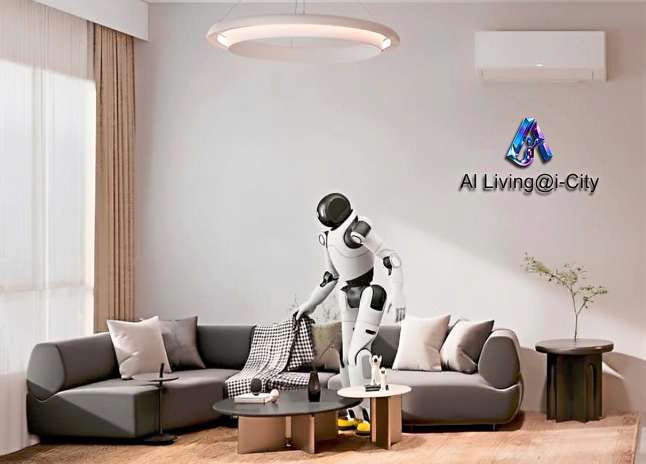
That philosophy underpins AI Living @ i-City, where architecture, AI and intelligent building systems are planned together from the beginning.
Unlike conventional homes that remain largely unchanged after completion, AI Living is conceived as an environment that can continue evolving as AI technologies improve over time.
“The goal is not a smarter building. It is a better home,” Mak said.
Mak ended his presentation to the architects on a lighter note, suggesting that the profession may have some catching up to do as AI begins to reshape residential design.
His remark drew laughter, but his underlying message was clear: as AI becomes part of everyday life, the homes people live in will have to evolve with it. At AI Living @ i-City, that vision takes shape with a simple proposition: tomorrow begins at home.