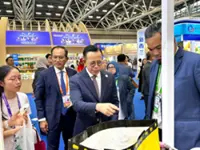
BUTTERWORTH: A total of RM9bil under the Power-Up 10K initiative has been channelled by the Entrepreneur Development and Cooperatives Ministry to entrepreneurs as part of efforts to accelerate the growth of micro, small and medium enterprises (MSMEs).
Its minister Steven Sim Chee Keong said the RM9bil had been approved as of 31 July, benefiting 250,000 MSME entrepreneurs.
He said the Power-Up 10K initiative, which provides RM15bil in financing, was aimed at accelerating MSME growth in a more structured, targeted and high-impact manner.
Sim said the ministry had also introduced the Indian Entrepreneur Capital and Economic Stimulus Package (MUDRA) initiative this year to strengthen financing support for Indian entrepreneurs.
"Under MUDRA, 5,000 Indian entrepreneurs have received various forms of financing totalling RM100mil," he said in his speech during the Muslim Economic Development Agenda (APEM) 3.0 here on Saturday (Aug 15)
Sim said his ministry would continue to strengthen its strategic support through the ABCD Strategy, which focuses on productivity enhancement, streamlined bureaucracy, access to capital and market access.
He said the approach was aimed at strengthening the resilience, competitiveness and capacity of MSMEs to expand their businesses and penetrate wider markets.
"This reflects the government's commitment to building a stronger, progressive and inclusive entrepreneurial ecosystem, while ensuring sustained business growth and improving the people's well-being," he said.
Sim praised and welcomed the organisation of APEM, describing it as a strategic platform to strengthen the participation of Muslim MSMEs in the national entrepreneurial ecosystem.
Sim said MSME development required a comprehensive approach to help entrepreneurs move beyond conventional business practices, including through better access to financing, capacity building, technology integration and stronger market networks.
"Entrepreneurs today need more than just capital. They need guidance, market access, business networks and continuous support to grow sustainably and remain competitive, eventually becoming larger players in the national economy.
"Our goal is to ensure more entrepreneurs can progress to the next level, create jobs, boost productivity and become an important component of the country's economic value chain," he said.
Sim urged the APEM organisers to establish stronger strategic cooperation with ministries, government agencies, financial institutions, the cooperative sector and industry players.
He said such collaboration was important to ensure the resolutions reached at the convention could be translated into high-impact action programmes and business opportunities.
The initiative, he added, would help strengthen the resilience and competitiveness of Muslim MSMEs while creating greater opportunities for their participation in the wider national economy.
Sim said the APEM 3.0 platform could be strengthened through five strategic initiatives aimed at helping Muslim entrepreneurs expand their businesses and improve their competitiveness.
He said the initiatives include financing and market access clinics, continuous capacity-building and entrepreneurship programmes, digital and artificial intelligence (AI) transformation, business matching, and business scaling.
"The financing and market access clinics will provide entrepreneurs with tailored guidance on financing avenues and market expansion, while development programmes will focus on continuous capacity building and entrepreneurship training," he said.
The one-day event attended by 300 participants was organised by the Penang Muslim League.
Present during the event were Penang Muslim League president and APEM organising chairman Datuk Najmudeen Kader and business leaders from the community.