
PUTRAJAYA: While anyone can suffer from heat stress, certain groups of workers are more vulnerable and require closer monitoring, says the Department of Occupational Safety and Health (DOSH).
It said workers who are new to high-temperature environments are among those at greater risk because their bodies have not yet adapted to the heat.
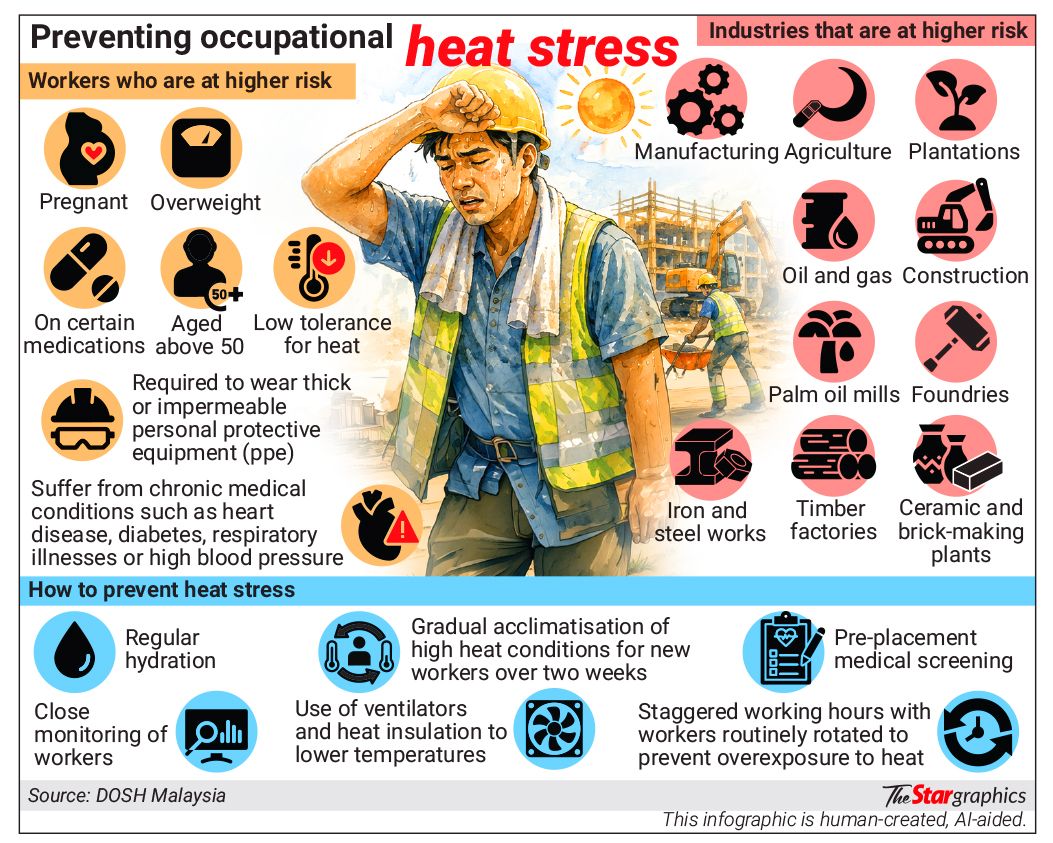
According to DOSH’s guidelines for employers, workers exposed to hot working conditions should gradually acclimatise over seven to 14 days.
This allows the body to better regulate its temperature and reduces the risk of heat-related illnesses.
ALSO READ: Don’t take heat stress risks at workplace lightly, employers told
Older workers, particularly those aged 50 and above, are also more susceptible to heat stress, DOSH noted.
“Workers who are overweight, pregnant or suffer from chronic medical conditions such as heart disease, diabetes, respiratory illnesses or high blood pressure may also face a higher risk of developing serious heat-related complications,” it said.
DOSH also noted that certain medications can affect a worker’s ability to regulate body temperature or retain fluids, increasing the risk of heat stress.
It said the risk rises significantly in industries where workers are routinely exposed to high temperatures or perform physically demanding tasks.
These include construction, agriculture, plantation, manufacturing, oil and gas, iron and steel, foundry, palm oil mill, timber, ceramics and brick-making, where temperatures can reach extreme levels.
DOSH said the use of thick or impermeable personal protective equipment, while necessary for safety in many industries, can increase heat retention and make it more difficult for the body to cool itself.
Employers are advised to take these factors into account when assigning duties and planning work schedules, particularly during prolonged periods of hot weather, to minimise the risk of heat stress among vulnerable workers.
The issue requires greater attention from employers as Malaysia braces for the possible arrival of a Super El Nino this November, based on forecasts by the Meteorological Department.
The climate phenomenon could bring extreme temperatures, reduced rainfall, and more frequent and prolonged heatwaves, potentially exposing outdoor workers and those in heat-intensive industries to a greater risk of heat stress.