
IN the waters of Sabah’s Tun Mustapha Park, sharks are becoming harder to find.
The change has not happened overnight. There has been no dramatic disappearance.
Instead, researchers, conservationists and fishers are noticing a gradual shift beneath the surface: fewer sharks, more rays, and growing concern about what that means for the health of marine ecosystems.
To understand what is happening, WWF-Malaysia and its partners have spent years gathering evidence from the sea itself.
One of their most important tools is the Baited Remote Underwater Video System, or BRUVS.
The setup is simple: a camera mounted on a frame alongside bait made from oily fish such as mackerel and sardines. Lowered to depths of between 5m and 30m, the cameras record marine life that passes by.
Working with Sabah Parks, Deakin University, Scuba Junkie and the Banggi Corals Conservation Society, WWF-Malaysia has deployed BRUVS across Sabah waters, accumulating more than 500 hours of footage.
The process is painstaking. Researchers review each recording frame by frame, identifying every shark, ray and other large marine animal that appears on screen.
Sometimes the footage captures reef sharks, rays, turtles, moray eels and squid. Sometimes it captures very little at all.
The surveys form part of the Global FinPrint project, the world’s largest study of reef sharks and rays.
In 2025, researchers entered the second phase of the programme, focusing on how sharks and rays are faring inside marine protected areas and how critical habitats can be better protected.
The findings so far are troubling.
The first phase of Global FinPrint found Malaysia had among the lowest numbers of reef predators recorded in the region.
At some sites in Sabah, including Mabul and Kapalai, researchers recorded no sharks at all.
Rays, meanwhile, were encountered more frequently, particularly in areas where predators were scarce.
Researchers say this may point to an ecological imbalance.
The local findings mirror a wider global trend. A 2021 reassessment by the International Union for Conservation of Nature found that more than one-third of shark and ray species worldwide are threatened with extinction.
In Malaysia, the number of threatened shark and ray species has doubled since 2014, while the number classified as endangered or critically endangered has more than tripled.
Yet underwater surveys tell only part of the story.
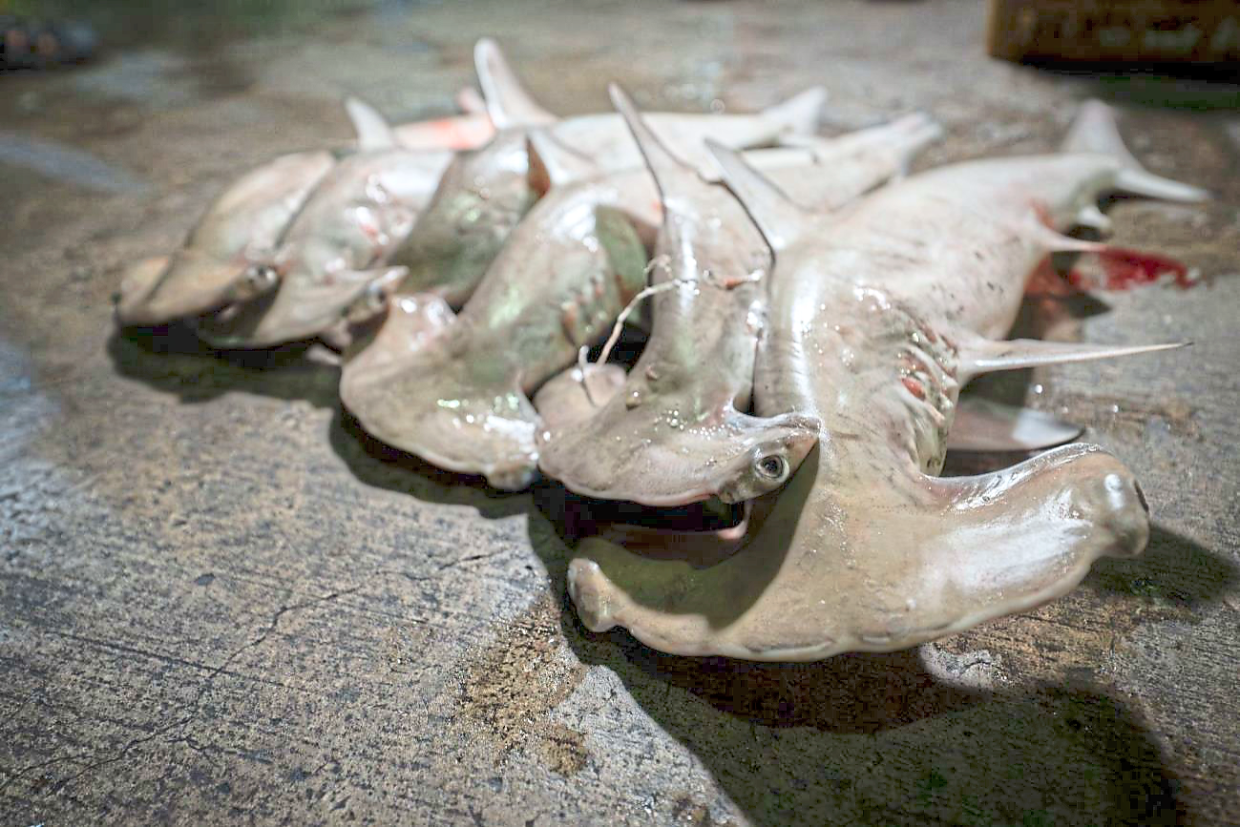
To understand what is being removed from the sea, WWF-Malaysia and Universiti Malaysia Sabah also monitored catches at fish landing sites and markets in Kota Kinabalu and Sandakan between November 2023 and December 2024.
Researchers recorded 1,748 sharks and 2,890 rays representing 79 species.
The data revealed another worrying pattern: at least 80% of sharks and 93% of rays landed were immature, meaning they were caught before reaching breeding age.
For animals that can take more than a decade to mature, the loss of juveniles can have severe consequences for future populations.
Some species recorded at landing sites never appeared in the BRUVS surveys.
“After thousands of minutes reviewing BRUVS footage, it’s disheartening to find the very species we hoped to observe already landed and lifeless,” said WWF-Malaysia senior marine programme officer Serena Adam.
“When our team visited landing sites and conducted our surveys, we discovered that many of these sharks and rays were still premature. That’s why we’re working closely with coastal communities not just to monitor incidental catches but to build awareness, buy-in and capacity for live release of juveniles.”
The stakes are high because sharks and rays play a crucial role in maintaining healthy oceans.
As top predators and ecosystem engineers, they help regulate prey populations, recycle nutrients and maintain ecological balance. When their numbers decline, the effects can ripple through entire marine food webs.
Among the species found in Sabah waters are whitetip reef sharks, which shelter in coral caves and crevices, and grey reef sharks, known for their territorial behaviour.
The world’s largest fish, the whale shark, also passes through Malaysian waters.
These animals have survived for more than 400 million years, enduring mass extinctions and dramatic changes to the planet. Yet today many species face growing pressure from overfishing and habitat degradation.
Against that backdrop, a conservation effort taking shape in coastal villages around Tun Mustapha Park offers a measure of hope.
Rather than excluding local communities, WWF-Malaysia has been working with fishers to develop practical ways of reducing shark and ray mortality.
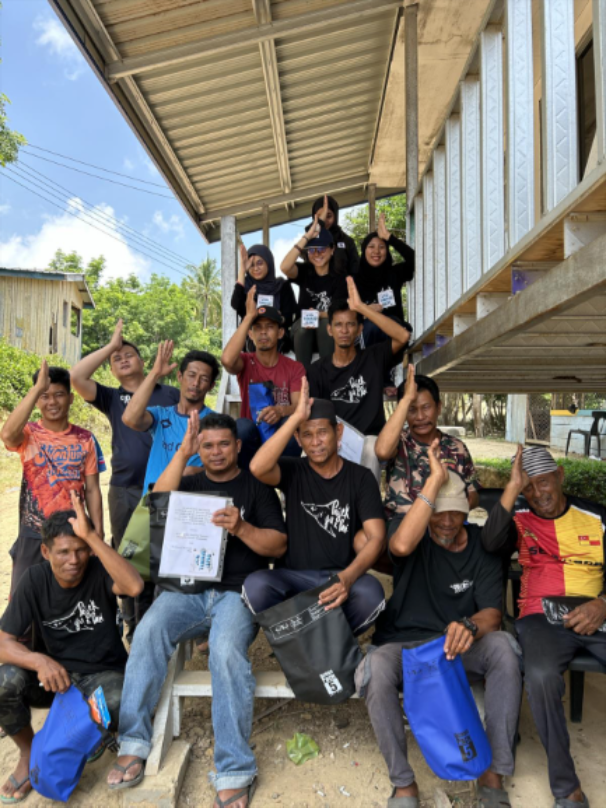
Through a pilot programme, 13 fishers from Kampung Inaruntung and Kampung Perpaduan volunteered to release juvenile sharks and rays that were accidentally caught alive.
Participants received training, safety equipment and support from local enumerators who monitored releases.
Early results have been encouraging.
Of 49 sharks and rays recorded through the programme, 61% were landed alive and successfully released back into the sea. The animals included bamboo sharks, catsharks and several stingray species.
For species that reproduce slowly, every surviving juvenile matters.
Among those taking part is Pakcik Ali from Kampung Perpaduan, a veteran fisher who has spent much of his life at sea.
He has witnessed the changes first-hand: fewer sharks, smaller rays and catches that no longer resemble those of previous decades.
When given the opportunity to participate in the release programme, he joined willingly.
“If we can do it, then we can do anything – and even better,” he said.
His attitude reflects a broader principle behind the project. Conservation efforts are more likely to succeed when communities are treated as partners rather than bystanders.
WWF-Malaysia marine head Chitra Devi said the organisation places considerable emphasis on listening to local knowledge.
“We engage coastal communities not only to raise awareness but to truly listen. Our officers sit with fishers in focus group discussions, hearing first-hand how shark and ray populations have changed over the years,” she said.
“By placing trained enumerators within villages, we’re not just gathering data – we’re building trust and empowering communities with knowledge that strengthens conservation from the ground up.”
Interest in the programme is already spreading.
Villages including Kampung Parapat Laut and Kampung Malubang have expressed interest in joining future efforts.
The long-term goal is a Tun Mustapha Park where sustainable fisheries support both biodiversity and local livelihoods.
The challenge remains significant. Surveys suggest shark populations are under pressure, and many young animals are still being caught before they can reproduce.
But researchers say the story is not solely one of decline.
Every shark recorded on camera, every juvenile released alive and every fisher willing to participate offers another chance for recovery.
For now, the evidence from Sabah’s waters carries a clear message: protecting sharks and rays will require science, community support and sustained commitment. Without that effort, the disappearance unfolding beneath the surface may continue unnoticed until the silence becomes permanent.
> Editor’s note: This article is adapted from material provided by WWF-Malaysia for World Oceans Day 2026. Interviews and data for the article, which has been edited for length, clarity and style, were provided by WWF-Malaysia.