Mat Sabu: Water level monitoring, assistance for farmers among mitigation efforts
KUALA LUMPUR: The government is strengthening various mitigation measures to reduce the impact of the El Nino phenomenon on the agro-food sector, including ensuring more efficient water resource management, expanding the use of smart irrigation technology, and providing assistance to affected farmers and rice farmers.
Agriculture and Food Security Minister Datuk Seri Mohamad Sabu (pic) said among the measures implemented were continuous monitoring of water levels in dams and catchment areas, integrated water resource management, the use of smart irrigation monitoring systems and drip irrigation systems to optimise water use.
He said efforts to increase the resilience of the padi sector were also being strengthened through research and development of new, more drought-resistant padi varieties by the Malaysian Agricultural Research and Development Institute (Mardi), in addition to cloud seeding operations carried out when weather conditions permitted.

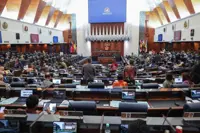
“The food security meeting chaired by the Prime Minister also asked Mardi to further enhance its research to produce new varieties,” he said during question time at Dewan Rakyat yesterday, Bernama reported.
Responding to a question from Tangga Batu MP Bakri Jamaluddin regarding the government’s preparations in facing Super El Nino, Mohamad said the government always maintains rice supply stocks for a period of about six months in addition to continuing imports as needed.
He said the government would also provide protection and assistance schemes to rice farmers affected by disasters including drought.
According to Mohamad, for the first phase of assistance, a total of RM45.24mil had been channelled to 8,224 rice farmers since 2024, while until June 30, 2026, a total of RM38.53mil had been distributed to 55,058 rice farmers involving 16,933ha affected by drought in the north and east of the peninsula.
He said the government was also encouraging the development of large-scale rice fields including in Sarawak, Pahang and several other states to increase production, in addition to expanding controlled environment agricultural practices to reduce the impact of weather changes on crops and the livestock sector.
Commenting on a supplementary question from Shah Alam MP Azli Yusof on the dumping of durians which has caused prices to drop, Mohamad said the government would continue to expand export markets, especially to China, through negotiations to facilitate logistics and customs clearance for fresh fruit and frozen products.
“Our durians in China are sold mostly in big cities, while the small towns have a much larger market potential,” he said.
On fisheries, Mohamad said the government was giving fishermen without licences the opportunity to submit applications under the regularisation programme, which is implemented periodically to fill vacancies left by cancelled licences.
Fishermen could also apply for special boat licences through the District Fisheries Office, subject to the conditions and criteria set by the Fisheries Department.
“This approach allows more fishermen to operate legally, gain access to various government assistance programmes and improve compliance with fisheries regulations to ensure the sustainability of resources,” he said when replying to a question from Bukit Gantang MP Datuk Syed Abu Hussin Hafiz Syed Abdul Fasal.
He had wanted to know whether there was any flexibility or a special mechanism for the issuance and renewal of fishing licences for Zone A fishermen (coastal boat operators), particularly traditional fishermen facing enforcement action over licensing issues.
Mohamad said 800 licences were approved nationwide last year, while 915 licences were approved the year before.