



At Tunku Abdul Rahman University of Management and Technology (TAR UMT), research is more than a scholarly pursuit; it is a vital mission to address pressing societal and industrial needs.
Through the TAR UMT Internal Research Grant, the university empowers faculty members to pursue innovative solutions across diverse fields, leading to published works and real-world applications.
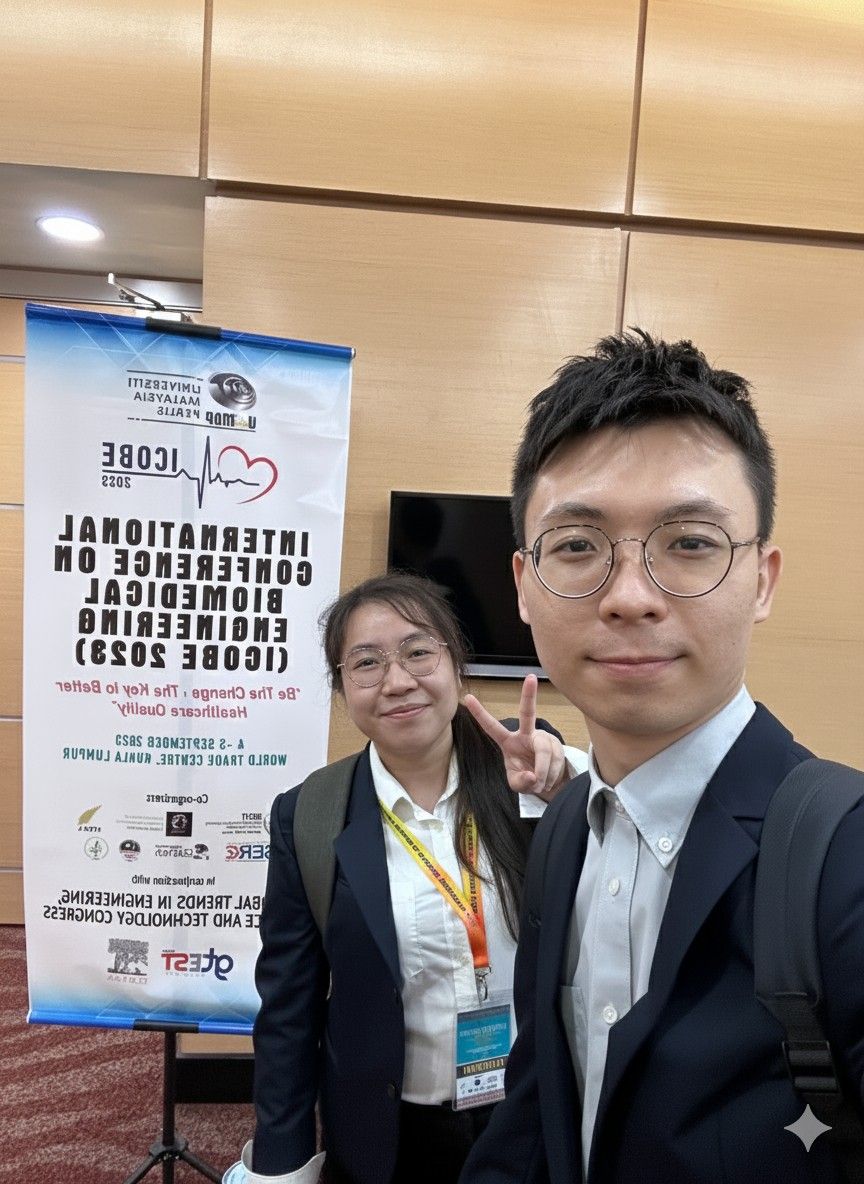
One of the university’s standout research achievements lies in the realm of digital pathology, led by Assoc Prof Dr Tan Xiao Jian. His work addresses a critical gap in breast cancer diagnosis: the subjective nature of assessing ‘abnormal’ cancer cell nuclei. Traditionally, this process relies on visual judgment, which can vary between experts. To resolve this, Tan developed the Harmonic Mean (HM) model, a mathematical framework that measures nuclear pleomorphism (differences in size, shape and appearance). This turns a subjective visual assessment into an objective, numerical score, supporting more consistent and accurate breast cancer grading.
Tan was able to embark on this research with the support of TAR UMT’s internal grant. The financial support was instrumental in providing the resources needed to acquire high-resolution digital slides and sophisticated computational tools.
“The project also involved Teoh Chai Ling, a postgraduate student pursuing her Master of Engineering Science, who was a key part of the technical team,” he added.
“Chai Ling focused on cleaning up digital images of cells to make them clearer and used a specialised tool called CellProfiler to make sure the computer was identifying the cells correctly.
“In addition, she also built a software needed to run the study’s new math model and used a type of AI (a Support Vector Machine) to test the results, ensuring that the measurements were accurate and reliable.”
Tan’s research findings also received positive feedback from collaborating histopathologists, who noted that the model’s outputs aligned well with clinical interpretation.
In the field of assistive technology, Peh Guan Soon and Ooi Chun Pew have developed OptiChat, an integrated mobile application designed to enhance the independence of visually impaired individuals. OptiChat functions as a smart assistant that can describe objects through a phone camera and answer questions, making technology feel more human and empathetic.
The researchers highlighted that the university’s internal funding was a ‘much-needed help in enabling this project to begin,’ as it allowed for vital accessibility evaluations with the Malaysian Association for the Blind (MAB). Students played a pivotal role in this process, participating in system testing and interviews with the visually impaired community. This involvement taught them the importance of user-centric design and the ethical considerations of AI.
"Users appreciated the effort and initiative in creating an app tailored to their needs," Peh shared, noting that the feedback gathered by the team has motivated them to continue enhancing the app.
In addition, both researchers are utilising their research findings in their lessons, equipping students with the skills to design accessible technology for a more inclusive society.
TAR UMT is also making significant strides in early childhood education through the development of a comprehensive, curriculum-aligned framework that enables preschool teachers to effectively teach humanities through picture books.
“Teachers want to teach values and humanities, but lack practical, structured resources to do so, resulting in them heavily relying on academic skills (literacy and numeracy) and having limited guidance on teaching values, empathy, identity and social understanding,” explained Dr Norazly Nordin, who is part of the research team.
This led the team to develop 30 ready-to-use lesson plans and the CHERISH teaching model that show how teachers can introduce humanities topics through picture books in ways that are fun, meaningful and developmentally appropriate for young children. This is important research to strengthen character education, fills a practical gap by providing ready-to-use teaching materials, promotes high-quality use of picture books, and supports the national curriculum.
Norazly also highlighted the importance of TAR UMT’s internal research grant. “Without this early support, it would have been difficult to gather the foundational resources, expert feedback and classroom insights needed to turn a promising idea into a rigorously developed teaching framework.”
The team’s research success continues to gain positive traction, such as being approached by the Malaysia Board on Books for Young People to share their work with key players in the children’s book industry – an acknowledgement that the research is relevant and needed beyond academia.
In addition, Norazly also presented about the research at the 2025 IBBY Asia Pacific Regional Conference in Suwon, Korea, which provided international visibility and affirmed the value of their work in a global context. The team has also secured the copyright for the CHERISH Model, establishing it as a unique and original pedagogical framework. This is in addition to publishing the teaching module for the teacher handbook, ensuring that the findings are accessible to practitioners and can be integrated into teacher training and professional development.
Research work is an important aspect of the postgraduate programmes at TAR UMT. For more information on TAR UMT’s postgraduate programmes, call 011-1058 5971 or log on to www.tarc.edu.my for details about TAR UMT and online applications. Various financial aid options and merit scholarships are available for qualified students.
