Experts urge prevention over disposal to tackle landfill crisis
PETALING JAYA: Malaysia must prioritise waste prevention at the source to avert a looming national crisis, warn environmental experts.
They say the current waste management strategy focuses too heavily on downstream disposal, arguing that scaling up composting, recycling incentives and producer responsibility is vital to prevent landfills from reaching capacity by 2050.
Sahabat Alam Malaysia honorary secretary Mageswari Sangaralingam said the country must adopt a zero-waste approach that emphasises reducing consumption and redesigning production systems.
“Our goal should be to prevent waste generation. Recycling is not a primary solution but a last resort before disposal,” she said.
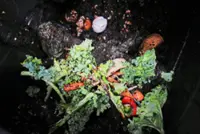
Mageswari said Malaysia’s mandatory waste separation system does not cover organic and food waste, despite it making up a significant portion of household rubbish.
She said diverting this through composting could significantly reduce landfill pressure.
“Composting could divert at least 50% of household waste from disposal. Community composting facilities and affordable tools can make this more practical,” she said.
Mageswari also said organic materials such as kitchen scraps and garden waste should be separated and composted, supported by public education on benefits such as producing nutrient-rich soil and reducing greenhouse gas emissions.
In 2023, Malaysia generated about 39,000 tonnes of solid waste daily, with food waste accounting for 44.5% of the total.
This is followed by plastics (13.2%), disposable diapers (12.1%) and paper (8.5%).
Last year, 21 landfills managed by SWCorp were reported to be reaching full capacity between 2025 and 2041.
Mageswari said mandatory extended producer responsibility (EPR) initiatives are required to hold manufacturers accountable.
“EPR should begin at the product design stage, incorporating durability, repairability and non-toxic materials,” she said, calling for incentives such as tax breaks, grants and recognition schemes to encourage businesses to adopt sustainable practices and invest in refill systems.
Environmentalist and climate activist Dr Sharifah Mazlina Syed Abdul Kadir said incentives and enforcement must work in tandem to improve waste segregation at the household level.
She said food waste should be diverted from landfills through composting and biogas systems.
“Food waste is the largest component of Malaysian rubbish and should be diverted from landfills through composting and biogas systems,” she said.
While waste-to-energy facilities can reduce waste volume by up to 90%, Sharifah Mazlina said they are meant for residual waste that cannot be recycled.
“Prevention is always better than cure. Waste-to-energy can reduce waste volume by up to 90%, but it is meant for residual waste that cannot be recycled,” she said.
Sustainability advocate Anthony Tan believes there should be more incentives to encourage households to embrace composting.
This is because about 45% of household waste is organic, he said, citing a study by the Centre for Environment, Technology and Development Malaysia.
“As such, there should be greater promotion of existing incentives, including the RM2,500 tax deduction for the purchase of composting machines, which was introduced last year, to encourage households to manage organic waste at source,” he said.