PUTRAJAYA: Malaysia’s policy of maintaining friendly ties with all nations is helping protect its key trade routes amid the escalating Middle East conflict, says Datuk Seri Anwar Ibrahim.
The Prime Minister said Malaysia’s close relationships have enabled it to navigate rising geopolitical tensions and keep national assets secure along volatile shipping lanes.
"We in Malaysia are fortunate because our international relations are very close with all countries.
"Therefore, we are constantly in contact — whether it is myself, the Foreign Minister, or other Cabinet members — to ensure we have a better understanding of the situation," he said in an address at the Transport Ministry on Thursday (April 9).
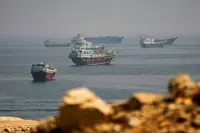
Anwar cited the safe passage of national oil company vessels through the highly contested Strait of Hormuz as a direct result of Malaysia’s diplomatic approach.
"When it comes to shipping routes, Alhamdulillah, our good relations with Iran have allowed PETRONAS vessels to pass through safely, and they will arrive in Pengerang in a few days," he said.
On April 7, Singapore’s Foreign Affairs Minister Dr Vivian Balakrishnan told Parliament that the republic would not negotiate with Iran on principle, stressing that freedom of navigation and transit is a "right, not a privilege" under international law.
Despite Malaysia’s diplomatic advantages, Anwar warned that the country cannot fully escape the economic fallout.
While ships remain safe, he said, business costs have surged due to regional instability.
"The old cost of oil secured before the war was stuck at Hormuz, and now, as it moves to Pengerang, the costs have increased.
"This is because insurance costs have surpassed 100%, and freight charges have also gone up. This means the oil that was supposed to be cheap to process in Pengerang has now become more expensive," he said.
Anwar said the global economy and Gulf states are bearing the brunt of the violence, which he stated was initiated by Israel and backed by the United States.
He also relayed a warning from the Emir of Qatar on the long-term impact on energy supplies.
"Even if the war ends tomorrow, according to the Emir of Qatar, who told me directly, it will take a minimum of three years to carry out minor repairs to allow gas operations to resume, and probably three to five years for full performance," Anwar said.
He urged the civil service and public not to be complacent despite Malaysia’s strong indicators, including high foreign investment and a stronger ringgit.
The Strait of Hormuz has become a major flashpoint following the outbreak of the US-Iran conflict in late February, when US and Israeli forces launched strikes on Iranian military and nuclear-related sites.
Although the United States and Iran recently agreed to a tentative two-week ceasefire from April 7, the situation remains volatile, with the conflict also spilling into Lebanon.