PETALING JAYA: Malaysia’s priority in the coming months is to safeguard fuel supplies by conserving stocks, stabilising distribution and reducing petrol as well as diesel use among consumers and businesses, economists say.
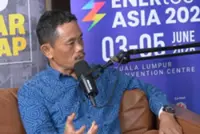
Economist Geoffrey Williams said the biggest threat is not oil prices, but the supply of petrol and diesel to consumers and businesses. He added that the Prime Minister has also assured energy supplies are sufficient until June.
“So the challenge is to conserve stocks, maintain supply and economise on use of petrol and diesel among consumers and businesses,” he said when contacted yesterday.
Williams added that both the public and private sectors could consider adopting a suitable work-from-home (WFH) policy as a measure to cushion the impact of the energy crisis.
“Enforcement of three days of WFH for half of all employees would cut petrol use by 25-30%. This would help spread out supplies,” he argued.
The quota for subsidised RON95 petrol could also be reduced to 100 litres – a move he said that would encourage behavioural changes that help conserve supplies.
“Another option for Malaysia is to consider sourcing petrol and diesel from other source countries, such as Russia, but it could be politically challenging,” he said.
He added that trying to diversify to renewable energy sources, electronic vehicles (EVs) and clean technologies is not a viable short-term option.
“Such a shift is a long-term reform. EV policy is already blocking the shift to cheaper EVs, so there is a contradiction in policy,” he said.
Iran effectively closed the Strait of Hormuz, a corridor that carries about a fifth of all global oil and liquefied natural gas flows, in response to US and Israeli airstrikes that began on Feb 28.
Oil prices have surged following the disruptions to shipping in the narrow waterway.
Centre for Market Education chief economist Alvin Desfiandi said the main concern is no longer prices, but the security and timing of fuel supply.
He said Malaysia should prioritise continuity of supply by securing additional cargoes from non-Hormuz routes, locking in alternative refined-product sources from regional hubs, and prioritising critical sectors such as public transport and logistics.
He added that Malaysia should avoid broad subsidy expansion, instead focusing on temporary, tightly targeted support to maintain labour mobility.
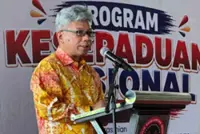
Malaysian Institute for Inclusive Development and Advancement (Minda-UKM) director Professor Tan Sri Noor Azlan Ghazali said rather than reacting in an ad hoc manner, Malaysia needs a more structured and coordinated approach to handle the impact of the ongoing situation.
“The reality is that the country must confront these challenges directly and make informed decisions based on solid data from existing agencies like Padu.
“Fiscal space is also becoming increasingly limited. Government debt levels have reduced available room for manoeuvre, making it more difficult to absorb shocks without affecting other areas of development,” he said at the “Middle East Crisis: Economic Implications, What Are Malaysia’s Next Steps?” programme held at Universiti Kebangsaan Malaysia (UKM).
He said that while there is broad support for targeted subsidies, including Budi95, their success depends on how they are implemented.