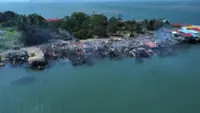
KOTA KINABALU: For the longest time ever, the cluster of water villages in Semporna looked good when viewed from above.
However, when one looks underneath the houses, they will be immediately confronted with a sea of solid waste that often makes headlines for marine pollution.
One such example is Kampung Sri Aman, where solid waste has been historically and conveniently thrown into the sea as there is no proper waste management system.
“That narrative is beginning to change through the introduction of a structured, community-based waste management system under the Semporna Waste Management Programme,” said Adzmin Fatta, a senior programme manager at Reef Check Malaysia who is based in Sabah.
In an initiative led by Reef Check Malaysia, the Semporna floating houses are now provided with scheduled waste collection, following a survey to ascertain the amount and types of waste generated with partners such as Etika Sdn Bhd, with the support from the Semporna District Office, District Council and state Tourism, Culture and Environment Ministry.
Covering 80 households and some 656 residents, the study revealed that the village generated an estimated 230.31kg of waste per day, with over 95% of these households not having proper access to waste bins.
Building on this data, Reef Check Malaysia and its partners undertook a series of community engagement efforts in February and March involving over 80 community members to co-develop a solution, which then led to the formation of a Village Waste Management committee comprising 10 representatives along with the commitment from 50 households to participate in the pilot phase.
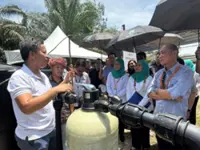
The preparatory phase also included distributing colour-coded waste bins, installing communal collection points, and ongoing awareness efforts to introduce the concept of household waste segregation following its launch on March 13.
Participants were required to segregate their waste and deliver it to a designated collection point three times a week, with a local coordinator appointed to manage the process, including weighing waste by category, recording household participation and monitoring the level of segregation using a standardised logbook system.
In a statement, Reef Check said early results from the first phase of implementation between March 16 and 25 showed promising signs.
The largest proportion of waste collected consisted of paper, boxes and cloth, accounting for 42.1% of the total, followed by plastic waste (33.5%), and plastic bottles and glass (21.4%).
These figures suggest that households are beginning to adopt segregation practices, particularly for dry and recyclable materials.
However, sanitary waste, including disposable diapers and pads accounted for only 3.1% of the total collected, significantly lower than expected based on the initial audit, with this gap likely influenced by stigma and discomfort associated with handling such waste in public.
Adzmin said the initiative demonstrates that meaningful solutions must address both systems and people, but emphasised that the findings from the waste audit clearly showed the issue was not a lack of willingness within the community, but rather the absence of access and structure.
“By introducing a practical and community-driven system, the programme is creating a foundation for long-term change while offering a model that can be adapted in other water villages facing similar challenges,” he said.
“This is more than just a waste collection system – it’s about restoring dignity, ownership and pride within the community,” said Adzmin, adding that this model can be used for other coastal communities in Sabah and beyond.
“For too long, water villages have been associated with pollution and neglect. What we are seeing in Kampung Sri Aman is proof that with the right system, support and community leadership, these narratives can change,” he said.