PETALING JAYA: Celebrating Chinese New Year this year is special for Prof Datuk Dr Taufiq Yap Yun Hin as the lunar new year coincides with the arrival of Ramadan.

He said the Chinese New Year celebrations and Ramadan observances allow both Muslims and non-Muslims to witness how faith and culture can coexist, reinforcing the message that Malaysia embraces its diverse community.
Taufiq said Macma has planned a programme in Kota Kinabalu that merges the spirit of Chinese New Year and Ramadan on Feb 28.
The event, which will be officiated by Sabah’s deputy chief minister, will feature an iftar alongside traditional lunar new year experiences like lion dance performances, cultural shows.
Taufiq also said that, as Islam celebrates diversity, there is no issue with Chinese Muslims wishing people a Happy New Year or Gong Xi Fa Cai (which is simply a wish for prosperity) while practicing their faith.
Such gestures, he said, reflects how Islam can adapt to different cultures in Malaysia and bring peace and harmony to society.
Taufiq also highlighted the importance of embracing uniquely Malaysian traditions, such as yee sang.
“It (yee sang) actually originated in Malaysia, not China. It was developed in Seremban and is now recognised by the National Heritage Department. We should embrace it as part of our Malaysian heritage,” he said.
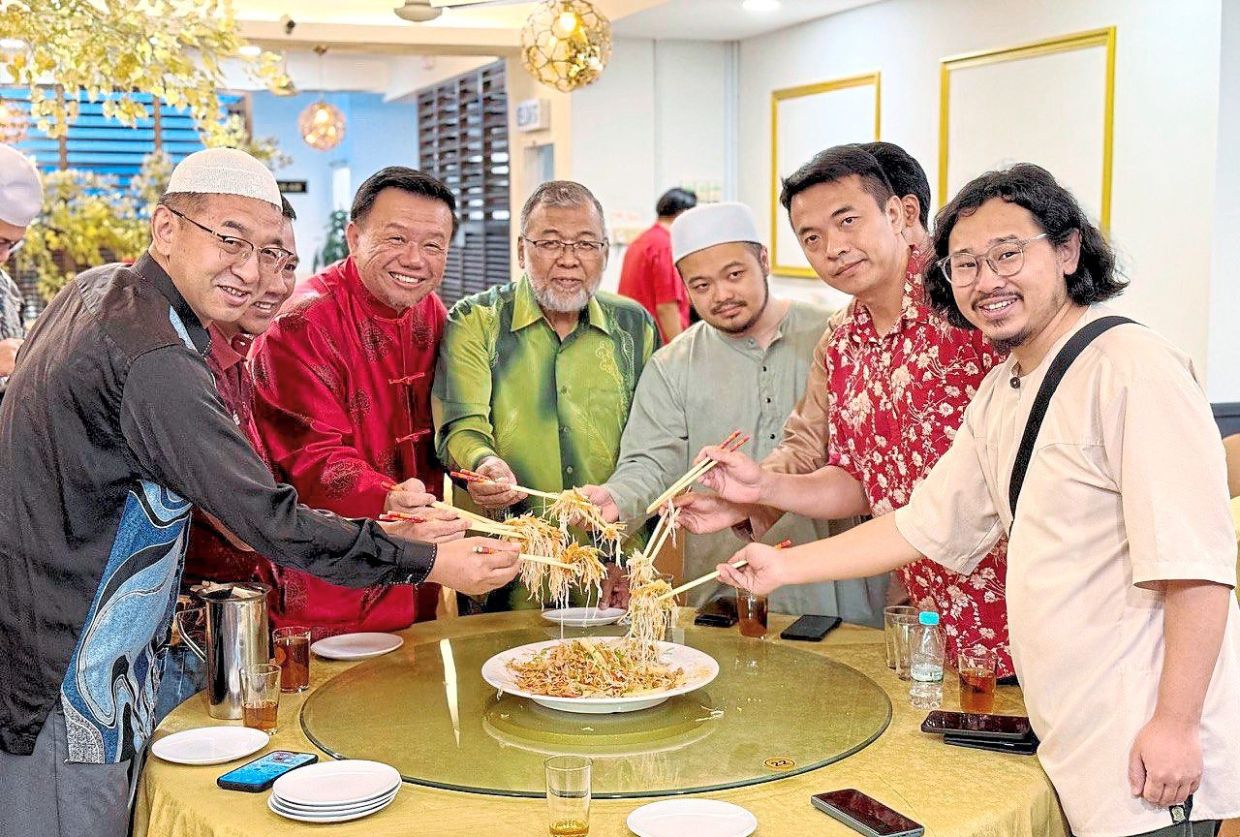
Beyond cultural unity, Taufiq pointed out the economic significance of the overlapping festive season with strong consumer spending.
“This benefits not only Malays but also the Chinese community,” he said, while reminding Malaysians to be wise in managing their finances.
Associated Chinese Chambers of Commerce and Industry of Malaysia president Datuk Ng Yih Pyng said this year is a special and rare period with Chinese New Year and the beginning of Ramadan occurring almost back to back, reflecting Malaysia’s unique social rhythms and rich cultural landscape.
“During this time, my plans involve not only fulfilling ongoing responsibilities, but also placing greater emphasis on engagement and outreach with communities of all backgrounds,” Ng said.
ALSO READ: KTMB offers 20% ETS discount for CNY, early Ramadan
This is to ensure that “societal activities continue smoothly ... amid both festive and religious observances”, he said.
“The ability of different communities to respect and support one another during significant cultural and religious occasions is one of our nation’s greatest strengths.
“Such unity and coexistence do not happen automatically, they require constant care and collective effort,” he added.
From a sociological perspective, Prof Datuk Dr Awang Azman Awang Pawi said the overlapping of events such as Chinese New Year and Ramadan functions as a space for symbolic interaction.
The National Unity Advisory Council member said the communities celebrating the lunar new year and welcoming Ramadan both share core values of kinship, empathy, self-discipline and social solidarity.
“For instance, Malay families attending Chinese New Year open houses or non-Muslims respecting the fasting month is not merely etiquette but a form of social recognition that is vital in building a multi-identity society,” he said.
In Malaysia’s plural society, this overlapping calendar creates what he calls a “social proximity effect”, making communities closer as they are directly exposed to the practices and symbols of different religions and cultures.
“Structurally, this strengthens social capital, particularly bridging social capital and networks that cross ethnic and religious boundaries,” he added.
“These experiences also help reduce prejudice through positive face-to-face interaction that can diminish stereotypes between groups.
“When Malaysians share meals, break fast together with non-Muslim friends, or respectfully wish Gong Xi Fa Cai, they are building social trust,” he said.
Buddhist Chief High Priest of Malaysia, Datuk K. Sri Dham-maratana Nayake Maha Thera, said Malaysia is fortunate to be a multiracial and multireligious country, which he described as a source of strength for its people.