GEORGE TOWN: Despite 100 years since the founding of Harbin Medical University (HMU) in China by Penang-born physician Dr Wu Lien-Teh, his legacy continues to receive international recognition.
Penang Tourism and Creative Economy Committee chairman Wong Hon Wai said Dr Wu’s legacy remains a living bond between the state and Harbin, linking Malaysia and China through shared achievements in medicine, epidemic control and public health innovation.
“Founded a century ago, Harbin Medical University carries forward its mission across generations, and its origins are inseparable from the life and work of Dr Wu, who was born in Penang.
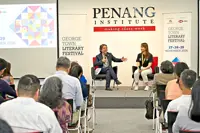
“He later devoted more than three decades of his career to public health in China,” Wong said in his welcoming address at the “Dr Wu Lien-Teh’s Spirit: A Living Bond Between Penang and Harbin” session held here yesterday.
Dr Wu was born in Penang in 1879 and later founded HMU in 1926. He passed away in 1960 at the age of 81.
He was the first ethnic Chinese to obtain a Doctor of Medicine degree from the University of Cambridge before going on to gain global prominence during the pneumonic plague outbreak in Northeast China between 1910 and 1911.
The plague claimed about 60,000 lives before Dr Wu helped bring it under control.
Following the epidemic, Dr Wu continued his public health work in China and went on to found Harbin Medical College.
He returned to Penang in 1937 after his residence in Shanghai was destroyed during the war, ending a 30-year career in China.
In recounting Dr Wu’s achievements, Wong said it was Dr Wu who identified the outbreak in China as the pneumonic plague and introduced a series of science-based containment measures.
He added that this led Dr Wu to design a simple protective gauze mask, later known as the Wu mask, which is widely regarded as the forerunner of today’s medical masks and N95 respirators.
“At a time when there was little understanding of droplet transmission, his insistence on personal protection and quarantine measures helped stop the epidemic,” Wong said.
Also critically implemented by Dr Wu was his decision to implement cremation to eliminate sources of infection, despite strong social resistance.
This proved successful in containing the outbreak in China by March 1911, Wong added.
He said that Dr Wu’s contributions are well honoured in Penang, including the establishment of the Dr Wu Lien-Teh Society of Penang in 2010, as well as the naming of Jalan Dr Wu Lien-Teh and Taman Wu Lien-Teh.
He also said the bronze statue of Dr Wu at the Penang Institute, presented by HMU in 2014, symbolised the enduring ties between the university and Penang.
During the session, HMU students and delegates thanked the medical institution, now one of the best in the area.