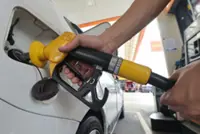
KLANG: Technology-enabled enforcement would be the way forward to detect foreign-registered vehicles that fill up with subsidised RON95 meant exclusively for Malaysians.
This was suggested by the Petroleum Dealers Association of Malaysia (PDAM) on Thursday (Jan 29) in response to the government’s move of initiating action against drivers of foreign-registered vehicles who misuse subsidised RON95 petrol.
PDAM also said in a statement that it was concerned over reports of staged images, fake foreign plates and extortion threats, which will adversely affect enforcement initiatives.
“Some dealers have lodged police reports in relation to such conduct," it said.
Domestic Trade and Cost of Living Minister Datuk Armizan Mohd Ali had said on Wednesday (Jan 28) that the government was drafting new regulations to prohibit foreign-registered vehicles from buying subsidised RON95 fuel at petrol stations nationwide.
He had added that the current legal framework under Regulation 12A only allows enforcement action against petrol station operators but not against buyers coming in foreign-registered vehicles.
PDAM’s statement also said that if the technology-based enforcement was not feasible, enforcement must be targeted at high-impact subsidy leakages, particularly organised syndicates and large-scale diversion activities.
“PDAM is not asking to weaken enforcement but for enforcement that is fair, proportionate, practical, and aligned with real economic impact.
“Dealers deserve fairness. The public deserves accountability," said the statement.
PDAM said the authorities must penalise petrol station operators who knowingly and deliberately sell subsidised fuel to those who are not entitled.
However, the association pointed out that petrol stations were mostly self-service and dealers do not have the ability to carry out real-time verification of every vehicle passing through.
“Enforcement responsibility must therefore rest primarily with the authorities and systems, and not be shifted back onto dealers by default,’’ said the statement.
It added that enforcement action takes place usually after videos of vehicles or CCTV footage go viral, and by that time, the foreign-registered vehicles have already exited the country.