



PETALING JAYA: The recent raid that led to the rescue of more than 100 protected turtles in Penang has once again exposed how illegal wildlife activities continue to thrive in Malaysia despite tough laws and heavy penalties.
Animal rights lawyer Rajesh Nagarajan said wildlife crime in Malaysia is overwhelmingly linked to organised and often transnational syndicates, rather than isolated individuals.
“These are coordinated operations involving financing, storage facilities, transport routes and international buyers,” he said when contacted.
Despite this, Rajesh said enforcement efforts often stop at low- level arrests.
“The result is a pattern where small players are caught while syndicate leaders and financiers remain untouched,” he said, describing enforcement as reactive rather than intelligence-led.
Rajesh, who is also Pertubuhan Pelindung Khazanah Alam Malaysia president, questioned whether high demand alone should be blamed for wildlife crime, pointing to what he described as weak follow-through after major seizures.
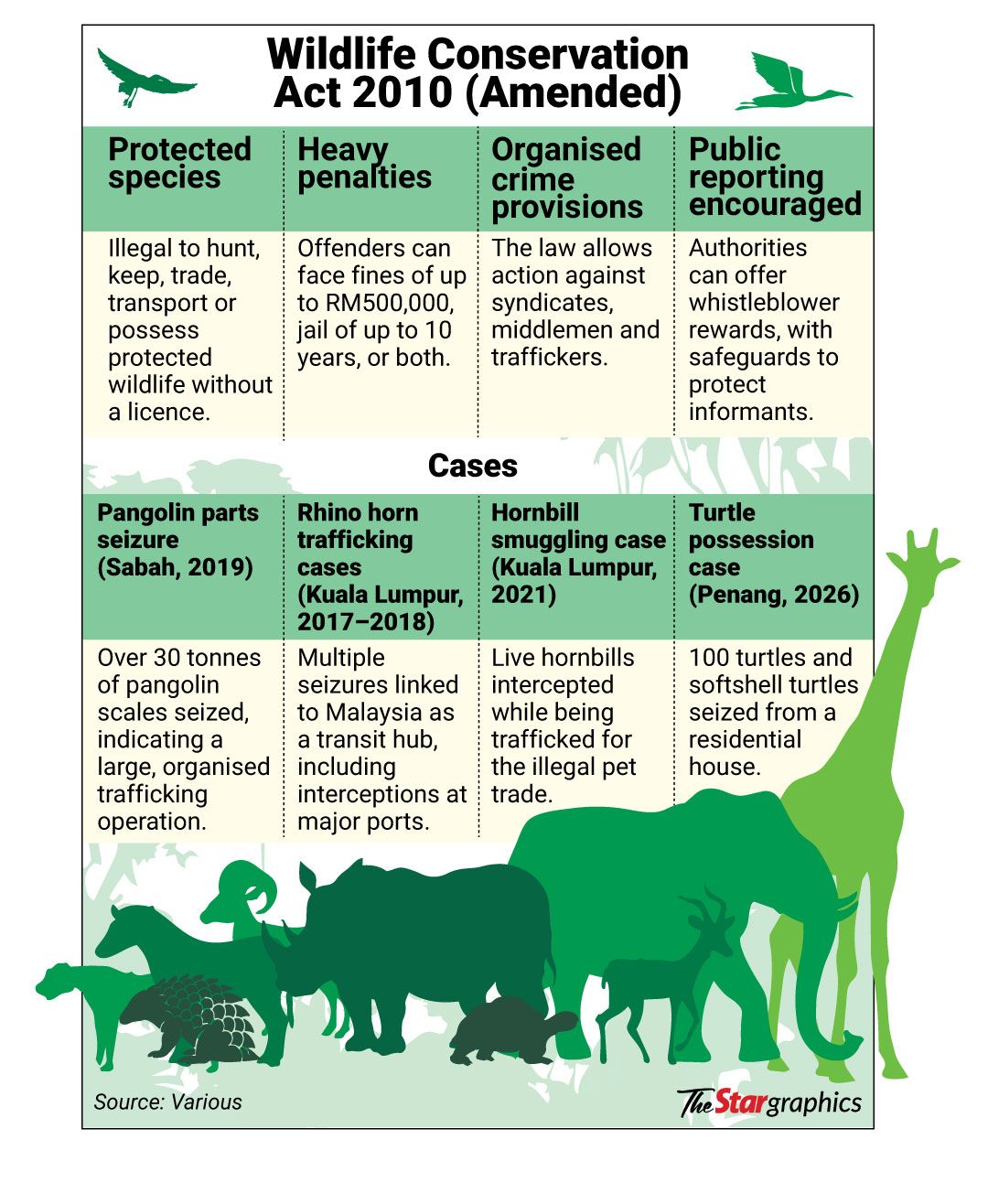
“In 2019, more than 30 tonnes of pangolin parts were seized in Sabah, one of the largest such cases globally. Yet there has been very limited public information on prosecutions matching the scale of that crime,” he said.
He also cited similar concerns over rhino horn seizures and live animal trafficking cases, where seizures were publicised, but court outcomes were rarely disclosed.
“This creates the illusion of action while failing to deliver real deterrence. Syndicates learn that seizures are a temporary inconvenience, not an existential threat,” he said.
Rajesh added that the prosecution of Malaysian wildlife trafficker Anson Wong by the United States in 2017 highlighted serious domestic enforcement gaps.
“That a foreign country had to step in is not a success story, but a damning indictment of local enforcement,” Rajesh noted.
Sahabat Alam Malaysia president Meenakshi Raman echoed the view that wildlife trafficking is driven by organised networks with significant resources.
“It is unlikely that individuals acting alone could identify, target and traffic wildlife that fetches high prices in the illegal market.
“Authorities must prioritise intelligence gathering and strengthen cross-border cooperation to dismantle these syndicates,” she said.
Meenakshi added that demand for wildlife products continues to undermine enforcement, as penalties often do not reflect the massive profits of the trade.
She said that beyond reporting cases, the public can play a more proactive role by supporting awareness campaigns, rejecting wildlife products and helping monitor online platforms where illegal sales occur.
“The fight against wildlife crime cannot rely on enforcement alone. It requires accountability, public awareness and a sustained commitment to protect Malaysia’s biodiversity,” she said.
Wildlife and National Parks Department (Perhilitan) director- general Datuk Abdul Kadir Abu Hashim said investigations by the department have shown that some foreigners arrested in wildlife-related cases may not be acting alone.
“Based on our intelligence and investigations, there are cases where foreigners arrested for wildlife crimes are acting as middlemen within smuggling networks,” he said in an interview, adding that illegal wildlife possession and smuggling remain difficult to eradicate.
“The high demand and lucrative value of wildlife in the illegal market continue to drive individuals and syndicates to engage in these activities despite strict enforcement.”
Abdul Kadir added that some segments of society still believe wildlife has medicinal value, which keeps demand high, while changing smuggling methods also pose challenges to enforcement agencies.
On public involvement, he said Perhilitan already has a reward scheme for informants to encourage tip-offs on wildlife crimes.
“There are procedures in place to protect the identity of informants, prevent abuse and ensure the accuracy of information received,” he said, adding that public cooperation is crucial given the department’s limited manpower.
Under the Wildlife Conservation Act 2010, offences involving protected species carry fines of up to RM500,000 and a jail term of up to 10 years.

