
PETALING JAYA: Malaysia’s plan to establish its first National Subfertility Centre marks an important step in responding to declining fertility rates, say interest groups.
Federation of Reproductive Health Associations Malaysia executive director Eden-Joy Kalom said that such a national centre is significant and timely, given that Malaysia’s total fertility rate has remained below the replacement level for years.
Eden-Joy said the centre could function as a one-stop hub that improves coordination of care while also strengthening research, ethical data collection, capacity-building and evidence-based policy planning to support long-term population health.
However, she said equal attention must be given to psychosocial support.
“Infertility affects mental well-being and relationships, not just physical health.
“Counsellors and mental health professionals should be an integral part of fertility care,” she said when contacted.
She also stressed the importance of affordability, inclusivity and ethical governance.
“Fertility services can be costly, so the ministry must avoid gatekeeping or limiting access to higher-income groups.”
Clear guidelines on patient eligibility, informed consent, data protection, embryo handling and the use of assisted reproductive technologies are essential to maintain public trust, she added, alongside transparency, accountability and sufficient workforce capacity.
While the centre can contribute to addressing infertility, Eden-Joy cautioned against viewing it as a standalone solution to Malaysia’s falling fertility rate.
“Fertility decisions are shaped by broader socioeconomic factors such as financial security, housing, work-life balance and childcare support.
“Medical services must be complemented by supportive policies and public education to deliver meaningful and lasting impact.”
Other health experts were also of the view that the success of the centre will depend on whether it delivers balanced, accessible and well-governed care.
The Women, Family and Community Development Ministry has announced that earthworks of the centre, to be built in Selangor, will begin this year.
It is expected to open by 2030 and to be run by the National Population and Family Development Board (LPPKN). The centre will provide treatment, research and training under one roof.
Men’s health specialist Dr Mohammad Imran Basri said the plan for the centre signals progress in recognising infertility as a public health issue rather than a purely private concern.
However, he cautioned against approaches that are too narrowly focused.
“One of the key risks in fertility care is an overly obstetrics- and gynaecology-centric approach.
“While women’s health is central, male factors contribute to a significant proportion of subfertility cases and are often assessed too late,” he said.
Dr Imran said the centre must adopt a multidisciplinary model from the outset, ensuring male and female fertility are evaluated early and in parallel.
Dedicated andrology services, advanced laboratories and clear male assessment pathways, he added, should be part of the core structure rather than an afterthought.
He warned against an overly IVF-driven model, noting that assisted reproductive technology, while valuable, should not automatically be the first step.
“Early assessment, lifestyle modification, hormonal optimisation and treatment of underlying medical conditions can improve natural conception rates and also lead to better outcomes if assisted reproduction is later required,” he said.
From an access and service delivery perspective, obstetrician-gynaecologist Dr Kannappan Palaniappan said the national centre could help address a long-standing gap in fertility care.
“Fertility is a rising concern as our fertility rates continue to drop.
“Most fertility services are in the private sector and government-linked facilities are limited due to cost.
“If the national centre caters to middle- and lower-income groups, then it will definitely be beneficial,” he added.
Dr Kannappan said Malaysia remains in the early stages of developing a public fertility care ecosystem compared with more developed Asian countries, which have invested more systematically in such services.
“If the centre is designed to offer services to all Malaysians and not just paying customers, then we are probably among the pioneers in the region.”
He advised couples facing difficulties in conceiving to seek fertility assessments early, either through government or private facilities, noting that delays can limit treatment options over time.
Beyond clinical services, reproductive health advocates said the centre’s broader role in research, ethics and policy planning will be crucial.
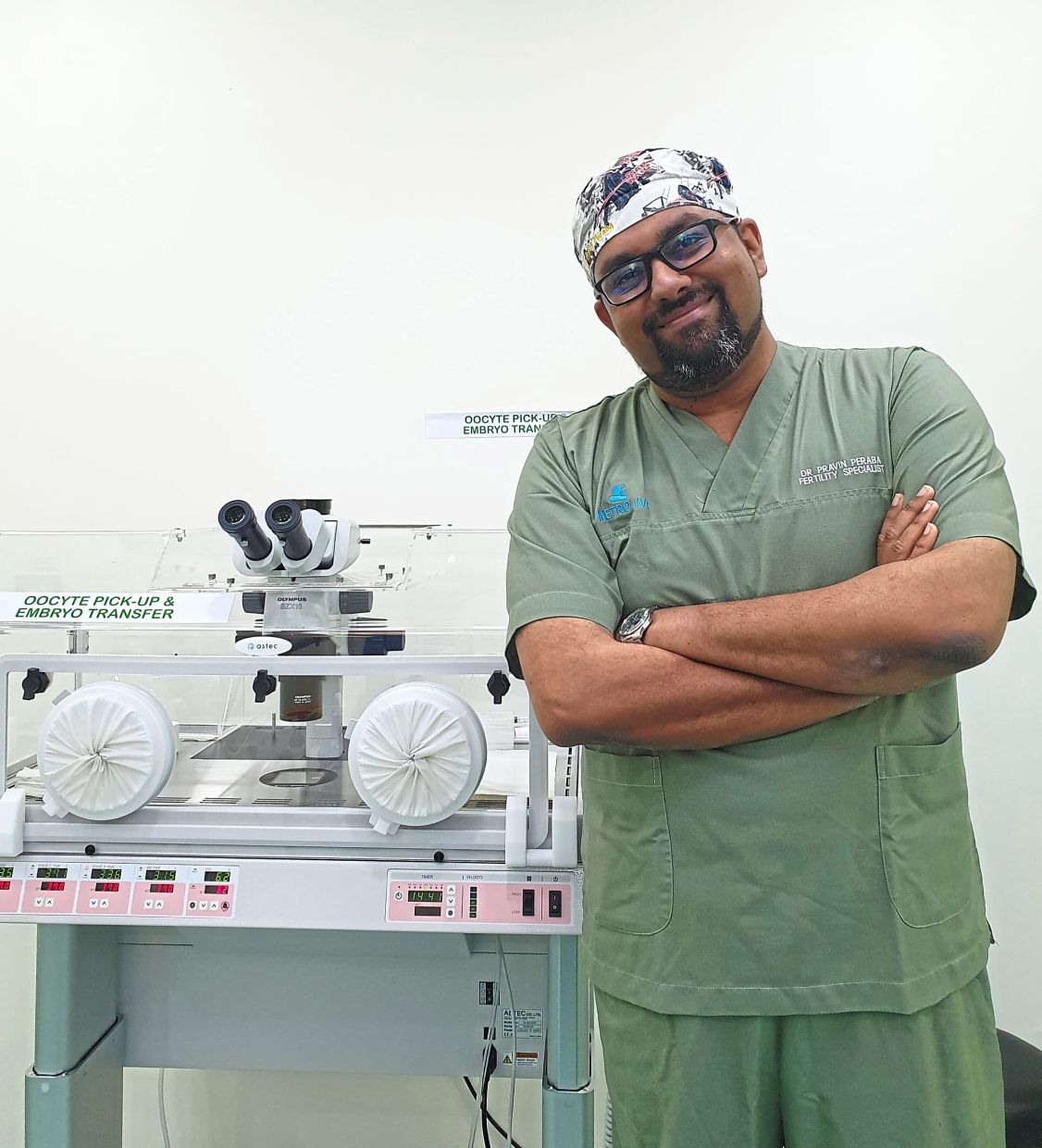
From a policy and structural perspective, Dr Pravin Peraba, president of the Malaysian Society of Assisted Reproduction Technology, said Malaysia’s TFR reflects a long-term decline.
“At this rate, couples cannot produce enough children to replace themselves,” he said.
He noted that nearly 85% of the 12,000 IVF cycles in 2024 were performed in private centres, highlighting the need for a national facility to improve accessibility.
Dr Pravin, a member of LPPKN, said the centre should be a full-service, one-stop facility.