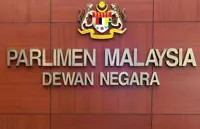
KUALA LUMPUR: Website access blocks imposed by the government do not involve media organisations, but are confined to content that clearly violates the law, such as gambling and pornography, says Datuk Fahmi Fadzil.
The Communications Minister said access restrictions are a last-resort measure implemented cautiously under existing laws and do not target online news portals or media organisations, in line with the government’s policy of upholding media freedom.
"Such action is rarely taken except for certain specific websites. At present, almost all websites ordered to have their access blocked are linked to gambling, pornography and activities that contravene the law, not media content,” he said during question time in the Dewan Negara on Thursday (Dec 18).
He was responding to a supplementary question from Senator Datuk Ahmad Ibrahim on the government’s stance in safeguarding media freedom, particularly involving foreign media portals, to prevent misuse for the dissemination of unsubstantiated or misleading reports, as well as mechanisms for swift response.
Fahmi stressed that the government does not impose licensing or regulatory controls on online media, whether local or foreign, in line with the principle of preserving freedom of expression and media freedom within the digital ecosystem.
However, he said action can be taken if published content is found to misuse telecommunications network services under Section 233 of the Communications and Multimedia Act 1998 (AKMM).
He added that the provision includes enforcement powers vested in the Malaysian Communications and Multimedia Commission (MCMC), but its application is subject to complaints and legal assessment, and not based on differing views or criticism of government policies.
Fahmi added that AKMM also contains extraterritorial provisions, allowing action to be taken against parties outside the country if the content in question has an impact on Malaysia.
Responding to an original question from Senator Amir Md Ghazali on efforts to ensure media freedom moves in tandem with journalistic ethics, Fahmi said both aspects are strengthened through clear policies and laws, cooperation with the Malaysian Media Council (MMC), as well as the provision of guidelines and professional training for media practitioners.
He said the MMC plays a key role in developing ethical and responsible journalism standards, including drafting codes of conduct for both mainstream and independent media practitioners, to enhance professionalism and uphold media freedom in the country.
According to Fahmi, these efforts are further reinforced through the empowerment of the Malaysian Journalists’ Code of Ethics 2024, which emphasises the challenges of digital reporting, including the spread of fake news and content manipulation using artificial intelligence (AI), in line with principles of source verification, fair reporting and a clear separation between facts and personal opinions.
On Malaysia’s media freedom ranking and criticisms raised by international parties, he said media freedom indices are relative in nature, but the government will continue to uphold and safeguard the principle of media freedom. – Bernama