Anwar: Thailand, Cambodia must return to negotiating table
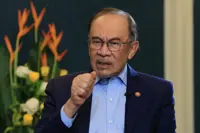
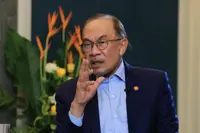
KUALA LUMPUR: Malaysia has urged Thailand and Cambodia to cease all forms of hostilities and refrain from any further military action, including the deployment of armed troops to the front lines, says Prime Minister Datuk Seri Anwar Ibrahim.
He said the appeal was conveyed through separate telephone conversations with Thailand’s Prime Minister Anutin Charnvirakul and Cambodia’s Prime Minister Hun Manet, following a telephone call from United States President Donald Trump.
“To support efforts to de-escalate tensions and enhance transparency, Malaysia has requested the deployment of the Asean Observer Team (AOT) led by Malaysian Chief of Defence Force, General Tan Sri Mohd Nizam Jaafar, to monitor the situation on the ground.
“This mission will also be supported by satellite monitoring provided by the United States Government, commencing at the same time,” he said in a Facebook post yesterday, Bernama reported.
According to Anwar, findings from the ground and satellite monitoring will be compiled by the AOT and presented at the Asean Foreign Ministers’ Meeting scheduled for Dec 16.
He said the report would provide an objective overview of the current situation, including the positions of both parties, in the interests of accountability, confidence-building and the preservation of regional peace and stability.
“Malaysia remains focused on working closely with Asean partners and the international community to ensure that dialogue, restraint and diplomacy continue to be the primary foundations for addressing any regional tensions,” he said.
Besides the Cambodia-Thailand conflict, he and Trump also discussed bilateral relations as well as other global issues of mutual interest during the phone call, Anwar said.
“Regarding the tension on the Cambodia-Thailand border, I explained Malaysia’s role in urging both countries to remain calm and return to the negotiating table through dialogue as well as bilateral and Asean mechanisms.
“Malaysia remains ready to assist efforts to defuse the situation, protect civilians and restore regional stability in line with the Asean spirit of good neighbourliness,” he said.
The Prime Minister said that as Asean Chairman, Malaysia would convene a Special Meeting of Asean Foreign Ministers in the near future to assess the situation and support measures to defuse tensions in the region.
“I also express my appreciation for the active engagement of the United States with Asean and the confidence given to Malaysia as the Asean Chairmanship 2025,” said Anwar.
The Cambodia-Thailand border conflict, which has lasted for a century, flared up again in July and led to a five-day military clash.
The two countries then agreed to a ceasefire in Kuala Lumpur on July 24 before signing the Kuala Lumpur Peace Accord on Oct 26 during the 47th Asean Summit, witnessed by Anwar as Asean Chairman and Trump.
However, fighting has recently flared up again, causing several deaths and thousands of people to be displaced.
In a Facebook post, Hun Manet said Cambodia welcomes and supports Anwar’s initiative for the ceasefire, which will be monitored by the AOT with the participation of the US.
He said he had spoken with Anwar on Dec 11 and with Trump on the night of Dec 12, with both conversations focusing on achieving a ceasefire and restoring peaceful dialogue between the two neighbours.
Hun Manet said he thanked both leaders for their continued efforts to support long- term peace between Cambodia and Thailand and reaffirmed that Cambodia remains committed to resolving disputes by peaceful means, in line with the spirit of the Kuala Lumpur Joint Declaration.
Referring to the afternoon clash on Dec 7, which triggered the latest round of hostilities, Hun Manet said he had proposed that the United States and Malaysia use their military and intelligence capabilities – such as satellite imagery taken at the time of the incident and in the 24 hours that followed – to determine clearly which side fired first.