
A PADI cultivation project in Tawang Baa, Padawan, is emerging as a model for community-centred agricultural innovation in Sarawak.
Funded by Yayasan Hasanah and implemented by the Sarawak Skills Development Centre, the project is supported by the state Education, Innovation and Talent Development Ministry (MEITD), the state Food Industry, Commodity and Regional Development Ministry, Sarawak Tourism Board and the state Agriculture Department.
This multi-agency cooperation reflects a shared vision to advance sustainable agricultural practices while uplifting the socioeconomic well-being of rural communities across the state.
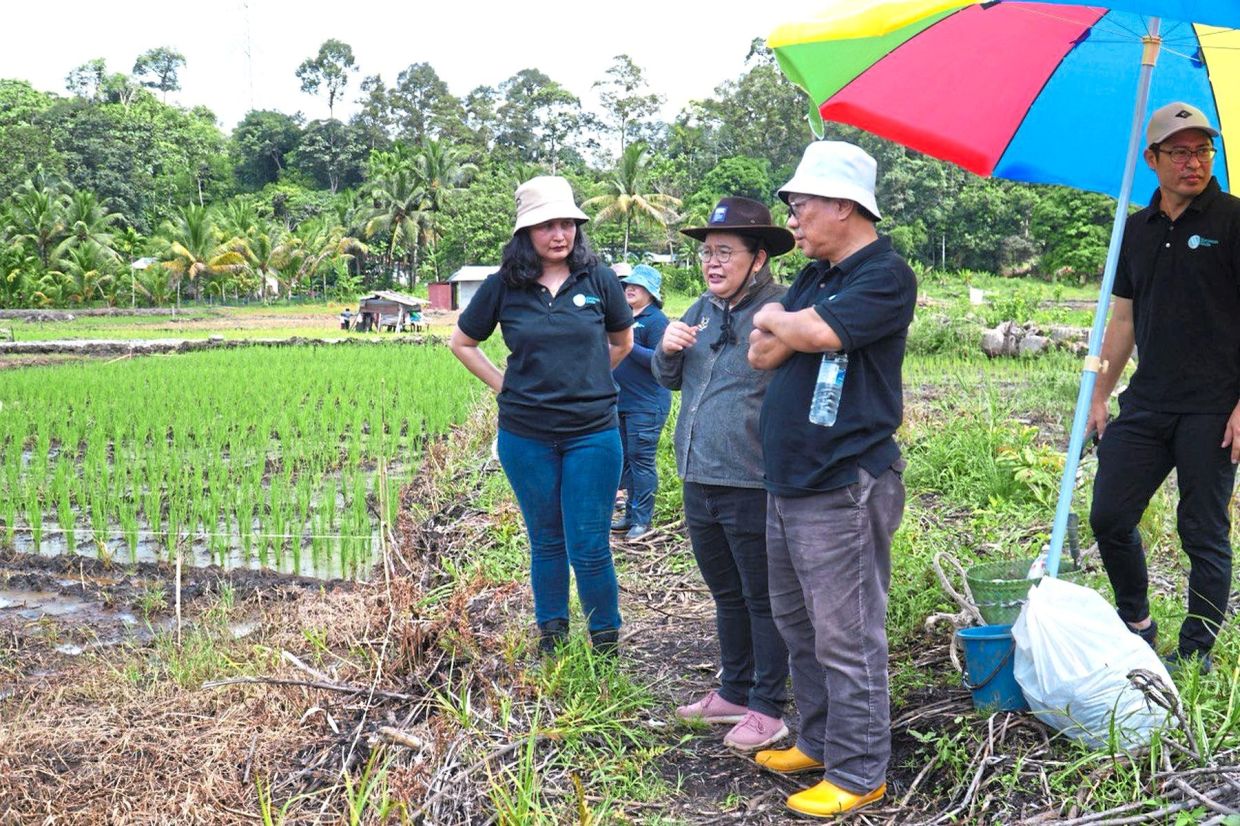
A recent working visit by MEITD deputy permanent secretary Anielia Siam assessed the project’s development, impact and future potential in strengthening sustainable agriculture and enhancing rural livelihoods.
Discussions with local stakeholders focused on local challenges, training needs and collaborative pathways to boost the project.
Sarawak Skills described the visit as an important milestone as the project enters its next phase, with stakeholders reaffirming their mission to strengthen rural development.
“The project is more than just agricultural development,” said Sarawak Skills executive director Hallman Sabri.
“It reflects a commitment to empower rural communities through knowledge, skills and sustainable practices.”
“We are proud to work alongside Yayasan Hasanah, government agencies and local leaders to ensure the project not only thrives but also becomes a model for other communities,” he said during the visit.
“By equipping farmers with modern cultivation techniques, improving productivity and fostering economic opportunities, we are laying the groundwork for long-term resilience and prosperity in Tawang Baa and beyond.”
Hallman added that the vision is to see the local community flourish not only in agricultural output but also in confidence, capability and economic independence.
“This initiative demonstrates what can be achieved when the public and private sectors unite with local communities for a shared purpose,” he added.
“We are committed to continuing our support, providing training and ensuring that the benefits of this project are sustainable for generations to come.”
Village head Punet Siet commended the project’s positive impact on the community, saying it had improved their agricultural knowledge and farming capabilities.
“It has also brought renewed hope to local families,” he said.