
A SHORT 23km drive from Sarikei town along the Pan Borneo Highway brings travellers to what was once one of central Sarawak’s hidden treasures – the Sebangkoi Forest Park.
Framed by towering trees and the gentle murmur of forest streams, this once-vibrant park offers weary travellers a refreshing pause amid nature’s embrace.
But time has not been kind to Sebangkoi. Established in 2003, the park now bears the quiet scars of neglect.
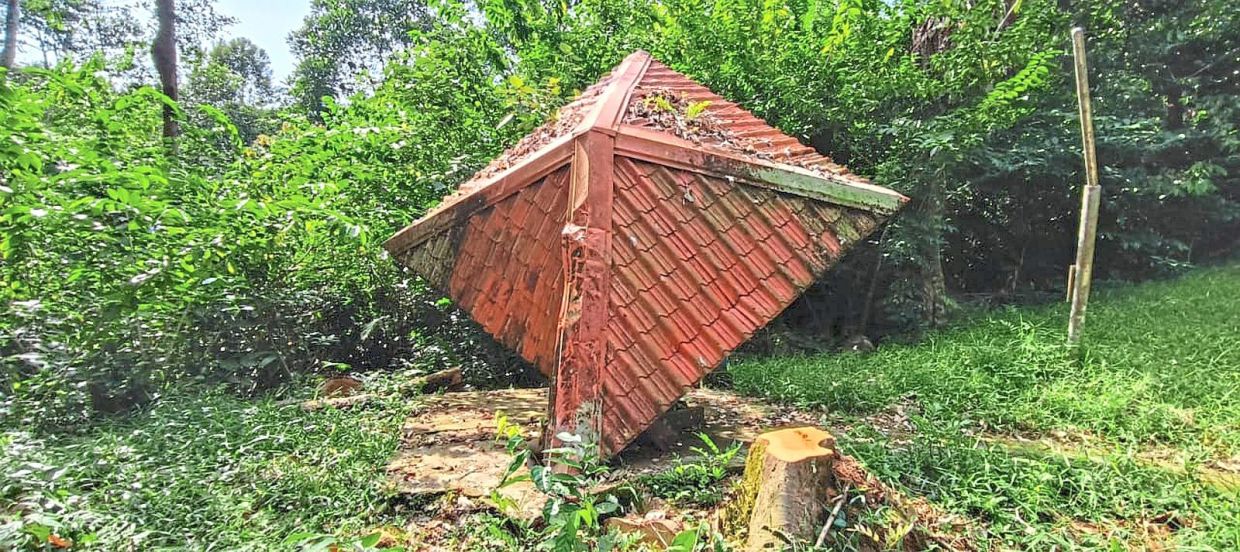
Its charm lingers, but so do the signs of age – fading paint, broken walkways and deserted gazebos that tell stories of better days.

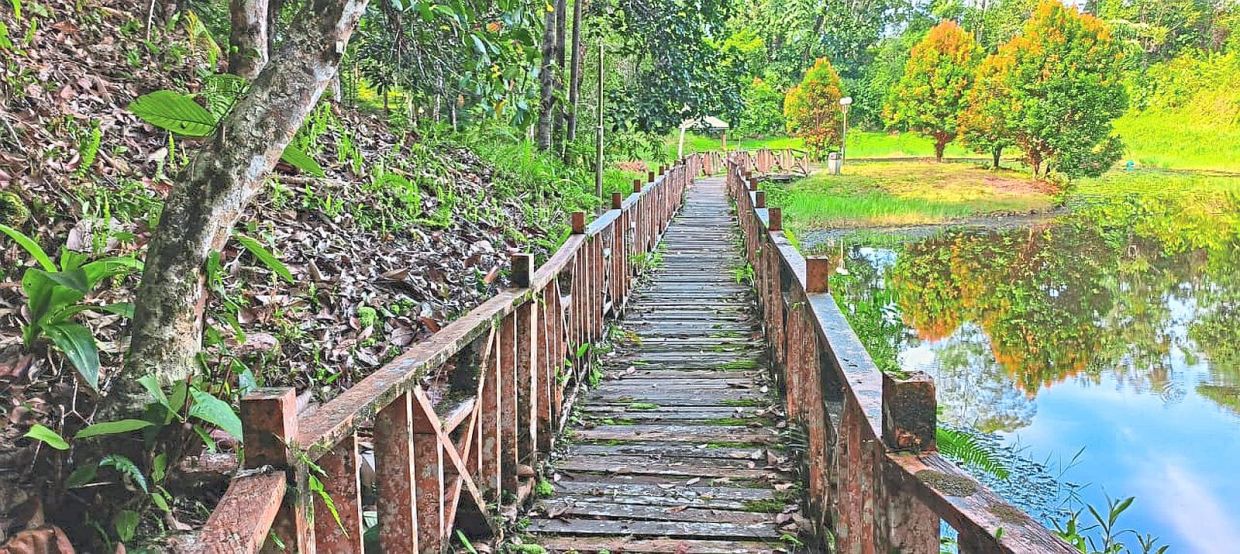
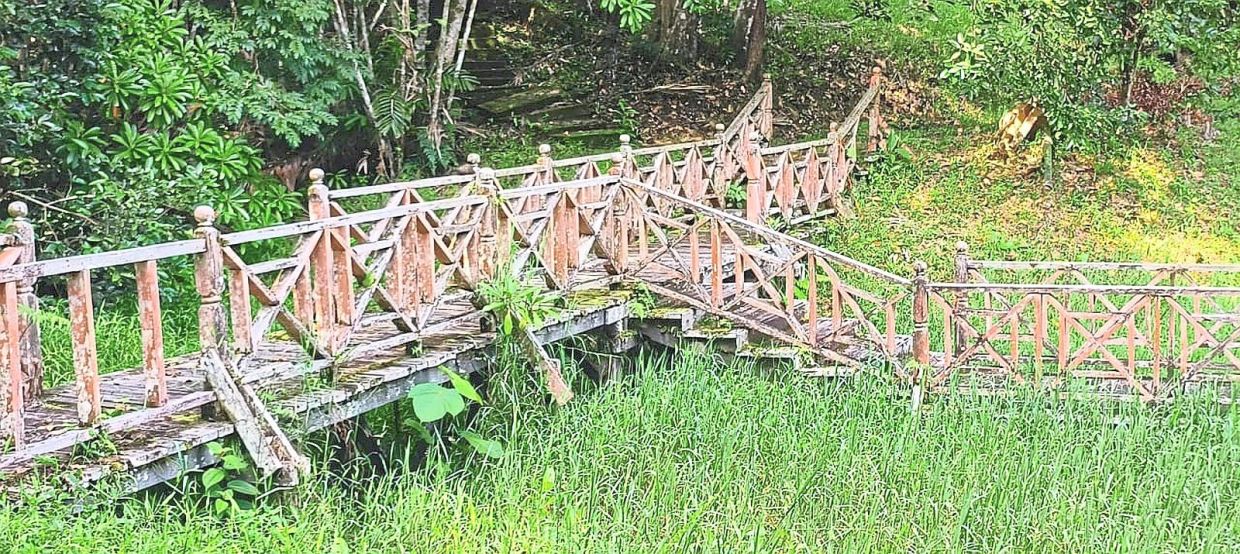
The wooden walkway, once sturdy and inviting, now shows clear signs of decay. The planks are weathered and streaked with moss, their colour dulled by years of rain and humidity.
Some of the railings have collapsed; others lean precariously, hinting at the toll of time and lack of upkeep.
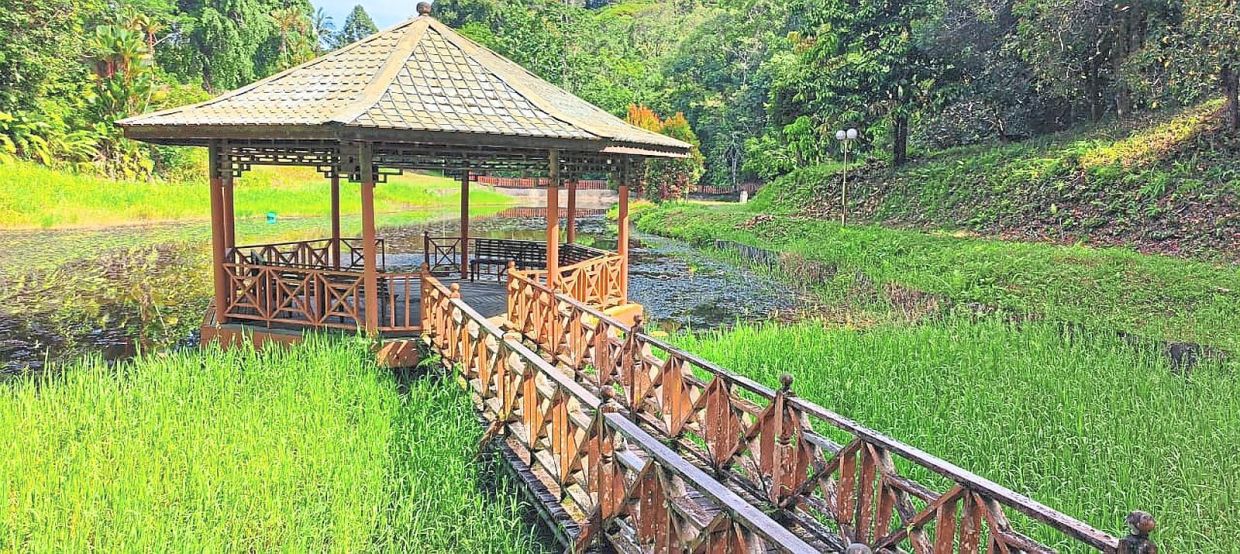
In the main pond, a gazebo stands surrounded by weeds, its reflection broken by ripples of neglect.
The animal statues – a horse, a giraffe and a hornbill – still stand guard, though their colours have long faded under the tropical sun.
Those who once visited Sebangkoi remember it fondly: the picnics beneath the trees, the jungle treks that led to cascading waterfalls, the cool dips in the river’s clear waters and the laughter of families enjoying the outdoors.
The nearby resort offered visitors a chance to spend the night close to nature – an experience many still recall with nostalgia.
The park was more than a tourist destination. It was a living classroom, a sanctuary where the Department of Agriculture cultivated over 300 species of herbs and fruit trees from within and beyond Sarawak.
Sebangkoi once boasted a range of facilities – guesthouses, playgrounds, barbecue pits, bridges, toilets, campsites, lakes, waterfalls, round-the-clock electricity and parking spaces.
Today, many of these lie in disrepair, their faded glory a reminder of how swiftly nature reclaims what is neglected.
Yet, despite its decline, Sebangkoi Forest Park remains a place of quiet beauty. The air is still fresh, the forest still whispers and the sense of calm endures – as though waiting for someone to care again.
During a recent visit, this writer found that while the park’s heart still beats, it is in dire need of restoration.
All hope is not lost, however. The authorities are aware of the park’s condition – and perhaps, with time and care, Sebangkoi Forest Park may once again bloom into the natural haven it was meant to be.
The Sarawak Forest Department is embarking on an ambitious mission to transform this tranquil reserve into a vibrant ecotourism and educational hub – a move that could put Sebangkoi on the map as a must-visit destination for nature lovers and researchers alike.
Leading the initiative is Sarawak Forest Department director Datuk Hamden Mohammad, who revealed that RM670,000 has been allocated by the federal government to upgrade key facilities in the park.
The improvements, which began in September, include refurbishing toilets, verandas and other amenities to make the park more comfortable and inviting for visitors.
“This allocation is just the beginning,” Hamden said at the Sebangkoi Forest Park scientific expedition seminar recently.
“Work is already under way and we expect completion by January 2026. Our aim is to make Sebangkoi a vibrant place that the public can enjoy and be proud of.”
But the vision stretches far beyond simple upgrades.
Hamden envisions Sebangkoi as a living classroom – a place where conservation, education and recreation meet.
Plans are already in motion to establish the park as a seed production area for forest restoration as well as a forest training centre offering facilities for team-building, environmental education and tree identification programmes.
“We want Sebangkoi to be a space where people can reconnect with nature and understand the importance of our forests,” Hamden explained.
The scientific expedition, held from Feb 19 to March 2, 2024, added even more weight to this vision.
Themed Exploring the Beauty of the Forest, the expedition brought together a team of researchers to uncover the park’s ecological wealth.
Over two weeks, scientists catalogued species of flora and fauna that highlighted just how biologically rich and diverse Sebangkoi truly is.
According to Hamden, the findings will serve as a springboard for more detailed studies in the years ahead.
“This seminar is a platform for researchers to share their discoveries and deepen our understanding of Sebangkoi’s biodiversity,” he said.
Among those who share Hamden’s enthusiasm is Datuk Len Talif Salleh, Sarawak’s Deputy Natural Resources and Urban Development Minister.
He believes Sebangkoi holds tremendous potential as an ecotourism jewel along the Pan Borneo Highway – a natural escape that celebrates Sarawak’s living heritage.
“After the Forest Department’s expedition last year, we discovered many unique species of flora and wildlife,” Len Talif said. “It shows how rich this area is in natural treasures.”
He noted that while the park had once been developed by the Sarawak Economic Development Corporation (SEDC) and managed by the Sarikei District Council, public response had remained lukewarm.
But with renewed interest and better facilities, he believes Sebangkoi’s best days are yet to come.
“The Forest Department is now taking proactive steps to rejuvenate the park and develop it as a well-planned ecotourism destination,” he said.
“We’ve also proposed that it be gazetted as a forest or recreational park – or even a national reserve – so it can be managed more effectively and sustainably.”
Equally important, Len Talif emphasised, is the role of the local community. He hopes that residents, including tribal and village leaders, will be actively involved in preserving and benefiting from the park’s natural assets.
“This initiative isn’t just about tourism – it’s about ownership and pride,” he explained.
“We want the community to see Sebangkoi as their heritage, something worth protecting and sharing with visitors.”
Looking ahead, Len Talif is optimistic that in two or three years’ time, the Sebangkoi Forest Park will bloom into one of Sarawak’s finest eco-destinations – a symbol of balance between development and nature.
“God willing, Sebangkoi will soon be a place where people can come to experience the true beauty of Sarawak’s forests – a source of pride for the people of Sarikei and for all Sarawakians,” he said.
For now, the forest remains calm, its tall trees standing like sentinels over a promise of change. But if plans unfold as envisioned, the rustle of leaves in Sebangkoi may soon be joined by the footsteps of many who come to rediscover the wonder of Sarawak’s green heart.