PETALING JAYA: Budget 2026’s big push for stronger digital infrastructure is definitely a boost for Malaysia’s Internet performance, as experts say fresh government funding and reforms may help to further close the connectivity gap in the long run.
With extensive 5G rollout, a fair number of users are still complaining that they face on and off slow speeds and service disruptions – issues experts attribute to costly upgrades, network congestion and fragmented infrastructure ownership.
With the new allocations under Jendela 2, analysts said the proposed allocation could finally bridge the digital divide between urban and rural Malaysia.
Universiti Sains Islam Malaysia (Usim) senior lecturer Dr Fauzun Abdullah Asuhaimi said that many telco operators struggle to invest in upgrades due to high capital and operational costs.
“Rising equipment prices, dependence on imported components and low returns on investment make it difficult to modernise infrastructure for telcos.”
She added that network congestion especially in urban areas was due to high user density.
“As more people rely on data-intensive applications such as video streaming platforms or online gaming and connected devices, networks often exceed their capacity, leading to slow Internet speeds, dropped calls and high latency.
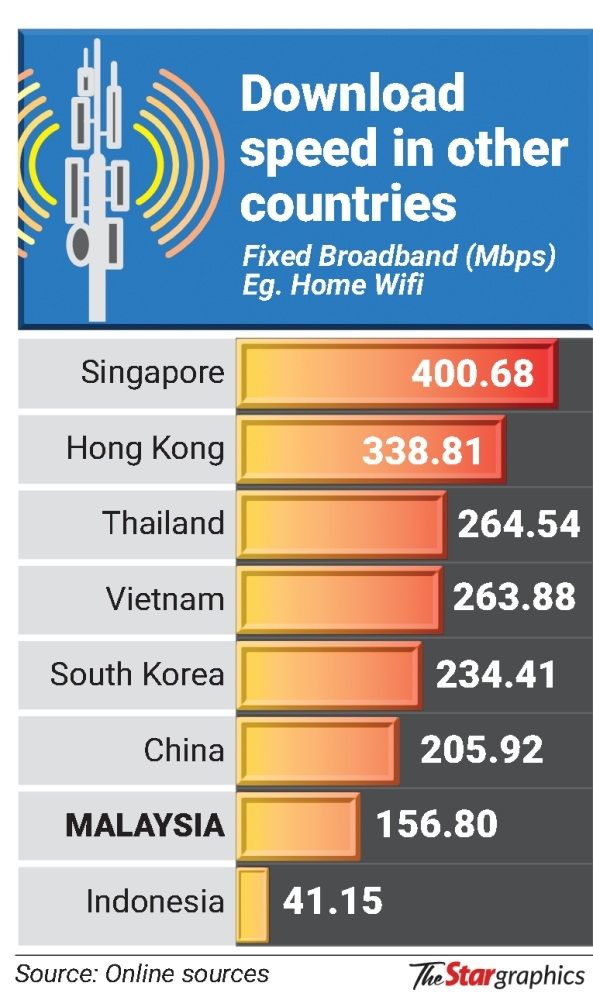
“Even with broad 5G coverage, cities like Kuala Lumpur face declining performance compared to rural areas because of heavy user loads,” Fauzun added.
“This shows that coverage alone is not enough; networks must also be built with sufficient capacity to handle growing demand.”
Fauzun said the recent Budget 2026 allocation can enhance digital infrastructure and expand connectivity – possibly resolving the problems.
“In Jendela 2 it also mentioned that more allocation will be given to improve connectivity in rural and urban areas.
“This should include adopting smart network solutions such as C-RAN and network slicing in urban areas to serve more users,” she said.
Personal data protection and cyber law expert Deepak Pillai said the budget allocation on some projects helps close the connectivity gap and strengthen Malaysia’s digital network.
Deepak said that while the usual preventive maintenance and infrastructure upgrades are often viewed as obvious solutions to this, in reality telco operators do not operate in isolation.
“The telecommunications sector is inherently interdependent, with multiple stakeholders across the value chain,” he said.
The expert suggested that telcos should negotiate more stringent performance and remedial service level agreements with infrastructure owners or access providers.
Meanwhile, some Internet users spoke to The Star about their struggle with slow Internet connections that disrupt their work, studies, and daily lives.
Charis Chiang En-Hui, 22, a fresh graduate, said her most frustrated experience was when she was attending online classes.
“Both at my parents’ place, Negri Sembilan and my rented room in Setapak, I was purely relying on my own mobile data at that time because we didn’t have WiFi but my mobile signal wasn’t that good in either location.
“There were times when it would cut off even though I have paid my bills on time,” she said.
“It did affect my studies as I was getting randomly disconnected from online classes, which meant missing out on crucial information, falling behind on my notes, and overall frustration when I couldn’t get my work done smoothly.”
Joanne Lee, 20, said her mobile data is often slow despite being on an unlimited plan. Lee recalled having to stay late on campus just to use the WiFi because her mobile data was very slow.
“It’s really inconvenient to drive 40 minutes back to campus when I don’t have class just for the Internet,” she said.
A writer who wants to be known as Vani said that her home WiFi was suddenly interrupted, and work she had done was not saved.
“I had to turn it off and on multiple times to ensure it was working,” said the 27-year-old from Kajang.
Azimah Mohd Jani, 36, a personal shopper from Ampang said she works from home.
“I have to switch constantly from mobile data to my home WiFi because both can be slow,” said Azimah.
“Since I am a personal shopper, I would need to use the phone a lot more to upload pictures, but it takes time to do so because the line goes on and off,” she said.
Budget 2026 has proposed that some RM770mil be allocated for better network connection. Apart from that, broadband coverage will be expanded through the Jendela 2 project to 2,700 new locations with an allocation of RM780mil.
The government’s dual 5G network model targets 80% coverage by 2026, ensuring Malaysians and businesses enjoy fast and affordable Internet access.