



PETALING JAYA: For many women, the decision to leave the workforce and become full-time homemakers is shaped less by choice and more by circumstances such as unaffordable childcare, inflexible working hours and low pay.
While the role is often dismissed as “not real work”, the women involved describe long hours of unpaid labour, emotional strain and a deep sense of invisibility.
For 37-year-old Zalinawati Arif, the decision came after the birth of her second child as childcare costs were too high to afford.
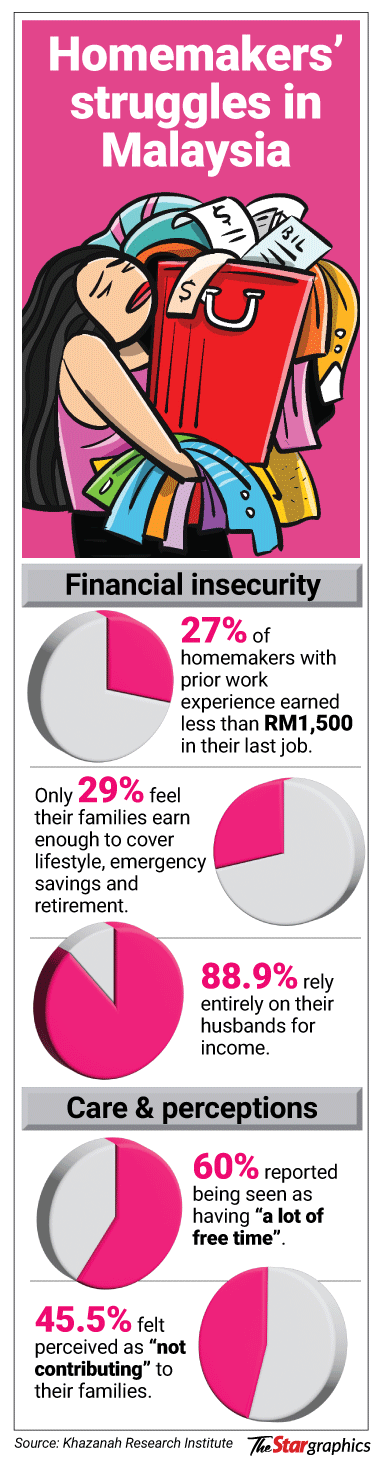
“My last job paid less than RM1,500, so most of my salary would have gone to daycare anyway.
“At first, I thought it was the right choice, but now I feel stuck because I don’t have my own income,” she said when contacted yesterday.
“Every time I need something – even small things like sanitary pads – I have to ask my husband, and it makes me feel like I have no bargaining power.
“People think I have so much free time, but actually my day is filled with cooking, cleaning and caring for the kids.
“Sometimes I wonder if society will ever see this as real work,” she added.
Some women have managed to find new avenues for income and confidence, often through community-based initiatives.
Haliza Husaini, 48, said training in digital marketing opened unexpected doors.
“I used to think once you leave the workforce, it’s impossible to go back.
“But when I joined a community-based training programme in digital marketing, I realised I could start something from home,” she said.
Now, Haliza runs a small online business selling homemade snacks, describing the experience as “amazing” as she is now able to contribute financially again.
“My husband is supportive, but what really helped was having a group of women going through the same journey motivating each other.
“I still take care of the kids and the house, but at least now I also feel proud to say I’m earning and saving for myself.
“It’s not just about the money; it’s about the confidence it gave me,” she added.
For Faizah Mohamed Azhar, 46, respect – or the lack of it – remains the hardest part.
Faizah shared that she left her job in retail a few years back due to demanding work hours and feeling guilty for not spending enough time with her children.
“But once I became a homemaker, I realised people don’t really respect the role.
“Relatives sometimes say things like, ‘Wah, so nice, you don’t have to work’, as if my day is easy.
“They don’t see me juggling school runs, cooking and taking care of my elderly mother-in-law.
“Sometimes I feel invisible, like I’m not contributing, even though I know my family relies on me.
“What hurts most is loneliness because there’s no formal support system and you end up feeling like you’re doing everything alone,” she added.
