PETALING JAYA: After botanist HN Ridley introduced rubber trees to Malaya in 1877, the British brought in Indians to work the rubber plantations.
Life for these indentured labourers was gruelling. They worked from dawn to dusk, clearing jungles, planting seedlings and tapping rubber – all for a pittance.
Many were worked to death, while others died of malnutrition and incessant tropical diseases.
Despite it all, they kept telling the stories of their lives – through music, writing and singing folk songs about their plight.
This was unveiled by brothers Kumanavannan Rajendran, 38, and Gogularaajan Rajendran, 32, who are spearheading a documentary about Malaysian plantation life. Using old folk songs, the brothers plan to trace the lives of these workers from India.
The documentary began to take shape in 2021 through the brothers’ research for a fictional film on plantation life under their production company, Om Sakthi Films.
“We started by interviewing labourers who used to work and live on the plantation. It was only then that I noticed there were so many elements and stories just waiting to be told,” Gogularaajan told The Star.
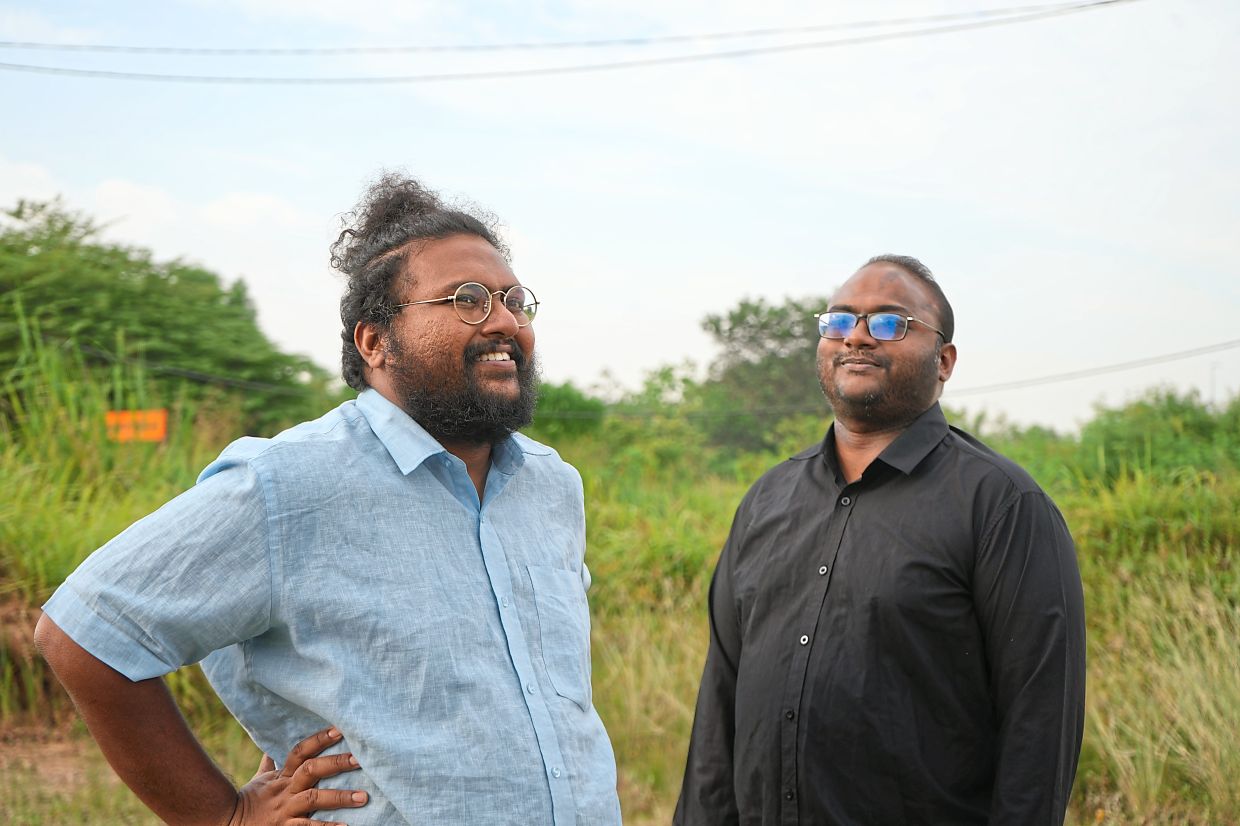
“While researching for the film, my brother and I found out about a Malaysian folk song book written in the ‘80s by University Malaya’s Prof Dr R. Dhanda-yutham, who was from India.
“The book amazed us and we decided to extend the idea to this documentary,” said Kumana-vannan.
“Dhandayutham’s book has over 500 songs composed by the plantation workers. He went to every estate and collected all this. He has passed away, but his family transcribed everything for him later on.
“Dhandayutham actually recorded all the melodies in a cassette, but it’s all gone now. We are taking this opportunity to retrieve these folk songs with some local singers and those from India as well,” Gogularaajan said.
The collection from Dhanda-yutham describes every aspect of the plantation workers’ lives and survival.
“There were songs about commands, confessional, humour, sorrow and courtship.
“Indians were involved in plantation work for about 100 years. But when I look back on that period, there is a void in their stories because not many were deservingly documented. Their suffering under colonial rule was not told,” he said.
Gogularaajan gave his favourite lines of a song:
“To tap rubber trees,
we boarded an old ship.
For 45 cents,
they broke my back.
For 35 cents,
they bent my joints.”
He said these moving lines vividly express the workers’ sorrow over the minimum wage paid to them at that time.
“The men worked while standing, which was why they said ‘They broke my back’ while the women bent while working, which was why their joints were bent,” he explained.
“I think it is important to reclaim their emotional experiences and tell their stories through these folk songs and the documentary.”
According to Kumanavannan, the folk song culture started to fade in the ‘60s largely due to the introduction of visual entertainment.
“If the songs are arranged chronologically, listeners can grasp the whole journey of these early immigrants until Malaysia’s independence,” said Gogula-raajan.
The 80-minute long musical documentary titled Araro Ariraro will be filmed in Banting and Kerling plantations, and is expected to be released in March 2026.
The brothers have roped in 10 people who lived in estates to star in their documentary in order to lend more reality to the documentary.
From Oppari, the mourning song sung during funerals, to Thalattu, the soothing lullaby used to lull infants to sleep, and Kummi, a vibrant dance form accompanied by rhythmic clapping, these traditional art forms showcase the rich and diverse oral and musical heritage of Tamil culture.
The documentary, the brothers said, is their gift to plantation residents so they will remember their history.
One of the resident-turned-actor is Rajendran Perumal, 69, from an estate in Banting.
According to Rajendran, his childhood was filled with songs. Funerals, in particular, were marked by mournful verses that moved even those not directly related to the deceased.
“When I was younger, I used to tease those who sang these mournful songs at a funeral, but in reality, when you listen to the words, you would feel like crying, like you have lost your own loved ones,” he said, adding that everyone in the estate had to take a day off during a funeral to assist with the arrangements.
“The singing was not just about sadness but also about storytelling, about their daily lives. Folk songs told of what the estate workers did from early morning till night.”
Rajendran said the songs alone may not strike a chord with the modern-day population, hence the importance of the visual documentary, which will highlight the depth and meaning behind these folk songs.