
PETALING JAYA: What begins as a health risk for smokers of disposable vapes could possibly end up as an environmental hazard if the used devices are simply discarded.
Apart from toxic residue, lithium batteries and chemicals leaking into soil and water once thrown away, the irresponsible disposal of used vapes also poses fire hazards, say experts.

Fire and Rescue Department director-general Datuk Seri Nor Hisham Mohammad said improper disposal of vapes poses fire risks.
“Most contain small lithium-ion batteries. If tossed into regular bins, they can cause fires in garbage trucks or landfills.
“Damaged or overheated batteries in the waste stream can ignite,” he said, adding that cartridges may also contain nicotine residue, metals and flavouring chemicals that can leach into soil or water.
“The liquids also contain various chemical compounds that can be harmful if mishandled,” he cautioned.
Solid Waste Management and Public Cleansing Corporation (SWCorp) chief executive officer Khalid Mohamed said a 2023 composition study of their landfills found that hazardous household waste comprised 1.15% of the waste there.
“E-waste made up 0.83% while the remaining 0.32% was made up of batteries, aerosol tins and others,” he said when contacted.
The 2023 study surveyed 25 landfills across seven states that have adopted the Solid Waste and Public Cleansing Management Act (Act 672).
The states are Johor, Melaka, Negri Sembilan, Pahang, Perlis, Kedah and the Federal Territory.
According to Khalid, the five main types of waste disposed at landfills managed by SWCorp are food waste, plastics, paper, disposable pampers and garden waste.
“Food waste comprised 35.45%, followed by plastics (26.95%), paper (10.34%), disposable pampers (8.91%) and garden waste (3.35%),” he said.
Environment and waste management specialist Dr Theng Lee Chong said most vape pods physically look like plastic products.
“When disposed into bins, it is very unlikely that the devices will be sorted for proper recycling but instead end up at landfills or disposal sites,” he said.
Plastics are known to be non-biodegradable, and the hazardous components in vape devices can contaminate the soil, surface and underground water bodies, he said, adding that this may lead to long-term adverse impacts on human health through the food chain.
The lithium batteries in the devices are also flammable and can cause explosions, he added.
“This is not only in vape pods but also in other devices that contain lithium batteries like toys, small electrical appliances and power banks.
“All of these should be segregated for proper treatment and disposal instead of being simply thrown into waste bins,” said Theng.
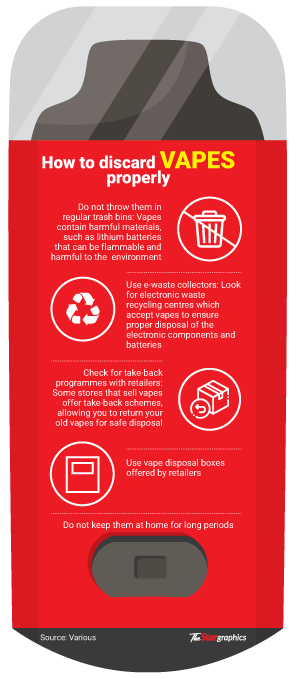
He said a take-back system by vape retailers is an effective way to ensure safe disposal of these products.
“The key concern, however, is where and how they are handled,” he said.
“Some parts of the vapes are recyclable, but there are still hazardous components in the device that require proper treatment and disposal.”
He proposed an extended producer responsibility concept to close the financial gap for proper recycling, treatment and disposal of used vapes.
ERTH (Electronic Recycling Through Heroes) founder and managing director Mohamed Tarek El-Fatatry supported Theng’s proposal, saying: “Vapes are a highly lucrative industry and since they are electronic devices, extended producer responsibility should apply to vape manufacturers and retailers.”
Mohamed Tarek, whose company collects and recycles e-waste, said there is a vape company that has implemented a take-back programme to recycle its devices.
“We have recycled thousands of pods,” he said, adding that the devices are collected together with their batteries and handed over to a licensed facility partner for processing,” he said.
“The processing is done according to the Department of Environment guidelines.”