New pact protects national interests, preserves sovereignty
KUALA LUMPUR: Malaysia considers the newly imposed 19% tariff on its exports to the United States a fair and balanced outcome that safeguards national interests, says Tengku Datuk Seri Zafrul Abdul Aziz.
While Malaysia had hoped for a lower rate, the Investment, Trade and Industry Minister said the result of the negotiations does not compromise the nation’s core policies or sovereignty.
“Among Asean countries, Malaysian goods remain competitive in the US market,” he told the Dewan Rakyat yesterday.
He emphasised that the United States is Malaysia’s top export destination and a source of foreign direct investments, with nearly RM200bil in export value, making trade relations too important to be taken lightly.
Tengku Zafrul cited the electrical and electronics sector, where about 100,000 jobs, particularly in Penang and Kedah, could be impacted by any adverse shift in US trade policy.
He said both countries have agreed in principle to an Agreement on Reciprocal Trade, covering six key areas: tariffs and quotas, non-tariff barriers, digital trade and technology, rules of origin, economic and national security, and commercial considerations.
Malaysia has agreed to reduce or eliminate import duties on 98.4% of all tariff lines for US imports, he said.
While excise duties remain untouched, Tengku Zafrul said sales tax exemptions will apply to certain US agricultural products like dairy and seafood.
On digital trade, Malaysia agreed not to impose a discriminatory digital service tax on US companies, to drop the 6% Universal Service Fund contribution requirement for American cloud and social media firms, and to lift the directive requiring domain name system traffic routing through local servers.
However, Malaysia rejected several US demands that could undermine sovereignty.
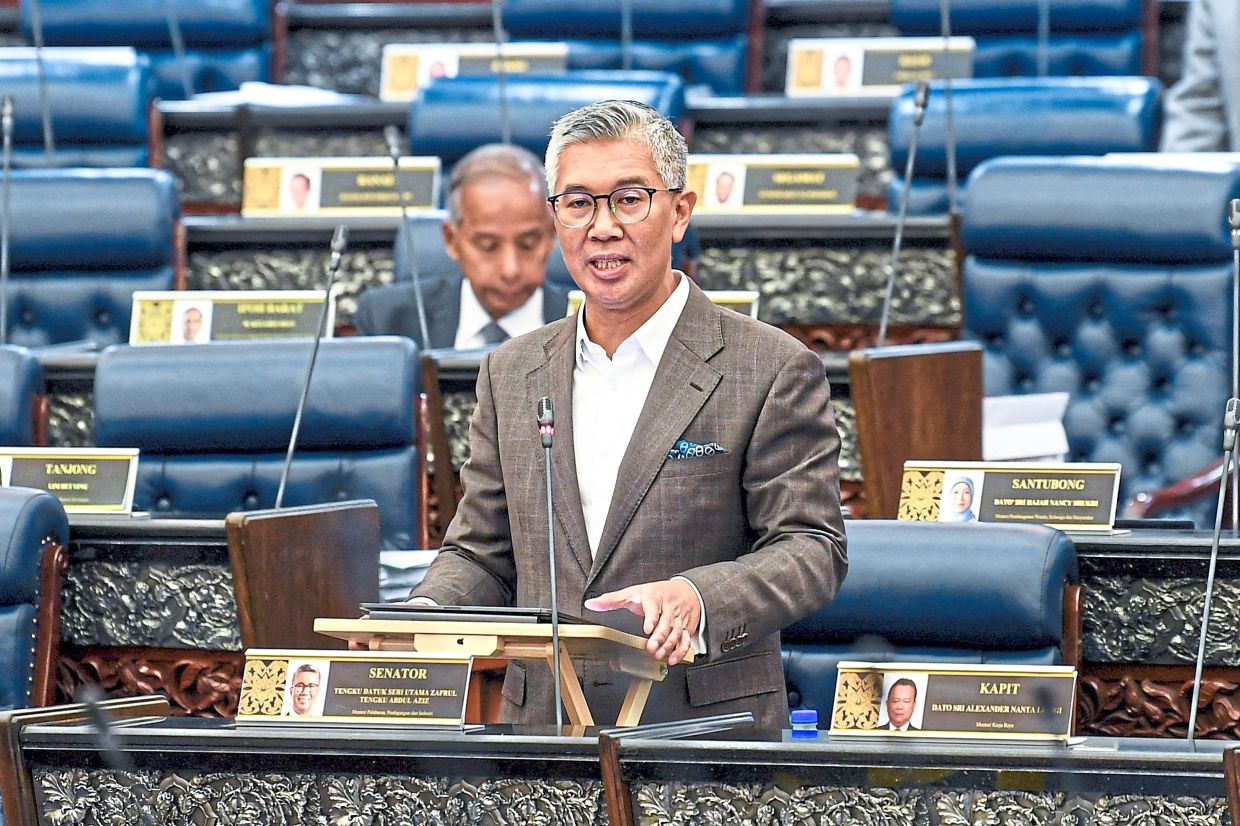
“Cloud service providers and social media platforms remain subject to Malaysian laws. We also retain the right to request source code transfers for use in critical infrastructure, government procurement and the financial sector,” said Tengku Zafrul.
Malaysia, he added, also agreed to strengthen export controls under Section 12 of the Strategic Trade Act, addressing US concerns over the export and transit of AI chips to third countries.
It also committed not to restrict exports of rare earth elements and critical minerals to the United States, though no exclusivity was granted over Malaysia’s supply.
Tengku Zafrul also dismissed claims that Malaysia Airlines’ US$19bil (RM80.51bil) acquisition of Boeing aircraft was made under pressure from the United States, clarifying that it is part of a long-term fleet renewal plan by Malaysia Aviation Group.
He said the purchase includes aircraft, engines, training, maintenance and long-term support, which would benefit Malaysia’s aerospace and tourism sectors.
Tengku Zafrul said that many Malaysian companies supply critical components to both Boeing and Airbus, contributing RM25.1bil annually and supporting 30,000 jobs nationwide.
“At the same time, our tourism sector has shown strong post-pandemic recovery. Boeing forecasts global passenger traffic to grow by 4.7% over the next 20 years. This investment enables Malaysia to tap into the growth potential of both tourism and aerospace industries,” he said.
Tengku Zafrul reaffirmed that the government remains firm on key national interests, including SME participation in supply chains, bumiputra vendor empowerment, halal import standards, and protections for critical sectors.
He also rejected allegations that Malaysia will automatically recognise halal certificates from US bodies.
While both countries have agreed to facilitate the import of meat and poultry products from the United States, such imports must still comply with halal standards set by the Malaysian Islamic Development Department.
Other key areas of agreement include streamlined registration for US dairy, meat and poultry exporters, regionalisation for disease control in poultry exports, and alignment of standards for industrial products like medical devices, pharmaceuticals, and automotive goods with Malaysian regulations.
Tengku Zafrul said both nations have also committed to strengthening enforcement in areas such as intellectual property rights, labour, environmental protection and sustainable fisheries management, based on Malaysia’s obligations under relevant international organisations.
“I want to stress that Malaysia has not relaxed any controls or conditions that would compromise the rights of the people or the sustainability of local industries,” he said.
“There is no blanket exemption granted to import licensing or approved permits for products imported from the United States.
“There is also no full liberalisation of foreign equity ownership conditions in strategic sectors, and bumiputra equity requirements remain in place for all relevant sectors.”