KUALA LUMPUR: Malaysia's current economic framework lacks the complexity required to transform the country into a developed nation, leading to low value creation, says a former Cabinet member.
Datuk Seri Rafizi Ramli (PH-Pandan) stated that the low value creation prevents employers from offering wages that meet the expectations of Malaysians, who desire a standard of living comparable to that of developed countries.
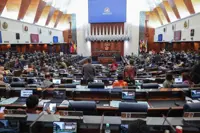
“We still face difficulties in transitioning from a resource-based and extraction economy to an industry based on innovation and value creation to compete with developed nations, and this is closely related to existing issues,” he said when debating the 13th Malaysia Plan at the Dewan Rakyat on Monday (Aug 4).
Rafizi, a former Economy Minister, added that the education system fails to produce the skilled workforce and expertise needed for a complex, high-value economy.
“Although many talented individuals in our country excel in their SPM exams and graduate from foreign universities with scholarships, a significant number of them end up trapped in careers within multinational corporations (MNCs) and government-linked companies (GLCs).
“These positions do not allow them to take risks and create greater value, unlike their peers in places like Silicon Valley, who strive to innovate and lead,” he said.
Rafizi said this was the reason why the 13MP, which was drafted during his tenure, highlighted the need for educational transformation through the introduction of mandatory early childhood education, starting at the age of five.
“Other countries invest their resources during early education, not at the university or Form 5 level and so on.
“That's why, when you look at 13MP, we didn't specify figures such as how many billions are allocated; rather, the commitment to providing universal preschool education means that whoever becomes the next government must prioritise ensuring that schools across the country, within the next five to 10 years, are able to deliver robust services,” he said.
He also pointed out that schooling should end earlier, at the age of 16, as Malaysia is progressing towards an ageing nation.
“This is so our children can start entering the workforce earlier, at the age of 21,” he said.
Rafizi also said that teachers and educators should be provided with adequate resources and training to elevate their professional status.
He said that while the school's syllabus is important, so is the quality of teachers.
“That's why we need to accept the fact that we have previously neglected the professional development of teachers.
“In 13MP, once this becomes a policy, future governments must allocate the necessary resources,” he said.
Rafizi said the 13MP mandates the establishment of a National Education Council that would catalyse the implementation of educational policies across ministries and sectors.
“Education should not be solely managed by the Education Ministry, as everything in our country starts from the classroom.
“Classrooms determine the type of engineers that emerge and shape our national economy,” he said.
On July 31, Prime Minister Datuk Seri Anwar Ibrahim tabled the 13MP, a five-year plan covering the period from 2026 to 2030, which provided a strategic framework for Malaysia's economic, social, and environmental priorities.
He stated that a total of RM611bil would be required to ensure the success of 13MP, covering the whole nation, including Sabah and Sarawak.