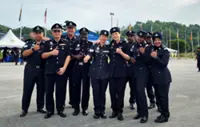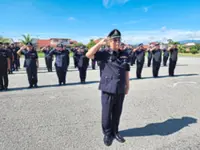
FOR Prof Dr Cheah Phaik Kin of UTAR’s Faculty of Arts and Social Science, serving as a volunteer police officer with the Royal Malaysia Police (PDRM) is a natural extension of her dedication to teaching, research and community service.
She lectures by day and patrols by night, showing that intellect and courage walk hand in hand.
Prof Cheah began her journey in the Royal Malaysia Police Volunteer Reserve in 2014, when the then Officer-in-Charge of Police District (OCPD) of Kampar, Supt Ng Kong Soon, approached her to consider joining the volunteer force.
The introduction came through then UTAR president Academician Emeritus Prof Tan Sri Dr Chuah Hean Teik, as the university had been actively working with the Kampar police on various community and safety initiatives.
“At the time, UTAR’s student population was growing rapidly. Having a university staff member in the force could help bridge the gap between PDRM and the academic community,” she recalled.
Although she had never envisioned herself in such a role, she saw it as an opportunity to contribute to the safety and well-being of her surroundings.
“When I requested time off to attend police training, then president Prof Tan Sri Chuah responded without hesitation. He recognised that this was a way to serve and safeguard the university community and beyond.
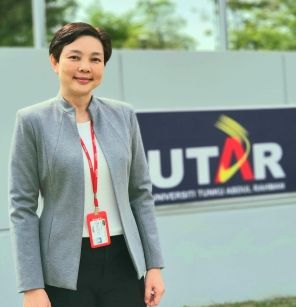
“That same spirit of support continues today under our current president Prof Datuk Ewe Hong Tat, whose encouragement reinforces the university’s commitment to civic engagement and public service.”
Since then, she has served for over a decade, engaging in a wide range of duties including neighbourhood patrols, managing public enquiries and participating in community outreach initiatives and police operations.
“Police presence can make a real difference, it helps prevent crime, de-escalate tense situations and provides a sense of safety to the public. Imagine yourself going to an ATM machine to withdraw some cash, seeing police officers nearby can bring a quiet sense of assurance. That’s the kind of presence we aim to provide, not with force, but with calm vigilance.”
Despite their growing importance in community policing, these contributions were largely absent from scholarly discussion. Recognising this, she partnered with criminologist Emeritus Prof N. Prabha Unnithan from Colorado State University to explore the topic in depth.
Their collaboration led to the publication of the first academic paper on the Royal Malaysia Police Volunteer Reserve in 2018, marking an important step in understanding and acknowledging the role of volunteer policing in Malaysia.
Published in Policing: An International Journal, the study examined how volunteer officers perceive and perform their roles, identifying four key role orientations that continue to inform administrative and theoretical approaches to police volunteerism.
Prof Cheah’s dual commitment to scholarship and service has earned her widespread recognition. Her decade-long dedication as a volunteer police reservist has been acknowledged through multiple letters of appreciation and service awards from district, state, and national police leadership — including commendations from PDRM headquaters in Bukit Aman and the Perak Police Chief, as well as being named Best Platoon Participant during her early training.
Her scholarly leadership extends internationally. She currently serves on the Board of Advisors for the Center for Public Safety and Justice at the University of Virginia and holds visiting appointments at the University of Central Florida and the University of Northampton. As a board member of the U.S.-based Volunteer Law Enforcement Officers Alliance, Prof Cheah has also helped shape global discourse on volunteer policing.
Her experiences have enriched both her research and teaching. “Every experience on the ground teaches me something new about people, about public safety and about myself,” she added.
For those considering joining the force, she offered honest advice. “You have to do it for the right reasons. There’s no reward, no fame, no monetary benefit.
“A lot of people join but don’t stay long. It’s better they realise early on that it’s not what they expected and it doesn’t get easier. But if you have the endurance to stay the course, you’ll find meaning in it, even when it gets tough.”