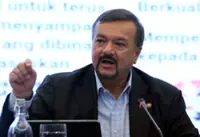

“It will change the trade dynamics and operating environment that can influence the economic growth narrative,” he said in his opening remarks at the Asean Investors Roundtable: Unlocking Opportunities to Advance Asean Climate Initiatives here yesterday.
This, he said, underscores the urgency for Asean member states to strengthen resilience, enhance collaboration and progress further along the path of regional economic integration.
“While we remain committed to international trade, fostering stronger intra-Asean collaboration will pave the way for a more self-reliant and resilient Asean community.”
Asean, he said, cannot be complacent even if it is still on track to hitting the target of becoming the fourth largest economic bloc by 2030 with its gross domestic product (GDP) projected to expand by 4.7% this year.
Amir Hamzah said the global economic landscape is rapidly evolving, with higher economic and financial market volatility expected.
“Asean’s success today is built on the policies and investments made over the past decades. But to sustain this growth and to take us further along the future trajectory, the region must make the right choices and take bold action today.
“This requires Asean to anticipate what the future in 20 to 30 years looks like. It will therefore be remiss for us to ignore the issues of climate change when planning ahead.
“While developments on this front continue to evolve, the realities of climate change are irrefutable. Whatever the politics of global climate action, climate change will continue to affect our physical environment, and people all around the region and the world,” he added.
Amir Hamzah also noted that Asean countries are increasingly facing the harsh realities of climate change, with devastating consequences on economies and livelihoods.
“We are experiencing more frequent and severe natural disasters such as floods, droughts and typhoons, causing billions in economic losses annually.
“As these climate-related challenges intensify, the Asean economy risks losing up to 11% of its GDP by 2100 if no effective measures are taken,” he said.
The roundtable was held in conjunction with the four-day 12th Asean Finance Ministers and Central Bank Governors Meeting (AFMGM) and related meetings.