
AS conflicts and divisions grow worldwide, a group of teachers in Sabah is laying the foundation for peace – one lesson at a time.
Through the Peace Educator Training (PET) Workshop, educators at Stairway to Hope (STH) are learning how to help students resolve conflicts, foster understanding and build a more peaceful future.
The two-day workshop, held on Feb 7-8, was organised by Heavenly Culture, World Peace, Restoration of Light (HWPL), a global peace NGO with UN consultative status. HWPL aims to promote world peace through education, law, and interfaith dialogue, ensuring that young minds are shaped with values of harmony and coexistence.
This was the second PET workshop at STH, following an initial online session in 2023.
Training teachers to teach peace
During the workshop, 11 teachers participated in interactive activities, discussions, and lesson-planning exercises tailored for students ranging from kindergarten to secondary school.
HWPL designed the programme not just to teach about peace but to turn educators into role models of peaceful behaviour in their classrooms and communities.
“Teachers play a key role in shaping future leaders. We want them to guide students to make wise decisions, resolve conflicts peacefully, and build a culture of nonviolence,” said Christine Wong, HWPL Malaysia’s peace educator.
Beyond the workshop, HWPL will continue supporting teachers through monthly follow-ups, offering a space to brainstorm ideas, discuss challenges and track their progress in implementing peace education. Teachers will also submit reports on how they apply these lessons in real classroom settings.
Why Stairway to Hope?
HWPL partnered with Stairway to Hope, a learning centre for stateless and underprivileged children in Sabah, due to its strong commitment to peace education.
Founded by Marilou S. Chin (pic), STH provides children with quality education, life skills, and a sense of self-worth, empowering them to break the cycle of poverty and instability.
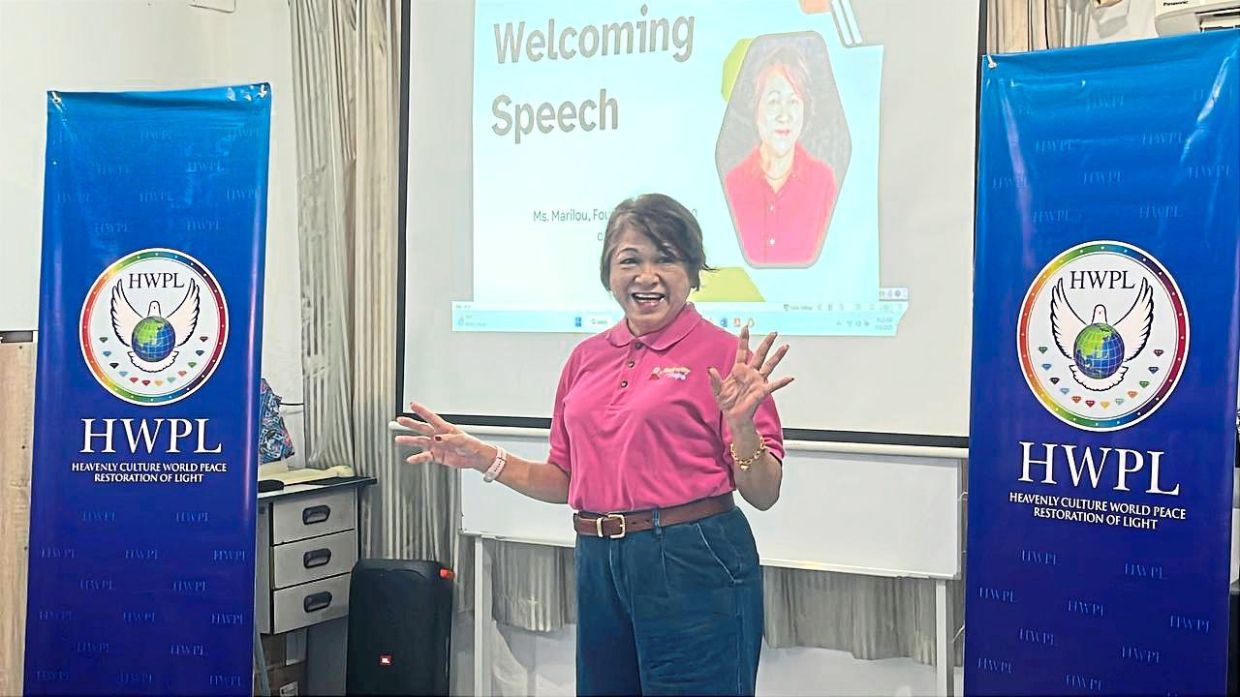
“Chin understands the importance of peace because she grew up in a country affected by war. She believes teaching peace can change how students see themselves and their future,” said Wong.
Speaking at the workshop, Chin compared peace education to planting a tree.
“Whatever we plant must bear fruit. If we plant peace in our hearts, we will create a better future for the next generation,” she said.
She urged teachers to take action, adding, “You have the power to spread peace. What we do today, no matter how small, will shape the future of our children.”
Committed to peace education
The workshop left a deep impact on the teachers, reinforcing their commitment to integrating peace education into their classrooms.
For Tarzia Musad, the experience was both insightful and inspiring. She found value in every session, highlighting how respect, love, and support are key to building a peaceful society.
Similarly, Nurkhayan Abdullah expressed her determination to apply what she learned, emphasising that peace must start with children. She sees peace education as a vital part of moral education, ensuring students grow up with the right values to create a better future.
Wong likened peace education to planting a seed – one that, with time and care, would grow into something lasting. She spoke about how shaping a child’s mindset today could influence the way they navigate challenges in the future.
“If we nurture a peace-loving heart in students, they will grow up making wiser choices, ensuring a future where peace isn’t just an idea but a way of life.”
Expanding peace education
With a growing demand for peace education, HWPL is working to expand PET workshops to more schools across Malaysia.
The programme has already been conducted in Sarawak, and HWPL is actively engaging with educators nationwide to introduce peace-focused lessons in more classrooms.
“We hope more educators in Malaysia will join our peace training programme. By teaching peace, we can build a generation that values harmony and nonviolence,” said Wong.
HWPL believes that peace education is a long-term investment in society, with teachers playing a crucial role in shaping the next generation.
As conflicts continue to arise globally, these educators are now better prepared to instil values of peace and unity, helping students become responsible and compassionate citizens.
With each lesson they teach, they are shaping a future where peace is not just a concept but a way of life.