MELAKA (Bernama): Did you know that there is a butterfly species that can fly back and forth from Melaka to Kuala Lumpur 44 times in its 14-day life span?
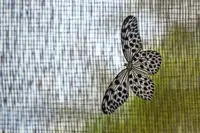
Known as Idea lynceus, this species, which is also known as the Malaysian tree-nymph, has a unique golden chrysalis and resembles a floating piece of tissue paper when it flies as it is said to be the lightest butterfly in the world.
Unfortunately, the butterfly, which is characterised by its translucent white wings patterned with black veins, and numerous oval black spots, faces a risk of extinction as the 16-year research on the rare species conducted at the Melaka Butterfly and Reptile Sanctuary in Ayer Keroh here may not continue due to a lack of funds.

Sanctuary manager Qurratu A'in Rohaminordin said they will not be able to breed the species following a loss of income from ticket sales, which is severely affected by the implementation of the movement control order to curb the Covid-19 outbreak.
"On Feb 1, we released 10 of the 20 Idea lynceus butterflies that are close to death due to their short life spans, ” she told Bernama recently.
She said the Melaka Butterfly and Reptile Sanctuary was the only conservatory in the world that has taken the initiative to carry out a breeding programme for the Malaysian butterfly species that could occasionally be found in Indonesia and Thailand.
Qurratu A'in said through the research, the sanctuary’s level of understanding about the species including its gender and host tree, had reached 90%.
"However, with fewer visitors since the MCO, which has also resulted in a drop in ticket sales, it is indeed difficult for the sanctuary to continue its operations as it is privately owned, ” she said.
Qurratu A'in said the adoption programme offered by the sanctuary was also affected because members of the public could no longer afford to pay, forcing the centre to be frugal in its expenses.
The adoption programme offers interested parties the chance to own the butterfly chrysalis and witness the amazing process of a caterpillar transforming into a butterfly.
"We are calling for support from any party to help this sanctuary tide over the financial slump brought about by the Covid-19 pandemic and help save Idea lynceus from extinction, ” she said.
Qurratu A'in said during the first MCO last year, the sanctuary received food supply aid from the Wildlife and National Parks Department of Peninsular Malaysia (Perhilitan) as well as a subsidy from the government’s Wage Subsidy Programme.
She said the sanctuary has been operating on a minimal basis since the re-enforcement of the MCO on Jan 13 to save costs, forcing them to dispose of about 3,000 caterpillars of various species, including the Idea Iynceus, last year.
According to her, the research on Idea lynceus, which has been placed under the Wildlife Protection Act 2010, started in 2005 and in November 2011, the sanctuary announced its success in breeding the tree-nymph.
"In their original habitat in the forest, female butterflies are able to lay about 200 eggs but only 2% to 4% can survive, making it one of the most endangered species, ” she said adding that the centre could breed about 500 butterflies a month when it was operating at maximum capacity.
In an effort to increase the tree-nymph population in its natural habitat, Qurratu A’in said the sanctuary had to regularly release 20% of the successfully bred species.
She said commercial butterfly breeding could increase the survival rate of the species up to 90%.
Qurratu A'in said that the tree-nymph butterfly also requires a special type of plant, namely the Agnosma sp, which is difficult to grow even in a controlled environment.
One-third of the 2.83ha area of the sanctuary was planted with the Agnosma sp native plants but of the 100 trees planted, only one survived, she added. - Bernama

Already a subscriber? Log in
Get 20% OFF The Star Digital Access
Cancel anytime. Ad-free. Unlimited access with perks.