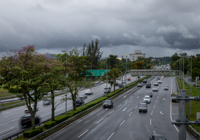
PETALING JAYA: The longer than usual rainy spell has caused the price of vegetables to soar, in some cases by over 100%, it was revealed.
Federation of Malaysian Vegetable Farmers Association adviser Tan So Tiok said the wet weather started about a month earlier than usual.
He said the problem was further compounded by the lack of farmhands due to the closed border.
“Many of our foreign workers returned to their countries in February and haven’t been able to come back since.
“With no farmhands and more rain, farmers have no choice but to slash production, ” he said, adding that prices of both local and imported vegetables have gone up by 30% to over 100% since two months ago.
Tan said water spinach and spinach priced at RM1 to RM2 per kg (wholesale) were now at RM4, with red chilli going for RM20 from between RM7 and RM8 before.
“The high price trend is expected to last until the weather pattern changes in January, ” he added.
The federation’s president Lim Ser Kwee said long beans were being sold at RM7 per kg compared with about RM3 previously, and cucumber from RM2 per kg to between RM4 and RM5.
“Vegetable harvest has gone down by 40% at most farms. With bad weather and a lack of workers, prices of vegetables have been going up for months now.
“Consumers have no choice but to pay more for fresh vegetables during the year-end, ” he added.
Weighing in, Cameron Highlands Floriculturists Association president Lee Peng Fo said with fewer workers since early this year, many farmers have been growing less flowers.
He said the supply of flowers such as chrysanthemum, rose, carnation and sunflower have dropped by some 30%.
“Our problem got worse due to the shortage of workers, ” he said.
Meanwhile, the Federation of Livestock Farmers’ Association of Malaysia assured that the prolonged wet spell will not affect the supply of poultry and eggs right up to Chinese New Year in February.
Its president Tan Chee Hee said farmers had enough production of day-old-chicks (DOC), thus the production and supply of broiler chicken was stable.
He said the wet season would not affect livestock production.
“Farm managements will determine production cost. If they can care for their poultry, production won’t be affected.
“We produce more than 100% of broiler chickens in the market, so the supply of chicken and egg during the year-end festive season and Chinese New Year will be good even with the increase in demand during that period, ” he said yesterday.
He said although cost of production had increased between 20% and 30% recently following a price hike in corn and soybean animal feed, this will not affect livestock prices.“The ex-farm sales price will be determined by demand and supply, which is picking up after interstate travel was allowed.
“Supply of eggs will not see any issue as well. We produce more than enough for the domestic market and Singapore, ” he said.
However, Tan said the shortage in foreign workers had a severe impact on the poultry sector.
Already a subscriber? Log in
Get 20% OFF The Star Digital Access
Cancel anytime. Ad-free. Unlimited access with perks.