
EXCLUSIVE:PETALING JAYA: The post on social media might seem innocuous to a layman’s eye – an event page for a certification course in “professional adult psychotherapy”, open to members of the public.
The one-day course promises attendees that they would be able to learn how to assess and solve the “problems” people face.
On the event page itself, few details were offered on who would be conducting the course.
The organiser was a psychology centre in the Klang Valley, which, on its website, says that it offers services such as individual and family counselling, hypnotherapy, divorce mediation and addiction therapy.
A visit by The Star found the centre to be nondescript and clean, much like any other centres offering counselling and psychological services. A chat with the receptionist revealed that the centre did offer all the services it touted on the website.
The centre also offered a bevy of mental health tests, which included what is called a “leaky gut” test and a neurotransmitter test.
These tests, the centre claimed, could help tell one’s mental health.
Asked about the qualifications of the psychologists who will be handling the counselling and psychotherapy sessions, however, the answer was less forthcoming.
“We haven’t updated our website yet but our psychologists are all qualified,” said the receptionist.
To the public, the centre seems to be a place one can visit to seek help for mental health.
To experts in the psychological field, however, the seemingly legitimate operation, one of many in the country, is a danger to the public.
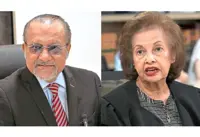
Malaysian Society of Clinical Psychology (MSCP) vice-president Dr Alvin Ng is all too familiar with the modus operandi of these centres, said to be founded and staffed by bogus “psychologists”.
Ng, who is also Sunway University Department of Psychology head and associate professor, said these “psychologists” lack proper qualifications and training.
He pointed out that bogus psychologists would often prey on the vulnerability of those seeking mental health aid.
“First of all, the damage would be financial. These people, who are desperate (for help), usually do not have that much money to spend on treatment, so they can be persuaded to pay a lot of money for some kind of ‘miracle cure’ that these bogus psychologists promise.
“So you lose your money, your savings for something that doesn’t work – how will you get back that (wasted) resources to go for the real treatment?” he said when interviewed.
The more pressing damage, he said, was that those who genuinely needed mental health help did not receive the treatment they needed.
“They are not getting proper help – one that is evidence-based.
“And if things do not improve, they might think, ‘Oh, all psychologists are like that,’ and stop getting treatment,” he said.
Ng said he came across a bogus psychologist who was found to have used an assessment tool for children on an elderly person.
“You know what it was called? The Wechsler Intelligence Scale for Children,” he added.
He said it was difficult for legitimate psychologists to call out these bogus operators as there are currently limited laws in the country against calling oneself a psychologist and offering psychology treatment.
“There is nothing in legal terms in this country to protect the term ‘psychologist’,” he said, adding that in countries such as the United States, “psychologist” is a protected term.
“Only people who are licensed specifically as a clinical psychologist or counselling psychologist can be called a psychologist in the US,” he said.
He said while Malaysia has the Allied Health Professions Act 2016, it is still not enforceable yet.
Universiti Pendididkan Sultan Idris Psychology and Counselling Department professor and clinical psychologist Dr Rahmattullah Khan said that as long as there is no licensing board for psychologists, the public will still be vulnerable to bogus psychologists.
He said that while MSCP is doing its part by vetting clinical psychologists, it is only a professional body.
“You still need a licensing board that can issue licences,” he said.
He said it was important to raise public awareness of how to differentiate between qualified psychologists and those who only graduated with a degree in psychology but have had no training in treating psychological disorders.
Counsellors are also bemoaning the quacks who are ruining the image of their profession, though they have a dedicated Board of Counsellors and a Counsellors Act 1998 to regulate their industry.
Assoc Prof Dr Anasuya Jegathevi Jegathesan, who was previously appointed as one of the regulatory officers governing counsellors, said enforcement by authorities is lacking.
Under the Act, she added, the regulatory officers are empowered to conduct site visits and to take action against illegitimate counsellors.
“However, two years ago, much to my disappointment and defeat, the biggest con artists in the industry were not included in the list of sites that we were to inspect,” said Anasuya.
Many unqualified “counsellors” were still roaming free, she said, although complaints about fake counsellors could be channelled to the Board of Counsellors and even consumer associations.
As a result, she said, many of these bogus counsellors exacted huge financial and psychological damage on their clients.
“For instance, there were cases where they counselled children of couples undergoing divorce to try to get the child closer to the parent who was paying them,” she said.
She added that such false counsellors also promise remedy for certain conditions which cannot be “cured” but only managed, like autism.
Anasuya also called on people to conduct background checks on mental health practitioners, such as if they are licensed by the board.
“That licence is not easy to get; there are very strict criteria one must meet before they can obtain the licence,” she said.
Already a subscriber? Log in
Get 20% OFF The Star Digital Access
Cancel anytime. Ad-free. Unlimited access with perks.