JACKIE Currie had never seen anything like it. She had raised bees in South Carolina for more than a decade, and her insects had almost always been eager to fly out and collect pollen.
But one day last summer, she found her bees huddled at the entrance of their hive, like frightened beachgoers after a shark attack.
The bees were right to be reluctant. There were murderers in their midst.
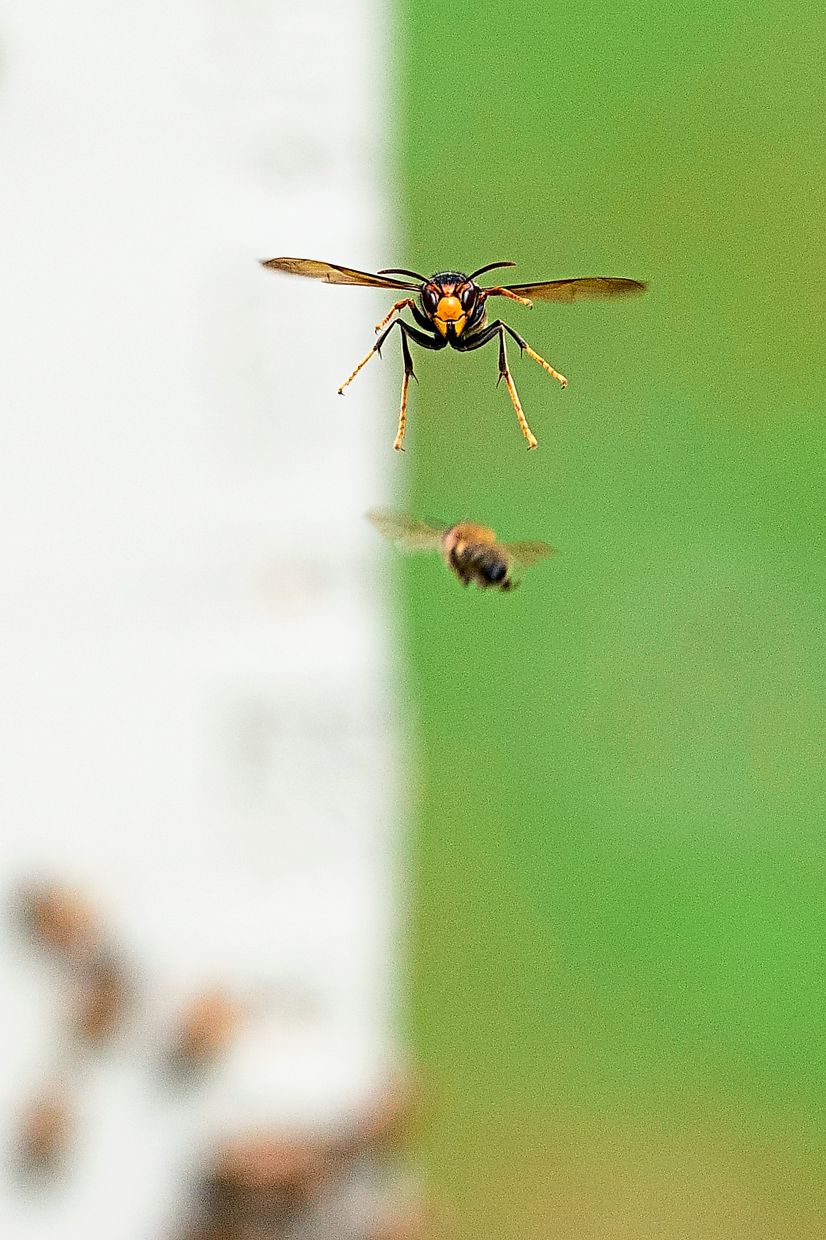
Hovering like hummingbirds just outside the hive were two yellow-legged hornets.
Despite being shorter in length than a paper clip, these predatory insects possess a venomous sting and a seemingly sadistic streak when killing honeybees. Once they snatch their prey, the hornets butcher the bee by removing its head, legs and wings to gain access to the nutritious abdomen.
Currie’s bees faced a dangerous dilemma: leave the nest and risk dismemberment or allow the hive’s resources to dwindle, putting the entire colony at risk of collapse.
“What’s heartbreaking is that my bees don’t know how to defend themselves,” Currie said in June as she watched several yellow-legged hornets hunt outside her apiary. “The bees that know how to deal with yellow-legged hornets are in Asia, not here.”
Natives of South-East Asia, yellow-legged hornets first appeared in South Carolina in late 2023 and have spread rapidly throughout the Lowcountry, an idyllic stretch of coastline known for its beaches and golf courses.
The region’s balmy weather and bevy of bees make it a hornet heaven, said Brad Cavin, an apiary inspector with Clemson University’s department of plant industry.
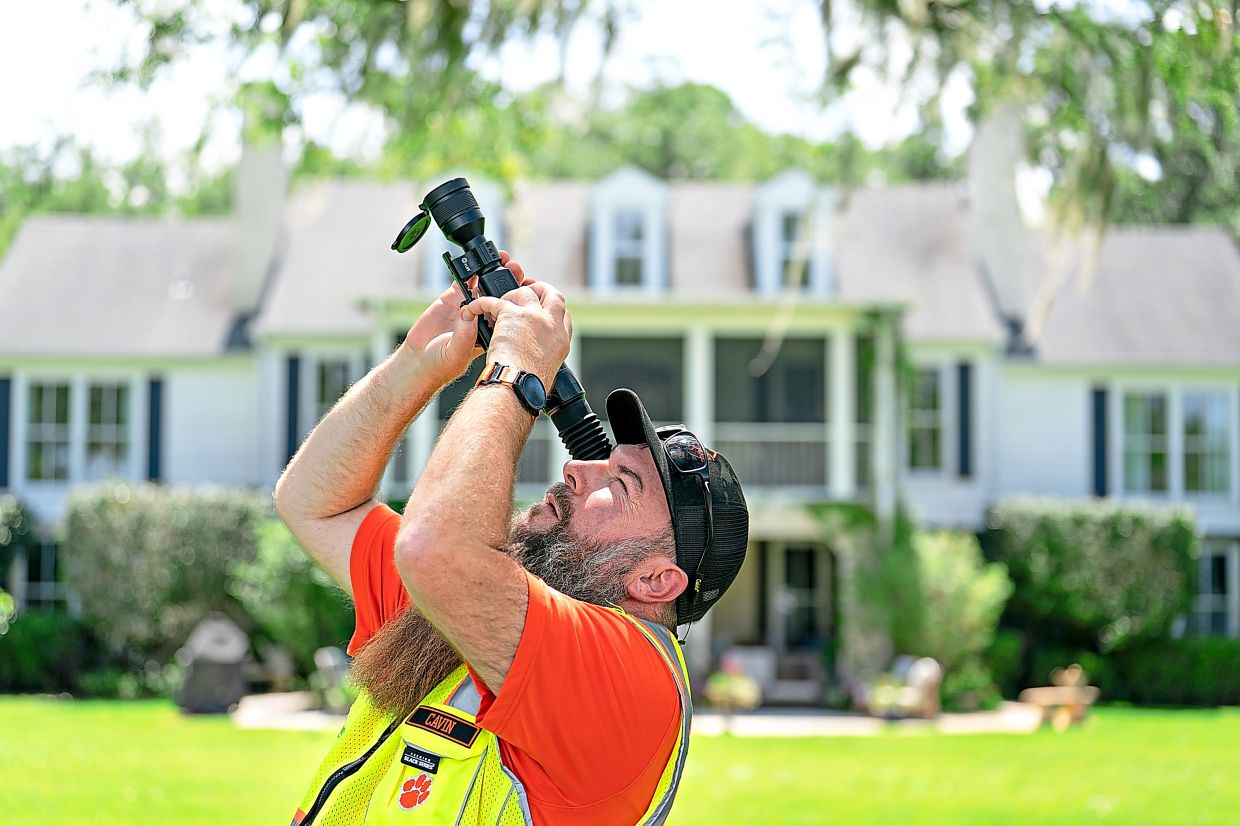
As the state honeybee inspector, Cavin, who has a billowing beard and wears a neon vest whenever live hornets are in the area, is helping to spearhead an effort to track and remove the hornets.
In 2024, Cavin’s team discovered 16 yellow-legged hornet nests; this year, the team had already removed 345 nests from the Lowcountry by late June.
Cavin lives in Greenville, South Carolina, and makes the nearly 400km drive to the Lowcountry multiple times a month.
The son of a pastor, he often likens his team’s mission to save this coastal paradise from a plague of invasive insects to a biblical bout between good and evil.
“This is the Garden of Eden,” he said, “and we’re fighting Satan.”
A buffet of bees
With their orange faces, large eyes and legs that look like they were dipped in Carolina gold barbecue sauce, yellow-legged hornets are visually striking.
Yet these eye-catching insects have managed to sneak aboard cargo ships and have moved far outside their native range.
They arrived in Europe via France in 2004 and in recent years have popped up everywhere from North Africa to New Zealand.
Yellow-legged hornets were first observed in the United States by a beekeeper near Savannah, Georgia, during the summer of 2023. The insects had likely entered through the Port of Savannah and subsequently spread into South Carolina.
(This year, a yellow-legged hornet sighting was reported at a port in Washington state, though the US Department of Agriculture was unable to verify it.)
Georgia and South Carolina’s Lowcountry provide yellow-legged hornets with a buffet of bees. Georgia is the nation’s third-largest producer of honey, and as of 2022, South Carolina was home to nearly 24,000 bee colonies.
And the hornets have no shortage of things to eat beyond bees. They feed on everything from deer carcasses to oyster shells and discarded prawn heads.
Cavin has seen them pecking at dead alligators.
To curb this spread, the Clemson team has been focusing on finding and removing the hornets’ nests, which the insects fashion out of wood and plant fibres that they chew into a cementlike paste.
The comblike structures are encased in a protective shell covered in swirling patterns that resemble oyster shells.
When queen yellow-legged hornets emerge at the beginning of spring, they build an embryo nest the size of a ping-pong ball.
Once the queen and the first generation of her offspring outgrow the embryo nest, they construct what’s called a primary nest, a cantaloupe-size structure that can be fabricated anywhere from a sprinkler valve box to the eaves of a building.
Once the primary nest reaches the size of a basketball, the hornets build an even larger structure, known as a secondary nest, usually high up in the trees.
With plenty of treetop real estate, these nests can grow larger than beach balls and contain thousands of hornets.
Swarms and a deafening buzz
Once a hornet nest is confirmed, Cavin calls in removal experts.
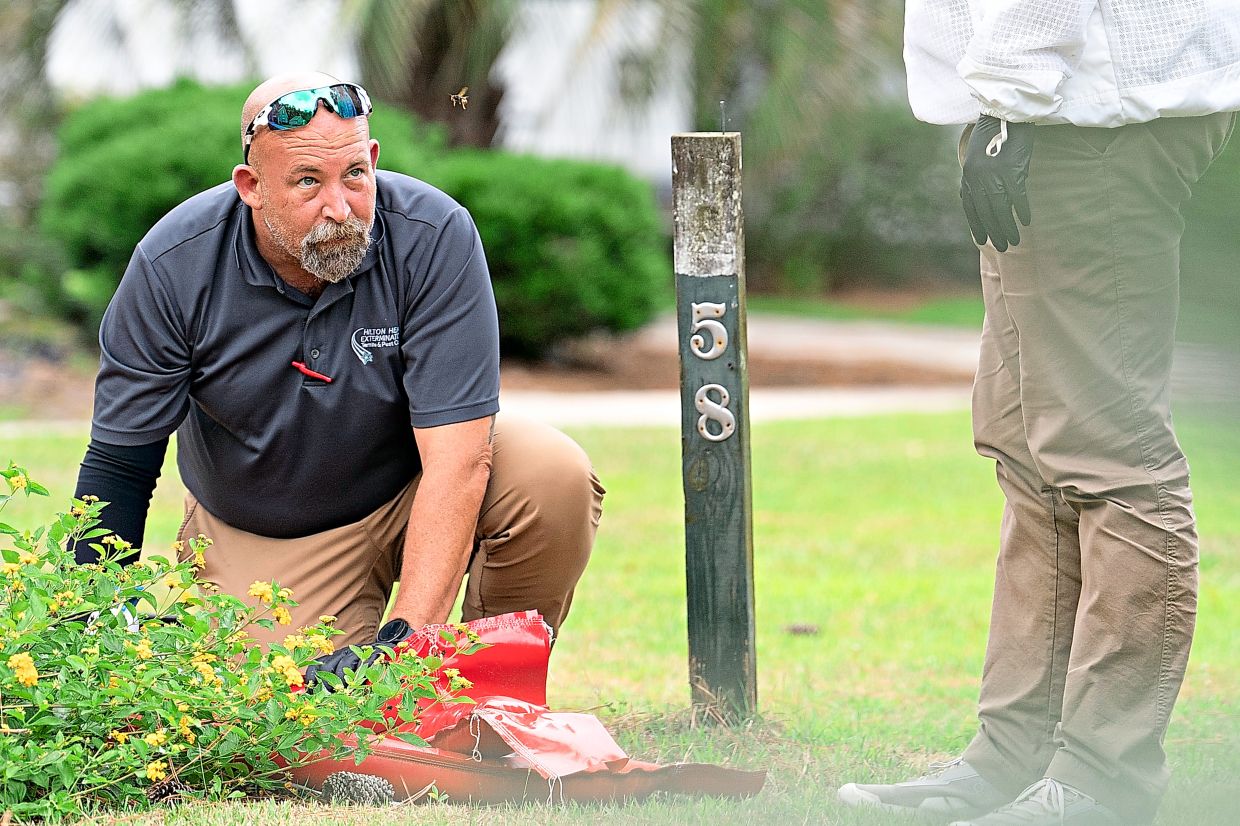
Among the most reliable are Nathan Krelis and Wes Long from Hilton Head Exterminators, who have removed hundreds of nests since the insect first appeared in the state, including one last summer that was the size of a car engine.
Removing nests takes skill and steely nerves.
The exterminators are often met by swarming hornets and a nearly deafening buzz.
To limit the amount of pesticide they spray into the environment, the pair plugs the nest’s entrance with a small piece of sponge, creating a self-contained chamber.
After the hornets cease swarming, the exterminators scrape the nest off and place it inside a clear plastic bag, like a takeout order.
Back at his team’s headquarters, Cavin freezes the nest to kill off any surviving hornets and places the structure in a kiln to dry for preservation.
One afternoon in June, the team conducted several removals along US Route 278, a road leading out to Hilton Head Island that is lined with gated communities and shopping plazas.
The exterminators suited up in beekeeping garb and climbed their ladders to remove nests from maintenance sheds, storefronts and several houses.
(When removing secondary nests from trees, the exterminators use construction lifts.)
At one house, Karen Opderbeck watched Long remove a nest that was tucked underneath the roofline.
Opderbeck, who had reported the nest, recalled a recent visit to an apiary with her garden club, where she witnessed a yellow-legged hornet hunting spree.
“They were nabbing bees and going up into the trees with them,” she said.
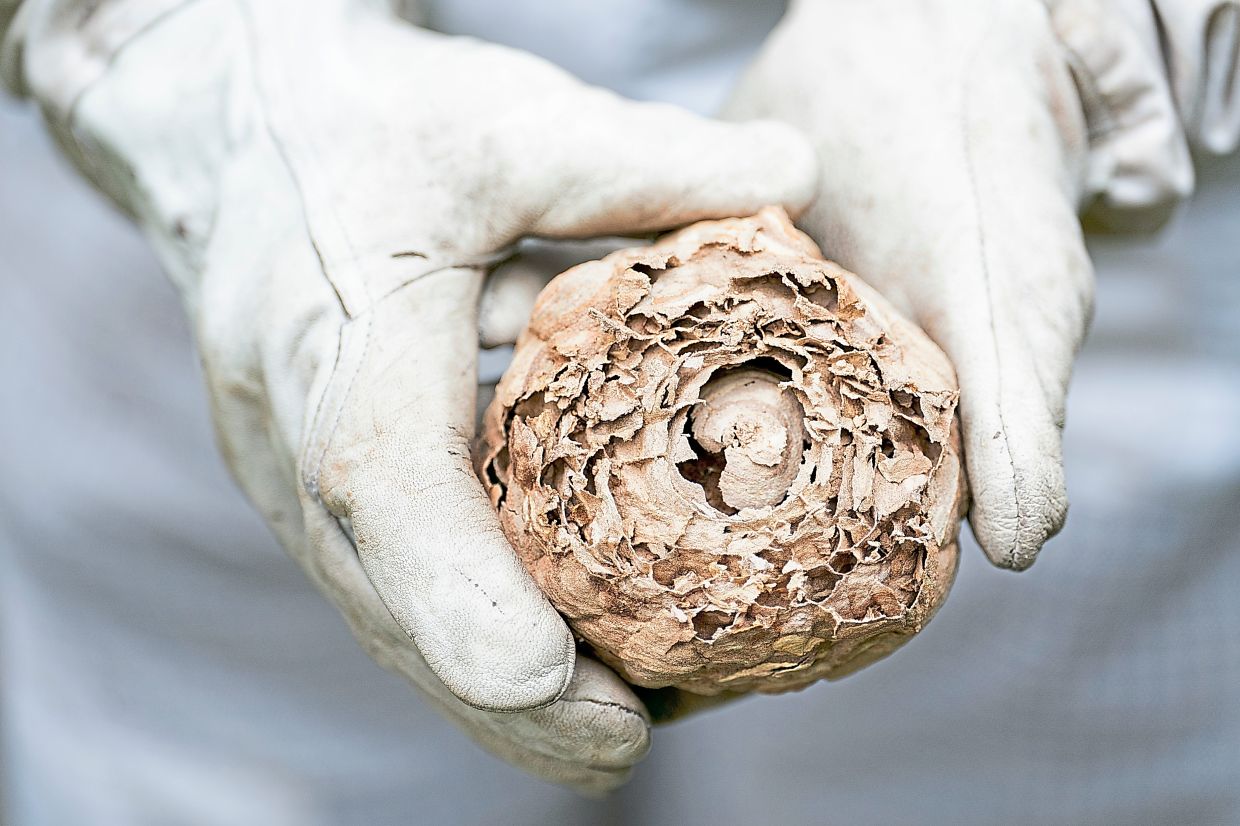
Long removed the softball-size nest and held it out in his gloved hand for Opderbeck to inspect. Lodged inside, like a Russian nesting doll, was the original embryo nest.
“It’s like having a stalker right at your front door,” Opderbeck said. — ©2026 The New York Times Company
This article originally appeared in The New York Times
Already a subscriber? Log in
Get 20% OFF The Star Digital Access
Cancel anytime. Ad-free. Unlimited access with perks.
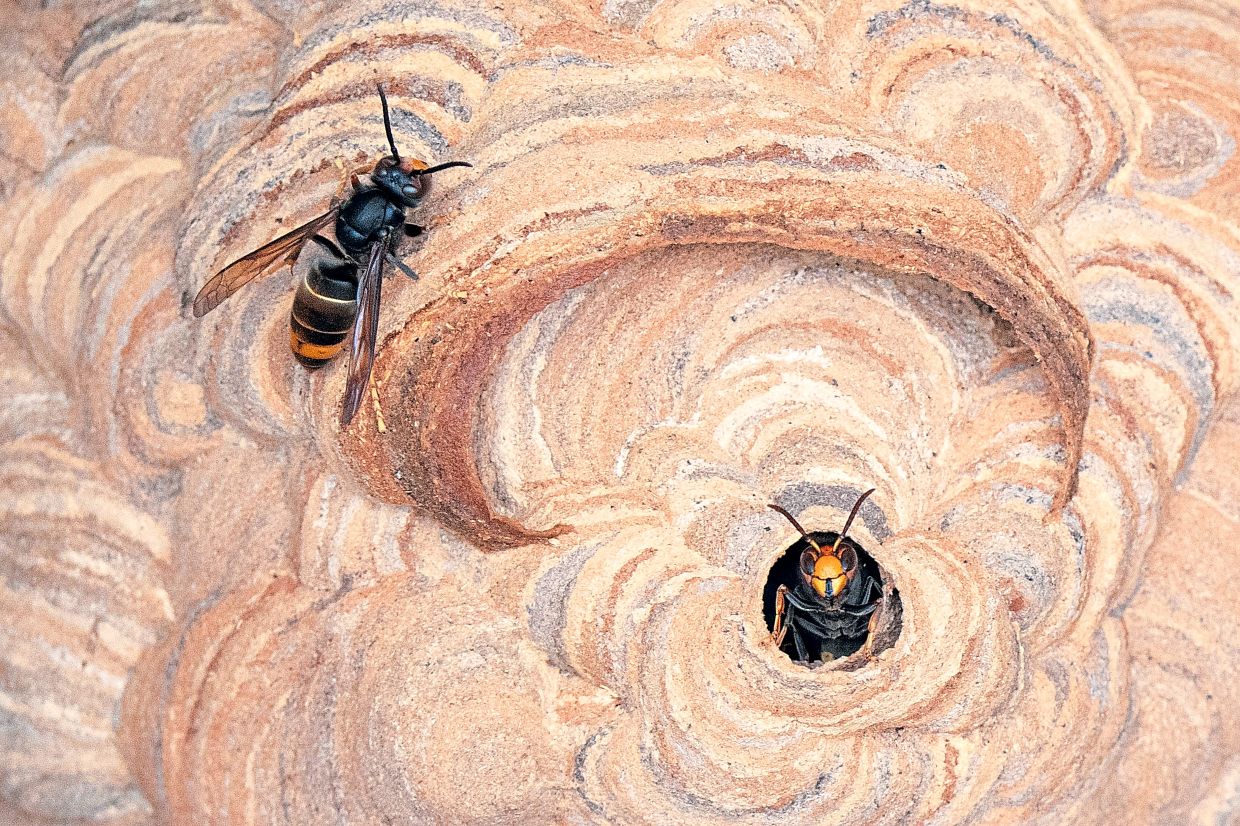
A yellow-legged hornet nest in Beaufort, South Carolina. The spread of yellow-legged hornets through the region is posing a threat to the local honey crop. — Sean Rayford/The New York Times
An exterminator holding a yellow-legged hornet nest after its removal from a residence in Beaufort, South Carolina. — Sean Rayford/The New York Times
A yellow-legged hornet diving at a honeybee near a hive in Bluffton near Beaufort, South Carolina. A state team of bee defenders is racing to rescue the honeybee. — Sean Rayford/The New York Times
Cavin looking at a hornet nest in Beaufort. An apiary inspector, Cavin is helping to spearhead an effort to track and remove the hornets. — Sean Rayford/The New York Times
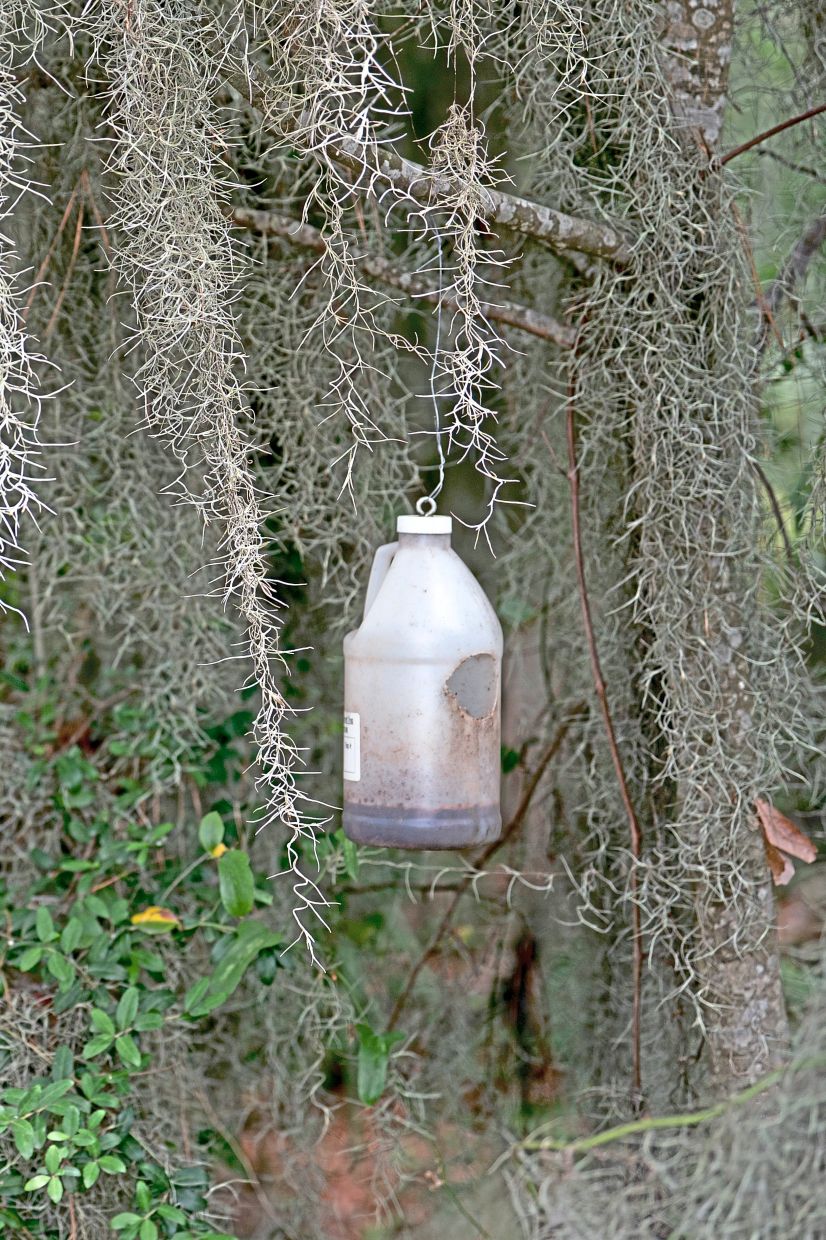
A hornet trap with Georgia juice, a mixture of grape juice and brown sugar syrup, on Judge Island near Beaufort. — Sean Rayford/The New York Times
Long from Hilton Head Exterminators keeping an eye on a hornet during a nest removal. Long has removed hundreds of nests since the insect first appeared in South Carolina, including one last summer that was the size of a car engine. — Sean Rayford/The New York Times