



TENS of thousands of Palestinian worshippers crowded the courtyards of the Al-Aqsa Mosque compound in Jerusalem’s Old City recently for the second Friday of Ramadan, the holy Muslim fasting month.
A day later, Israel abruptly announced it was temporarily closing the sacred site, leaving its esplanade desolate. The Israeli police said the closure was intended to ensure the safety of civilians while Israel was coming under Iranian missile attacks.
The closure was the latest blow for Muslims from Israeli-imposed measures at the disputed and volatile site. And it comes during a sensitive time, with the region at war again.
“The Muslim worshippers who associate Ramadan with praying at Al-Aqsa Mosque are very heartbroken by this closure,” said Mustafa Abu Sway, a Palestinian Islamic scholar and deputy head of the Islamic Waqf, the religious trust that manages the Muslim shrines.
“If the issue is the safety of worshippers, then Al-Aqsa Mosque has massive subterranean halls that can host thousands of people,” Abu Sway added.
“Our prayers are for a quick end of this war and for a comprehensive peace in the Middle East,” he said.
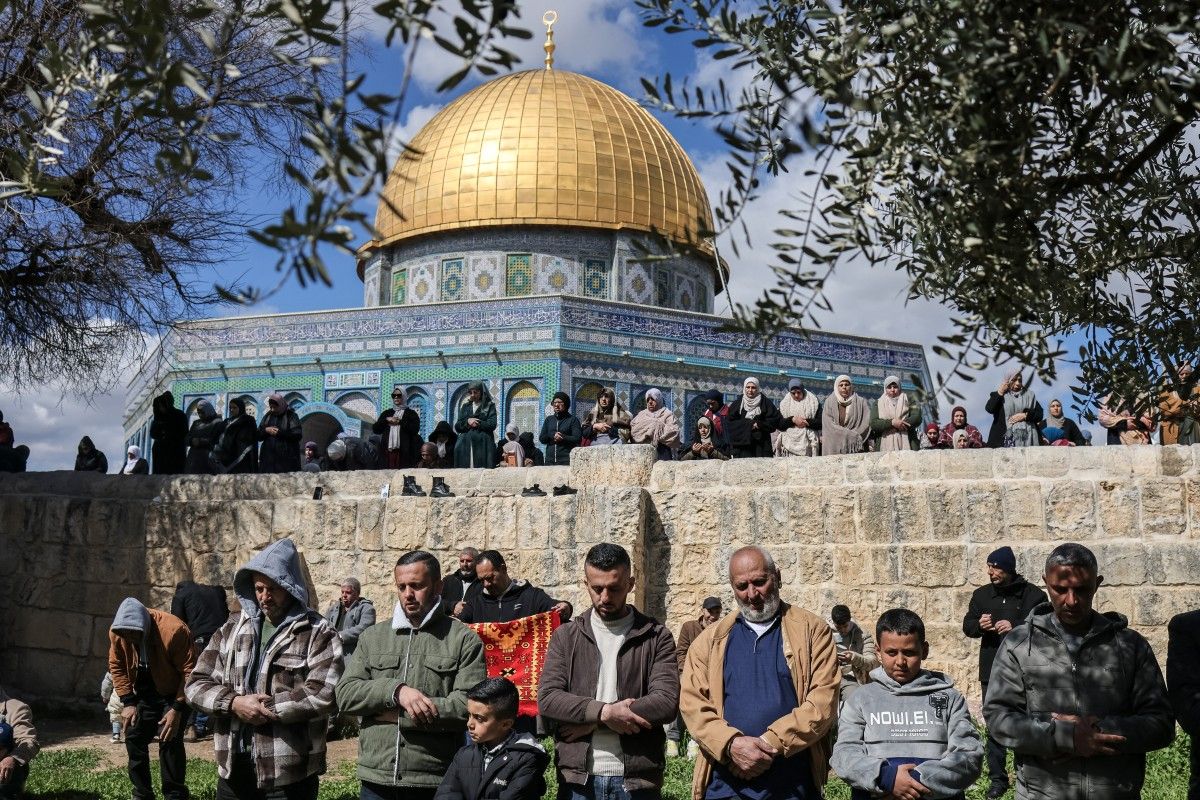
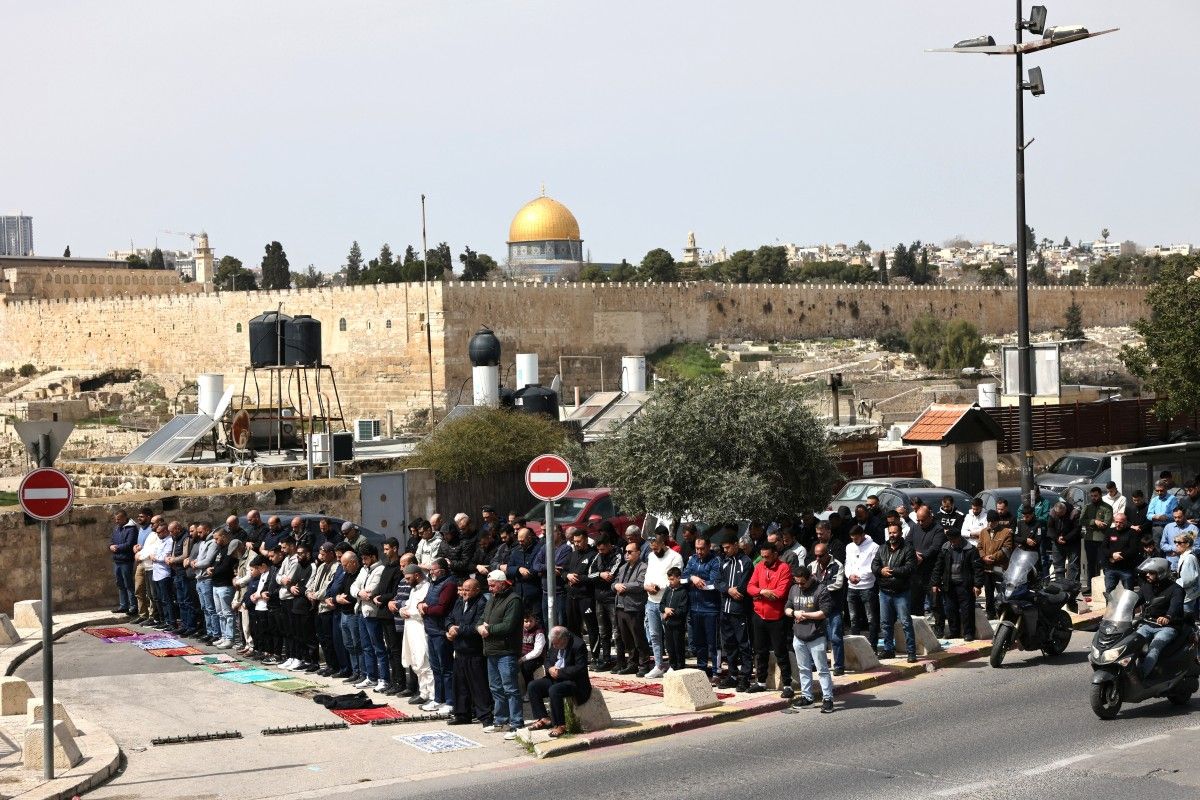
As Israeli and US warplanes began pounding Iran on Feb 28, the Israeli police, citing safety concerns, shut the gates of the Al-Aqsa compound, known to Jews as the Temple Mount.
The contested plateau is revered by Jews as the location of two ancient temples, and by Muslims as the Noble Sanctuary, containing the mosque and other shrines, including the golden-capped Dome of the Rock.
The compound is Judaism’s holiest site and Islam’s third holiest site. It has long been a flashpoint in the Arab-Israeli conflict, a crucible of Jewish-Muslim religious and political tensions that have often devolved into violence.
Although Jews have traditionally prayed at the Western Wall below, nationalist Jewish activists have increasingly been competing for more access and prayer rights atop the mount. The compound is in the predominantly Palestinian eastern half of Jerusalem, which Israel seized from Jordan in the 1967 Arab-Israeli War.
Palestinians cherish Al-Aqsa, particularly during Ramadan, when they gather in large numbers to perform the nightly prayers unique to the holy month.
Even before the closure, the old order at Al-Aqsa was increasingly being challenged.
An arrangement in place for decades to keep the peace has been gradually fraying in recent years. Under that arrangement, known as the “status quo,” Muslims alone can pray at the site. Jews and other non-Muslims are permitted to visit but not to perform religious rituals there.
Prime Minister Benjamin Netanyahu and the Israeli police, who are charged with enforcing the status quo, pay lip service to it.
But the reality is different.
Jewish activist groups have long been pressing for more access and equal rights to worship on the mount. Israeli authorities have responded by allowing increasing numbers of Jewish worshippers to ascend to the compound in groups with a police escort. They pray openly, mostly in an area east of the Muslim shrines, flouting the status quo arrangement.
They have the full backing of Israel’s ultranationalist national security minister, Itamar Ben Gvir.
As a result, scenes that once were inconceivable in the compound are now the norm.
I visited the site one morning during Ramadan before the closure order, and a police officer near the entrance reminded me of the rules: For non-Muslims, no prayers or religious rituals allowed.
Inside the compound, however, I encountered about a dozen Jewish worshippers, mostly men wearing skullcaps or the black fedoras often worn by the strictly Orthodox. Accompanied by police officers, they walked along the western esplanade singing a liturgical hymn out loud.
Muslims who had come to pray milled around and looked on sombrely, in silence.
Before Ramadan, more incremental changes were introduced at the holy site.
Regular afternoon visiting hours for non-Muslims were cancelled for the duration of the fasting month, as in previous years. But the police added an hour extending morning visiting hours from 6:30am to 11:30am, just half an hour before the daily Muslim noon prayer begins.
Since January, Jewish worshippers have been allowed to take up printed prayer sheets containing a special version of the morning prayer that is recited only at the ancient site.
The police had issued temporary bans barring a prominent imam, or prayer leader, and dozens of Waqf employees from entering the site.
The Old City holy site has long been a tinderbox.
In 2000, Ariel Sharon, then Israel’s right-wing opposition leader, visited to assert Jewish claims there. That prompted a bout of violence that led to a deadly Palestinian uprising known as the second Intifada.
In 2017, a crisis erupted after three Arab-Israeli citizens at the compound shot and killed two Israeli Druze police officers.
That led Israeli authorities to restrict access to the site and to install cameras and metal detectors, setting off further violence. The metal detectors were quickly removed.
And in 2021, tensions at the site contributed to the outbreak of 11 days of fierce fighting between Israel and Hamas.
Netanyahu has repeatedly asserted that there has been no change to the status quo, not least to protect Israel’s strategic peace treaty with neighboring Jordan, the historical custodian of the Old City’s Muslim and Christian holy sites.
More than a decade ago, Netanyahu promised King Abdullah of Jordan that Israel would uphold the status quo as part of a deal to defuse tensions over the site after another wave of bloodshed.
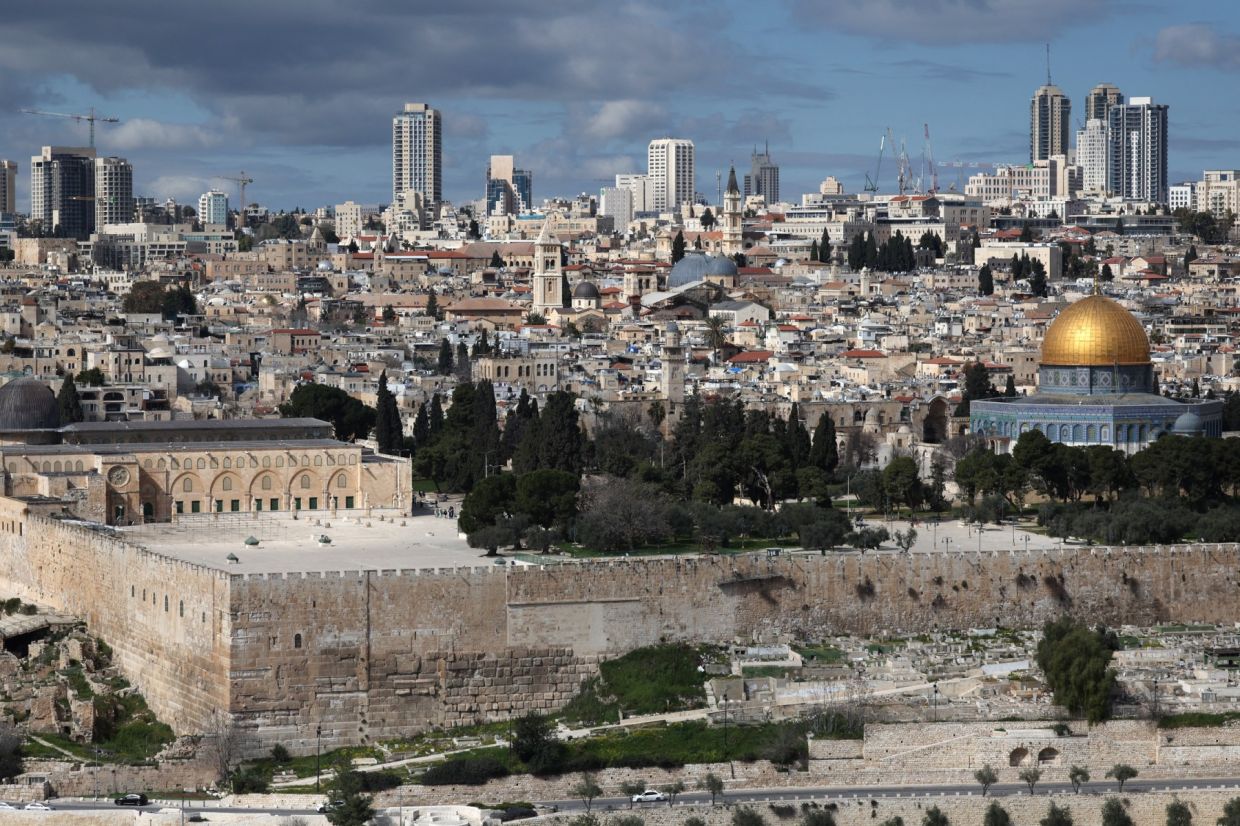
Still, the changes to the status quo and the Ramadan closure have not stirred any violence so far.
Many Palestinians in East Jerusalem said they were afraid of getting into trouble with Israelis authorities and being barred from the compound.
“People have had enough. They just want some quiet, to live and bring up their children,” said Muhammad Issa, a Palestinian resident of Jerusalem. “You fight over the land and end up under the ground.” — ©2026 The New York Times Company
This article originally appeared in The New York Times.

