

WHEN Malaysian women start their careers, the numbers look promising. Many of them enter the workforce in their 20s, making up more than half the labour force at 56.2% as of 2023.
But something happens when women hit their 30s: They begin to leave the workforce, and most don’t come back, according to a recent World Bank report.

“Unlike in other countries where women often re-enter employment after a career break, Malaysian women’s departure from the labour market tends to be more permanent.
“Malaysia has one of the lowest rates of women taking temporary career breaks, reinforcing this trend of permanent labour market exit.”
But as the country undergoes rapid demographic changes with an ageing population and declining fertility rates, the working-age group in Malaysia is shrinking, posing significant challenges to the labour market.
This means there is an urgent need to have more inclusive employment policies, including how to retain women in the workforce, to boost productivity – something Malaysia needs direly if it wants to achieve its goal of becoming a high-income nation.
For example, increasing just women’s participation in the labour market could boost Malaysia’s GDP by 7% to 12%, as previously stated by Wong Shu Qi, chairman of workforce development agency TalentCorp.
World Bank senior economist Shakira Teh Sharifuddin, who led the survey team, tells Sunday Star that among the main areas employers can look into when it comes to more inclusive employment practices are policies related to hiring career returnees, childcare provisions and benefits, and flexible work arrangements.
TalentCorp currently already has a Career Comeback Programme to encourage hiring returning women, but Shakira says this can be expanded mindfully.
She points out that a lot of the initiatives are currently being done in major urban centres like Kuala Lumpur and states with big cities, like Johor and Penang, “So what we somewhat suggested in the report is for the programme to be expanded ... to SMEs because at the moment, many of the firms participating in the programme are large firms.”
Its effectiveness can also be enhanced by tailoring support based on the skills and experience levels of career returnees, she adds.
The perception of ‘costlier’ hires
Based on the survey, which looked into this matter from the employers’ standpoint, Shakira says there is also a rather common perception among firms that women are more expensive hires, with around 40% of companies believing that hiring women is “costlier”.
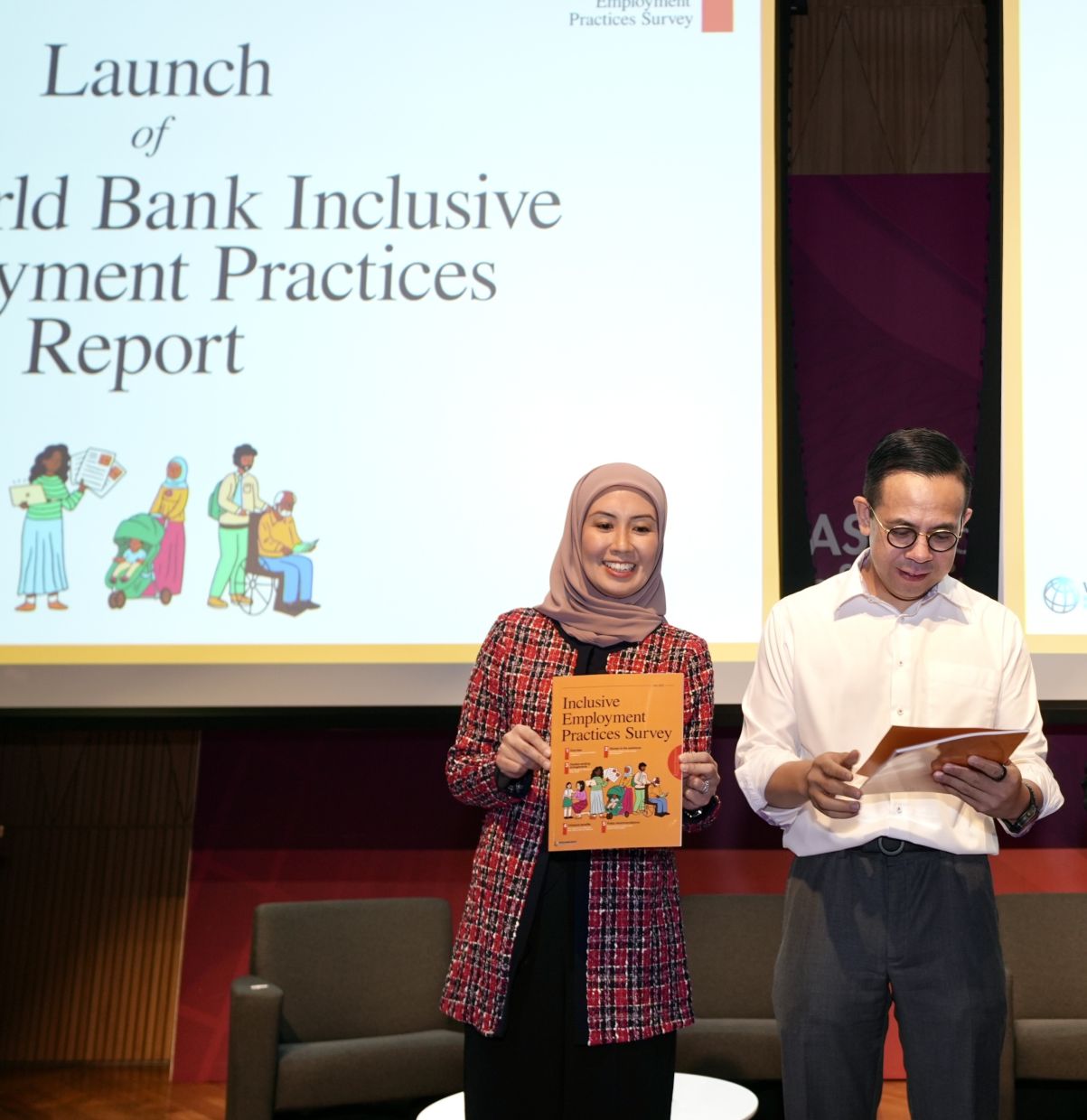
“Challenges related to hiring non-managerial female employees are largely linked to women’s care responsibilities,” reads the survey which found that 58% of their respondents say the main challenge with hiring women are their family commitments.
More than 40% of the firms surveyed also indicated that the required benefits and other expenses such as providing a lactation room or childcare facilities make it more expensive to hire women.
Regardless, the firms are trying to do their part in being more inclusive; 69% of companies cited maternity leave while 57% pointed to flexible work arrangements as measures they have in place to ensure more inclusive hiring.
Other popular measures include providing financial support for pre-natal and childbirth expenses (52%) as well as onsite facilities such as childcare centres and lactation rooms (51%).
However, the survey also found that most childcare facilities provided by employers are completely full and have long waiting lists, indicating that there is room for expansion.
But the high costs of the initial setup and longterm operational costs is a challenge for many employers, especially smaller companies.
“To further enhance childcare facility incentives, greater flexibility in how employers provide childcare support can be introduced.
“The current tax incentives could be expanded beyond the construction and setup of childcare centres to include alternative childcare arrangements.
“To ensure greater efficiency and equity, the government could provide broad guidance encouraging firms to adopt a flat-rate, per-child subsidy model, with higher subsidies for lower-income employees,” the report says.
The government’s commitment
Employers’ efforts are supported by government initiatives, and the recent 13th Malaysia Plan (13MP) has revealed the government’s commitment to facilitating more inclusive hiring practices.
As part of the 13MP, the Madani government said it plans to introduce laws related to hiring those returning to the workforce as well as a new certification programme to incentivise companies that hire women, senior citizens, and people with disabilities.
“An initiative to facilitate the ways women return to the workforce will be improved to increase the rate of women’s participation in the labour force.
“In line with this, the implementation of policies related to flexible work and career matching programmes will be strengthened,” read the 13MP.
The provision of childcare facilities at workplaces will also be broadened, it said.
The government also clearly stated its commitment to improving the work-life balance of employees, stating in the 13MP that flexible work arrangements that allow workers to adjust their schedules according to their life needs will continue to be encouraged.
Not only will this improve work-life balance, but the government noted that it will also improve workers’ productivity and ensure retention of workers in more secure formal sectors.
Shakira welcomes these announcements from the government, joking that they are so in line with her team’s recommendations that she wonders if those in government had read their report first.
However, she stresses that these policies should not be seen only through the lens of hiring more women, so as to not reinforce the idea that women are “costlier” hires due to their caregiving duties.
After all, she says, people of all walks of life leave the workforce for a multitude of reasons, such as health and burnout.
“Men also face health issues. Men also want to take career breaks.
“So communication of these kinds of policies is quite important in terms of making sure these policies are a little bit more general and not just specific to women,” she says.
Flexibility for everyone
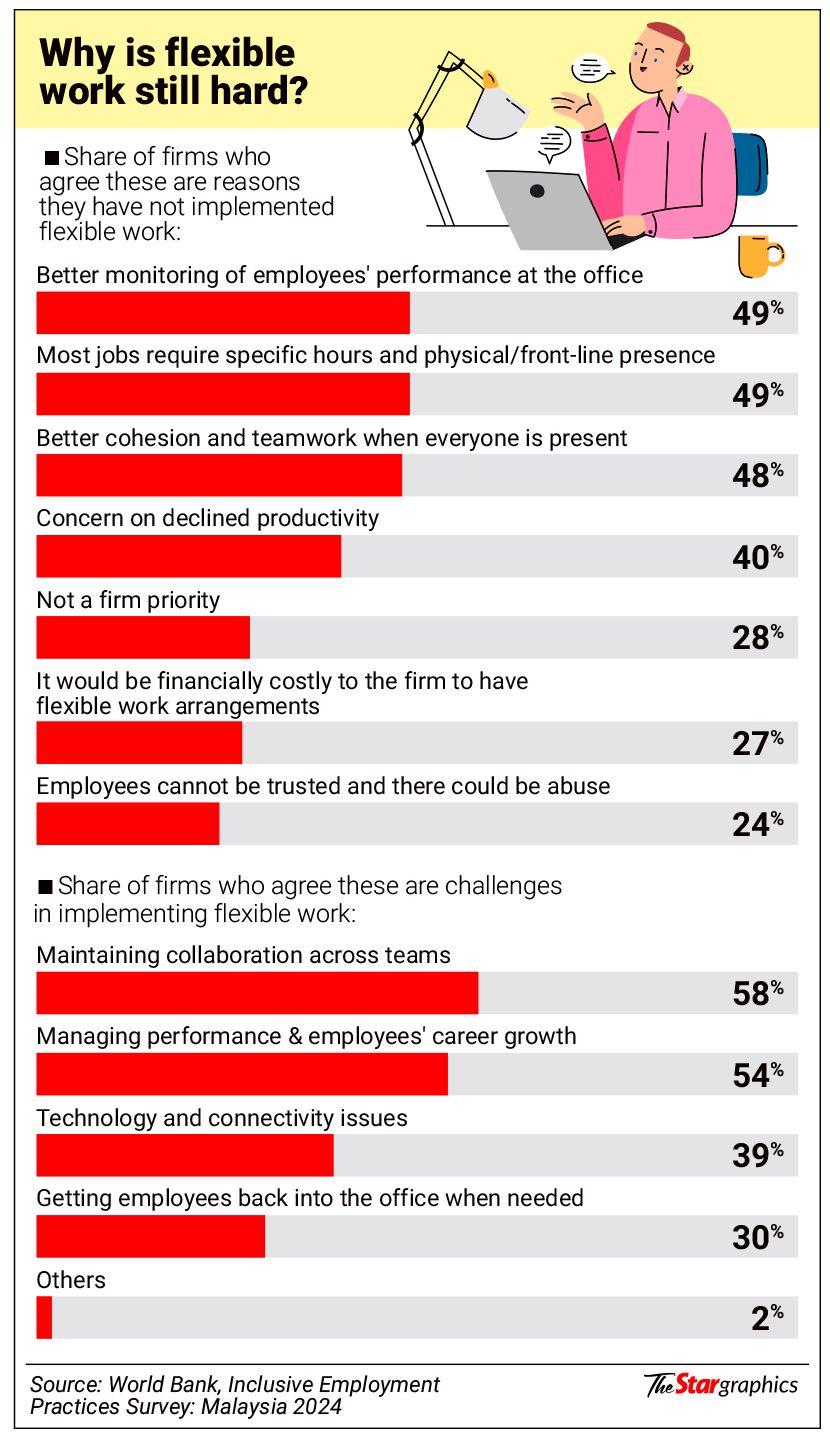
Flexible work arrangements, for example, can benefit every employee, not just women with caregiving responsibilities.
The government’s support of this is crucial, she says, pointing out that the Malaysian government had previously introduced the Aturan Kerja Fleksibel (AKF), a set of guidelines to support employers and employees alike on flexible work arrangements.
It’s a good move, but one that can be built upon, says Shakira.
“We recommended to build on that; first, maybe expand it to sectors which require a lot more physical presence because that is a challenge.
The report also recommended that the AKF guidelines incorporate aspects of managing productivity and efficiency, which are key concerns for many Malaysian employers.
“Strong support by the government for a lead-by-example approach from business and political leaders can also play a crucial role in ensuring stronger buy-in and commitment from firms to balance flexibility with productivity.”
Though childcare policies, hiring returning workers, and flexible work arrangements were the major focuses of their recommendations, Shakira says there is no one size fits all approach.
“It has to be a combination of various flexible, responsive measures.
“And the more options that employers make available, the more likely we are to meet women, parents, caregivers, regardless of their responsibilities or their commitments or where they are, and hopefully allow them to participate in the workforce.”
