



AT MBDA’s missile launcher plant in Bolton, England, Britain’s minister for the armed forces, Luke Pollard, stood with his hand outstretched as a test engineer sprinkled tiny microelectronic specks onto his palm as if they were fairy dust.
Those are the “brains of the missiles,” a technician explained, the sophisticated components that will enable the weapon to find and lock on its target.
Pollard was in Bolton last week to promote a new £118mil contract with MBDA, a European weapons manufacturer, to build six new surface-to-air missile launchers.
“Defence is the engine for growth,” said Pollard, who noted that there is a defence-related manufacturer in each of Britain’s 650 parliamentary constituencies.
It’s not just Britain.
Governments across Europe, compelled by Russia’s continuing aggression in Ukraine, are hoping hundreds of billions of dollars in increased military spending will lift their lackluster economies.
The post-Cold War peace dividend has shifted into reverse: There will be less money for schools and pensions, but more money for tanks and missiles.
Yet whether bigger defence budgets will create meaningful, long-term economic growth rather than primarily pump up the stocks of weapons manufacturers is not clear.
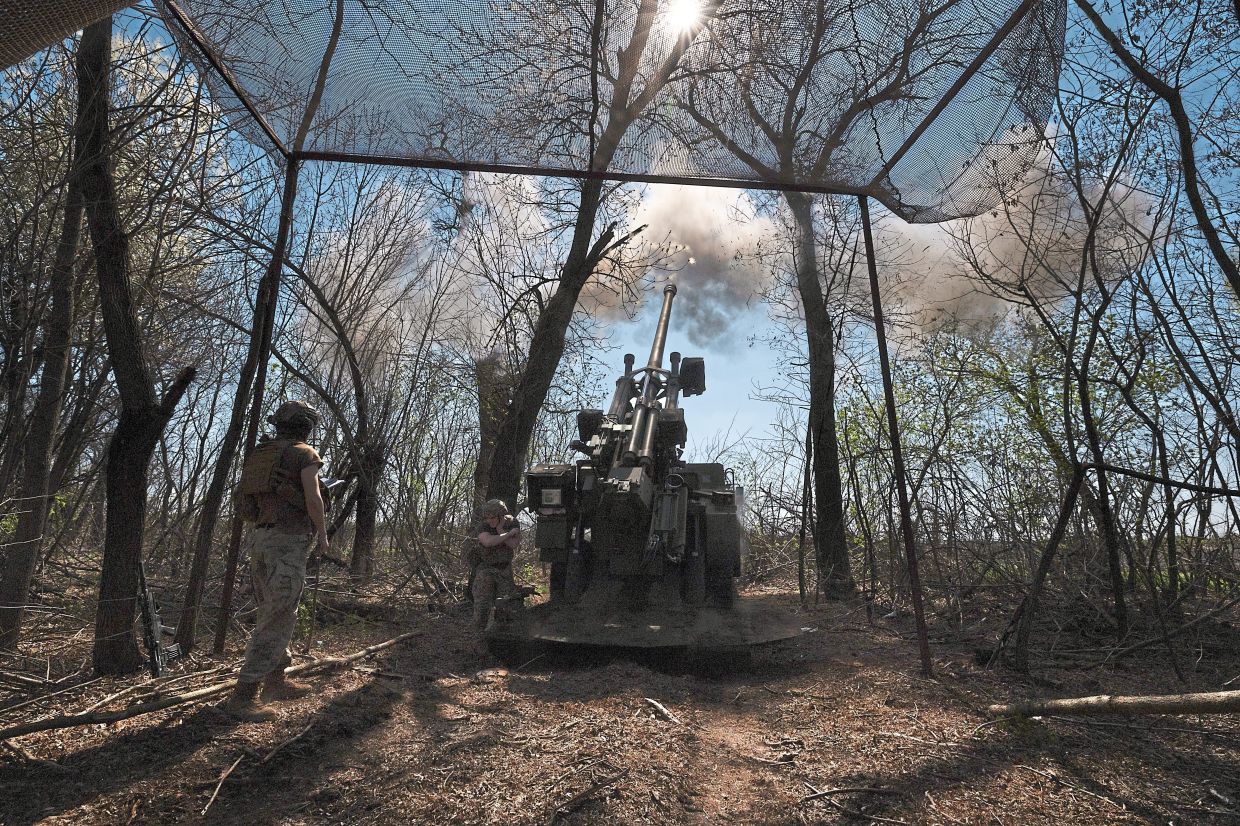
Success could turn on what the increased money is spent on and where it comes from – tax increases, borrowing or cuts in education.
That has not dampened hopes. Prime Minister Keir Starmer of Britain vowed to seize what he called the “defence dividend,” a “once in a generation” investment that can create new jobs and “huge growth in industrial capacities.”
In Germany, the weapons manufacturer Rheinmetall plans to hire 8,000 new workers over the next two years, fuelling speculation that an expanding defence industry can help offset job losses in the country’s struggling automobile sector.
In Italy, Prime Minister Giorgia Meloni this month joined the European Union’s programme to fund a military buildup and met with weapons manufacturers to encourage them to invest in projects that will also have benefits in the civilian sector.
As Ursula von der Leyen, president of the European Commission, has put it: “Economic strength and Europe’s plan to rearm are two sides of the same coin.”
The promise of economic benefits is also a way to counter political opposition from left-wing and populist parties to increased spending on armaments.
But “there are multiple ways to do this wrong,” Ethan Ilzetzki, a professor at the London School of Economics, said of using enlarged defence budgets to juice the economy.
He is the author of an analysis from the Kiel Institute for the World Economy on the economic gains of increased military spending in Europe.
Spending too much money to increase stockpiles of existing equipment or to buy American-made fighter jets and munitions offers very limited economic benefits, Ilzetzki said.
“Buying the same old equipment from the same old producers provides limited incentives to innovate,” he added.
Economists in general estimate that every dollar of military spending will increase gross domestic product by 50 cents.
The returns on spending on education or infrastructure tend to be much higher, yielding growth that is greater than the initial investment.
This spring, the European Commission estimated that increased defence spending would lead to a small boost – 0.3% to 0.6% – in the total economic output of the 27-member EU by 2028.
Big economic benefits from military spending happen down the road, economists say, only if significant sums of money are spent on research and development that eventually spill into the civilian sector.
“There’s nothing good about having to buy a tank instead of building a school,” said Kenneth Rogoff, a professor of economics at Harvard University.
What spurs growth are technological advancements and spinoffs that result from greater investments in areas like artificial intelligence, aerospace and semiconductors.
What’s more, researchers have found that increased public spending on defence-related R&D prompts the private sector to invest more in its own R&D.
The Internet, GPS, digital cameras, freeze-drying, microwaves, nylon and, let’s not forget, Silly Putty were all innovations that stemmed from defence-related research, Rogoff said. — ©2025 The New York Times Company
This article originally appeared in The New York Times.
