
ON a calm morning in May, Brianna Beaulieu, a master’s student in marine biology at the University of Western Australia, and several researchers from around the world boarded two research vessels bound for Ningaloo Reef on Australia’s west coast.
The scientists had invested months of planning to spend just a few minutes in the water collecting data on one of the ocean’s most mysterious animals – whale sharks.
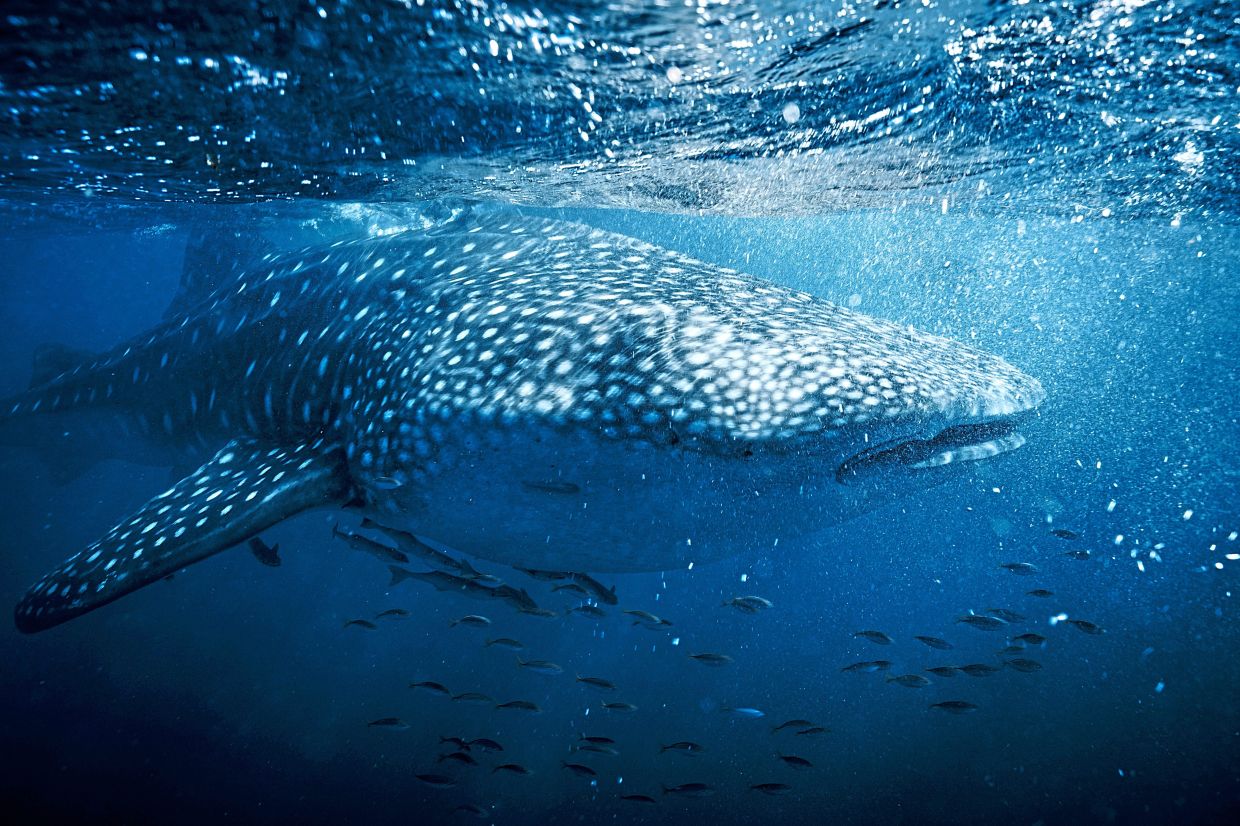
Whale sharks are not whales. They are fish, the largest in the sea, growing up to 18m long.
Yet, surprisingly little is known about their life cycle.
Researchers still don’t know where whale sharks mate, how often they breed or where they go to give birth.
Beaulieu and her colleagues hope to gain at least some insights into these giants.
A whale shark can easily be spotted from the air, cruising just below the surface of the crystal-clear waters of the Indian Ocean.
In May, they gather off the reef in numbers so high that, for the half-dozen spotter planes overhead, finding them is simple.
For 20 years, a team from the University of Western Australia has conducted annual fieldwork at Ningaloo Reef. Ningaloo is one of the world’s longest fringing reefs, formed unusually close to shore, and is listed as a Unesco World Heritage site.
The shallow turquoise waters are home to an extraordinary range of marine life.
The whale sharks that migrate there each year offer a rare window for scientific study.
Mark Meekan has overseen the research since 2004. His work focuses on the biology and ecology of whale sharks –how they grow, how they live and what can be done to protect them.
At the reef, the scientists measure the lengths and dimensions of the animals and collect tissue samples for chemical analysis.
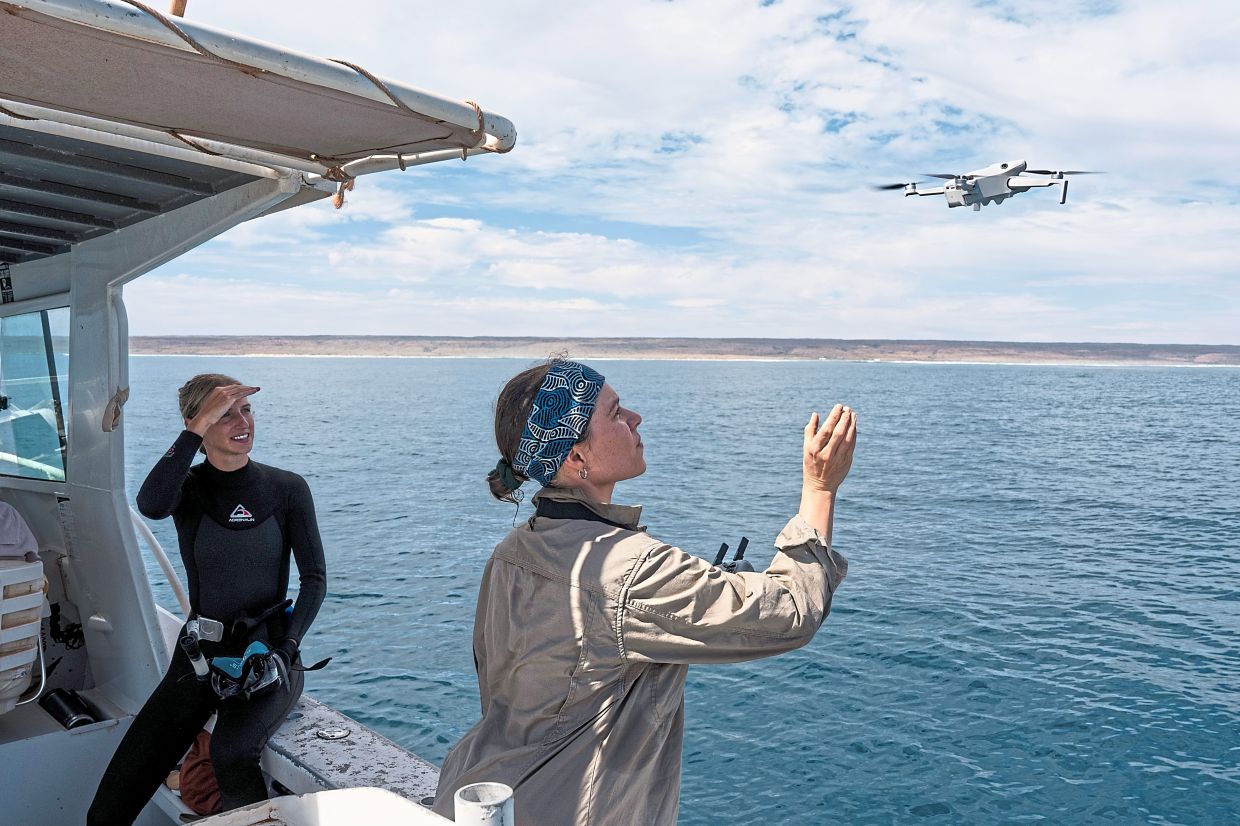
They also use drones to assess the body condition of the whale sharks: are they getting fatter? Thinner?
“Whale sharks can live for over 100 years and grow very slowly,” Meekan said. “To track that growth, you need long-term monitoring.”
One thing the team has learned is that whale sharks are highly susceptible to the impact of human activities on the oceans.
“By monitoring them, we’re not just learning about the sharks, we’re learning about ocean health more broadly,” he said.
“These animals travel thousands of kilometres, so each one is like a sentinel or autonomous sampling unit moving across the Indian Ocean and returning to Ningaloo each year to tell the tale.”
Much of Beaulieu’s research focuses on measuring the overall health of whale sharks and the impact of human-made threats on them, including boat strikes and “forever chemicals” in the water.
Whale sharks gather at Ningaloo Reef to feed on plankton that appear each year when coral spawn.
Beaulieu dives into the water, taking a compact underwater camera to document a whale shark’s appearance.
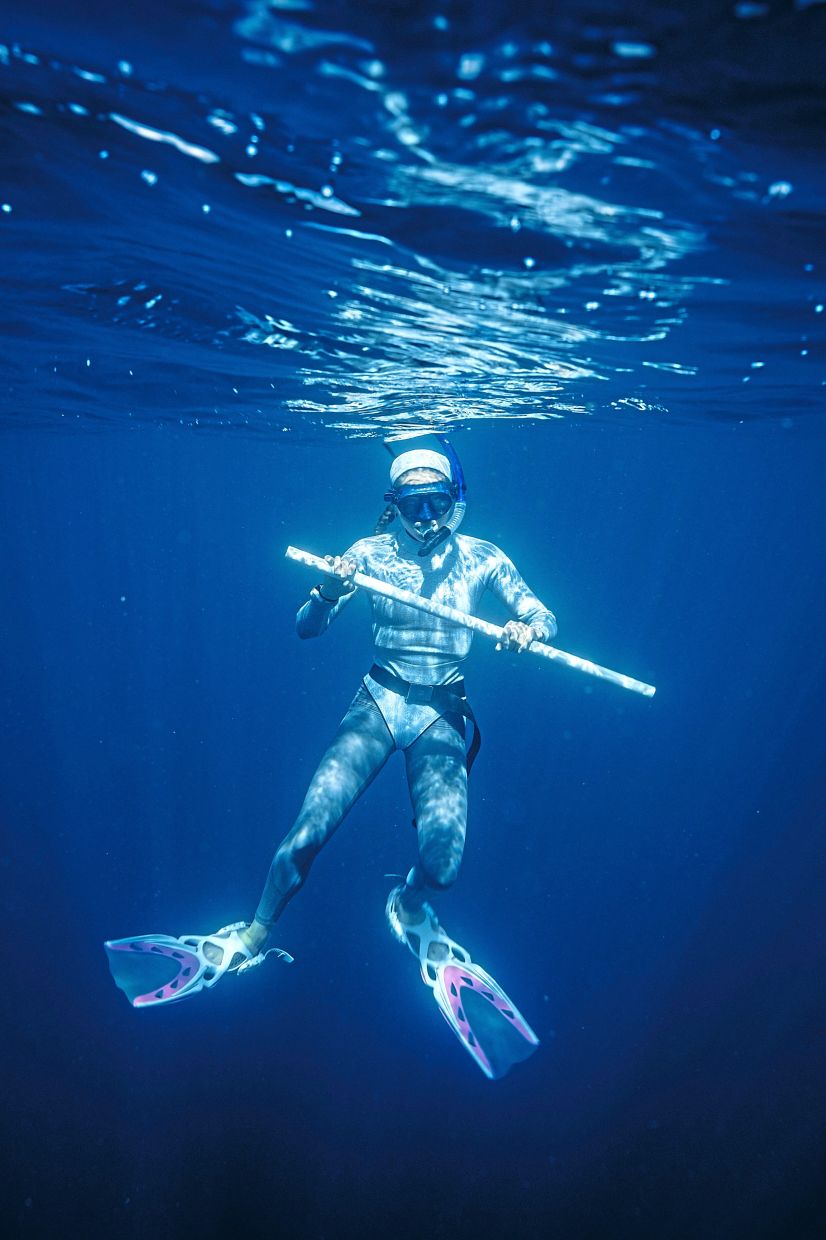
Her colleague Sophie Jones often joins her in the water, gripping a metre-long reference pole that provides a crucial scale to help researchers precisely determine the animal’s size, while a drone captures the scene from above.
The whale shark typically remains relatively calm as Beaulieu swims beneath it and holds a small ultrasound device above the surface of its skin, just behind the dorsal fin.
The data, which measures skin depth and the condition of the muscles, is sent to a veterinarian to assess the whale shark’s internal health and reproductive status.
The encounter lasts just a few minutes before the whale shark disappears again into the deep blue.
Beaulieu and the other researchers then swim to the surface and signal for pick-up.
Then they do it all again. The team repeated the sequence 11 times that day: spotting, diving, documenting and collecting data.
These few minutes with the whale sharks are the culmination of a year’s planning, a gigantic logistical effort to shadow a giant.
In the 12 days of fieldwork, the researchers documented 101 whale shark encounters – a bumper year. In 2023, after their boat broke down, they had only four.
Researchers have developed tools that allow the public to contribute to whale shark science.
Platforms such as Shark Guardian and Wildbook for Whale Sharks invite divers, tour operators and marine tourists to upload their photographs of whale sharks, ideally with a clear view of the area just behind the gills, where the spot patterns are most reliable.
Sophisticated pattern-matching algorithms then compare these images with an international database of more than 8,000 individual whale sharks, improving the ability of scientists to monitor their movements, residency, growth and health.
“Every day during the season, guides are in the water filming the sharks, and those videos provide us with ID images,” Meekan said. “That allows us to track which sharks are resident and which are just passing through.”
These public contributions offer a “massive, valuable dataset”, Meekan said.
Organised fieldwork is subject to funding cuts, weather delays and travel hurdles.
So, data from the public provides a way to keep following these mysterious giants long after the research vessels return to the shore. — ©2025 The New York Times Company
This article originally appeared in The New York Times
For ocean health

The biology and ecology of whale sharks, which can live for over 100 years, can teach us how to protect the world's oceans and marine life. — Photos: Matthew Abbott/The New York Times
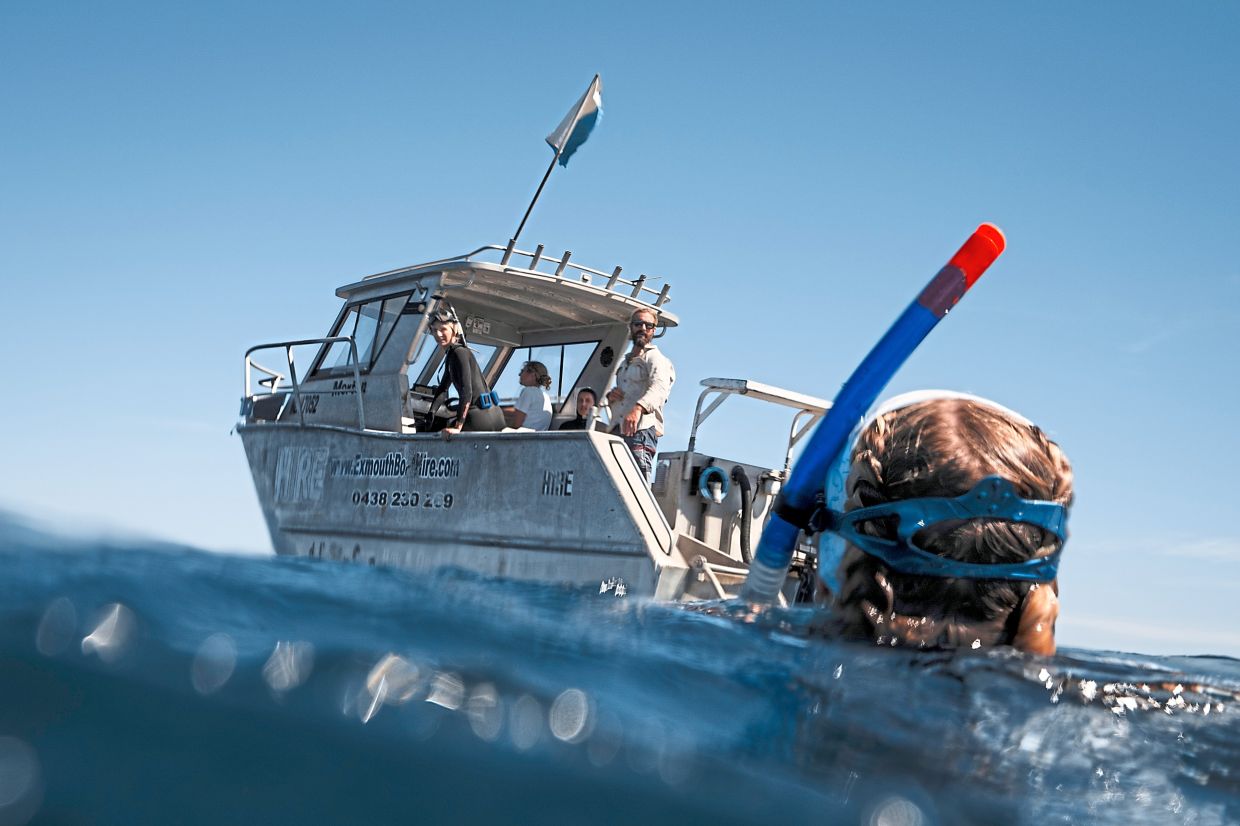
One of two research boats that stay in communication with a spotter plane and race to get the whale shark researchers near one of the giants for a dive, along Ningaloo Reef.
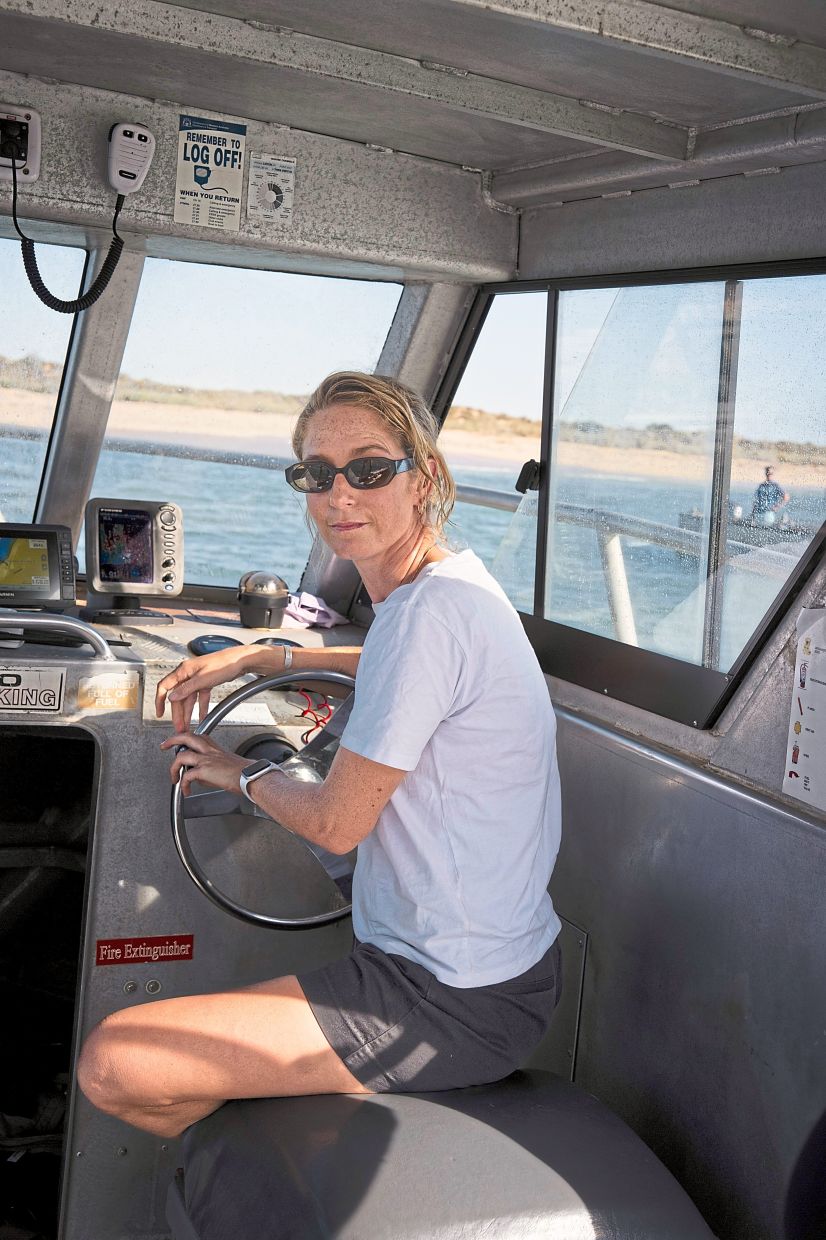
Jessica Strickland, captain of one of the two research boats.
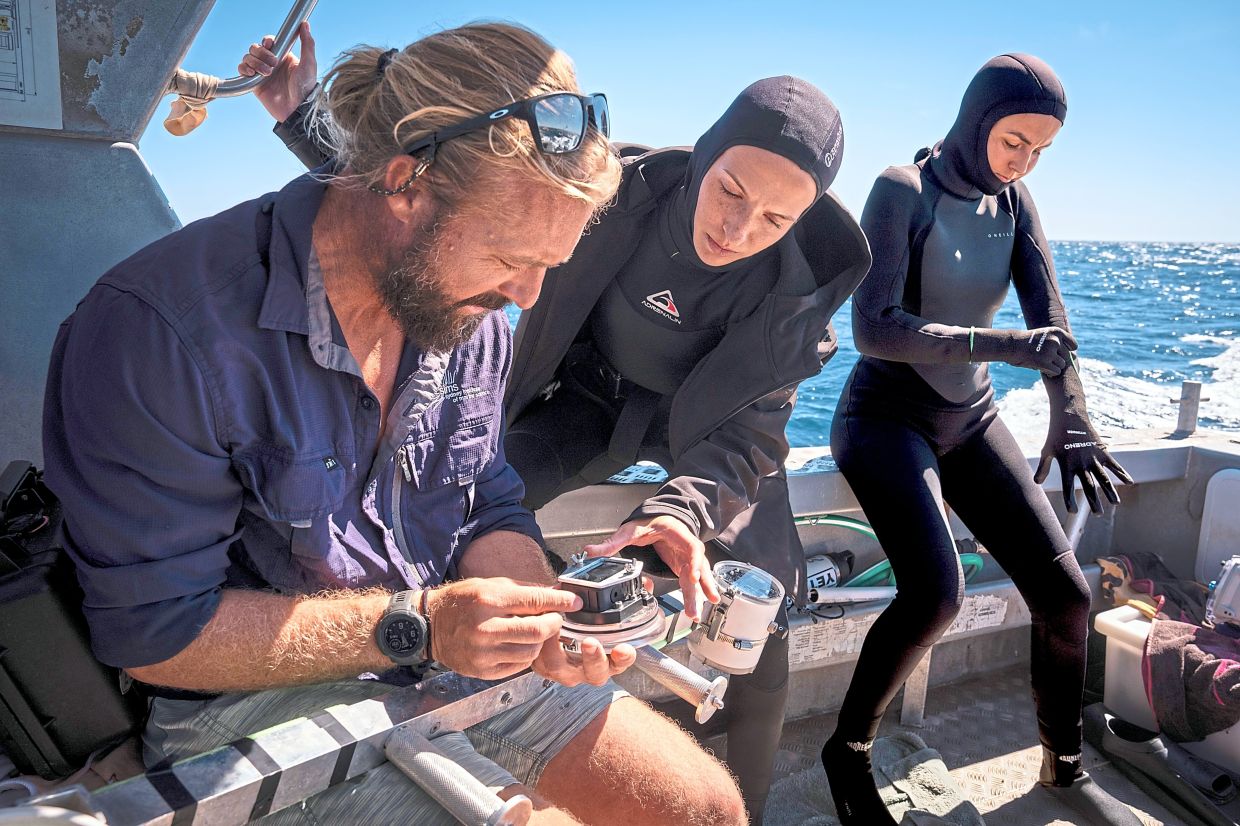
Video and data is downloaded from various devices after a day of tracking and then diving near whale sharks, the biggest fish in the world’s oceans, in Exmouth, Australia.
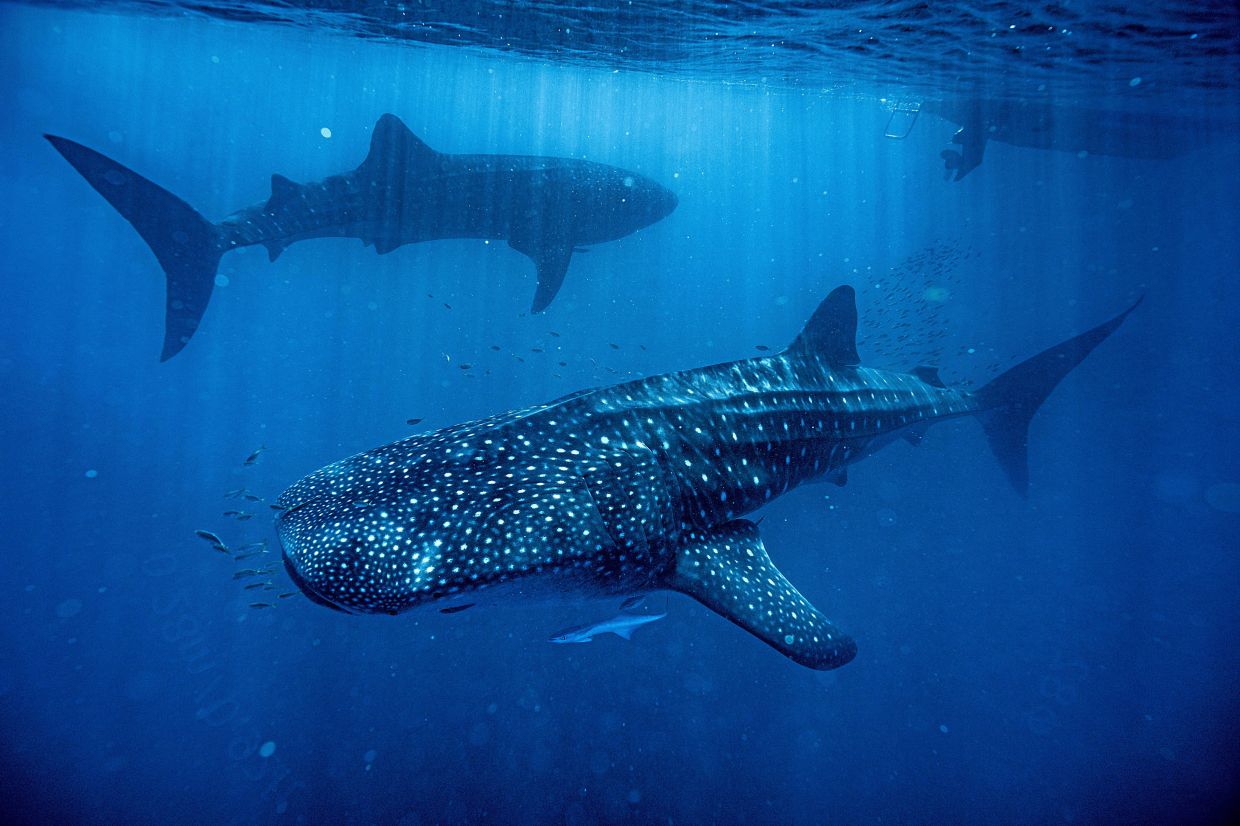
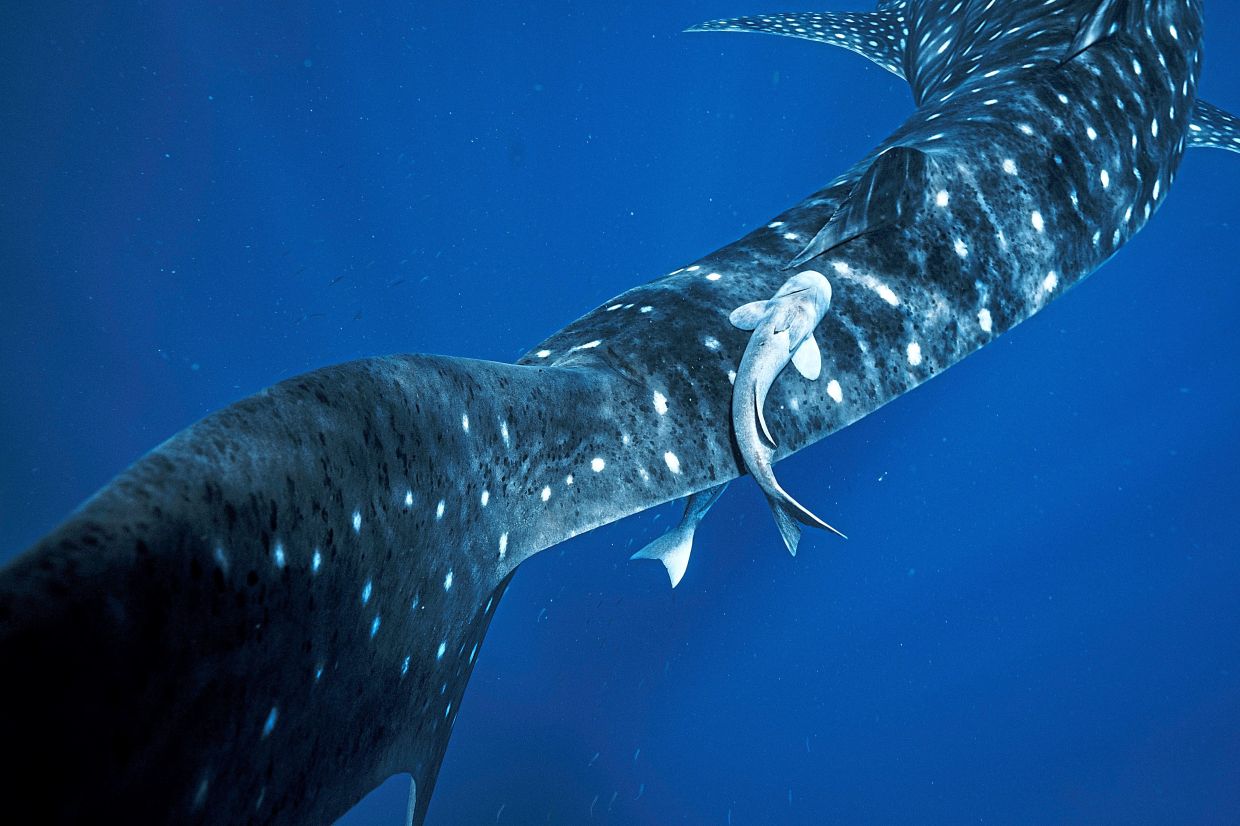
Two whale sharks, the largest fish in the world’s oceans, along the Indian Ocean’s Ningaloo Reef, off the western coast of Australia, May 6, 2025. For the past 20 years a team of researchers from the University of Western Australia has been working to understand the biology and ecology of these giants, which can live for over 100 years, and learn what can be done to protect them. Matthew Abbott/The New York Times)
Whale shark researcher Sophie Jones holds a 1 meter reference pole, used to help estimate size, along Ningaloo Reef.
A remora hitches a ride near the tail of a whale shark, the largest fish in the world’s oceans, along Ningaloo Reef, western coast of Australia, May 8, 2025. For the past 20 years a team of researchers from the University of Western Australia has been working to understand the biology and ecology of these giants, which can live for over 100 years, and learn what can be done to protect them. Matthew Abbott/The New York Times)
Researcher Laura Dehne brings back a drone that can be used to estimate the size of a whale shark near the ocean’s surface, along Ningaloo Reef, western coast of Australia, May 6, 2025. For the past 20 years a team from the University of Western Australia has been working to understand the biology and ecology of the largest fish in the world’s oceans and learn what can be done to protect them. Matthew Abbott/The New York Times)
Researcher Michael Doane preparing an underwater two-camera video rig that can make it possible to determine a whale shark’s size. (Inset) Researcher Sophie Jones holding a metre-long reference pole, used to help estimate size, along Ningaloo Reef on the western coast of Australia. — Matthew Abbott/The New York Times