
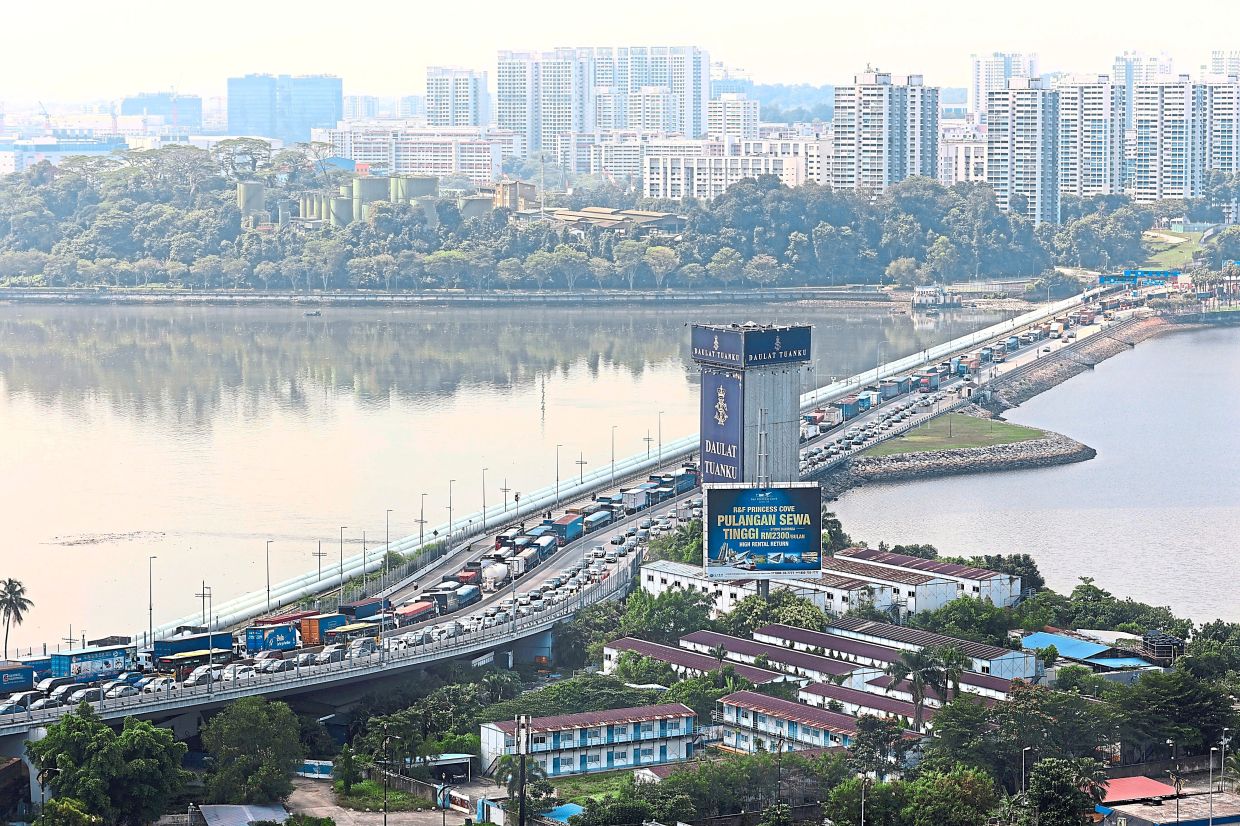
SIXTY years ago, the only physical link between Malaysia and Singapore was the Johor-Singapore Causeway that opened on June 28, 1924.
From the initial single motorway and railway track that now serves KTM Bhd’s Tebrau Shuttle service, along with a footpath, the causeway has been widened several times over the century to cope with the increasing road traffic.
The situation remained until January 1998, when the Second Link between the nations opened to connect Gelang Patah in Johor with Tuas in Singapore. The idea of a second link was first raised by the 11th Johor Mentri Besar, Tan Sri Othman Saat, in 1980.
On Aug 30, 2018, the 16th Johor MB, Datuk Osman Sapian, said Johor was eyeing a “third link” that would possibly start in Pengerang to connect with Singapore’s Pulau Ubin. However, no concrete proposals have been unveiled since.
On Dec 1, 2019, then Home Minister Tan Sri Muhyiddin Yassin said Malaysia was hoping to begin “comprehensive research” on the matter in 2020, but nothing further about the proposal has been heard of since then.
As Muhyiddin was speaking that day, discussions were ongoing in the background on how to proceed with the Johor Baru-Singapore Rapid Transit System (RTS) after an extensive cost-cutting exercise initiated by Malaysia.
On July 30, 2020, then Singapore Prime Minister Lee Hsien Loong and Muhyiddin, who had become Malaysia’s prime minister by then, attended a ceremony at the midpoint of the Causeway to signal the resumption of the RTS project.
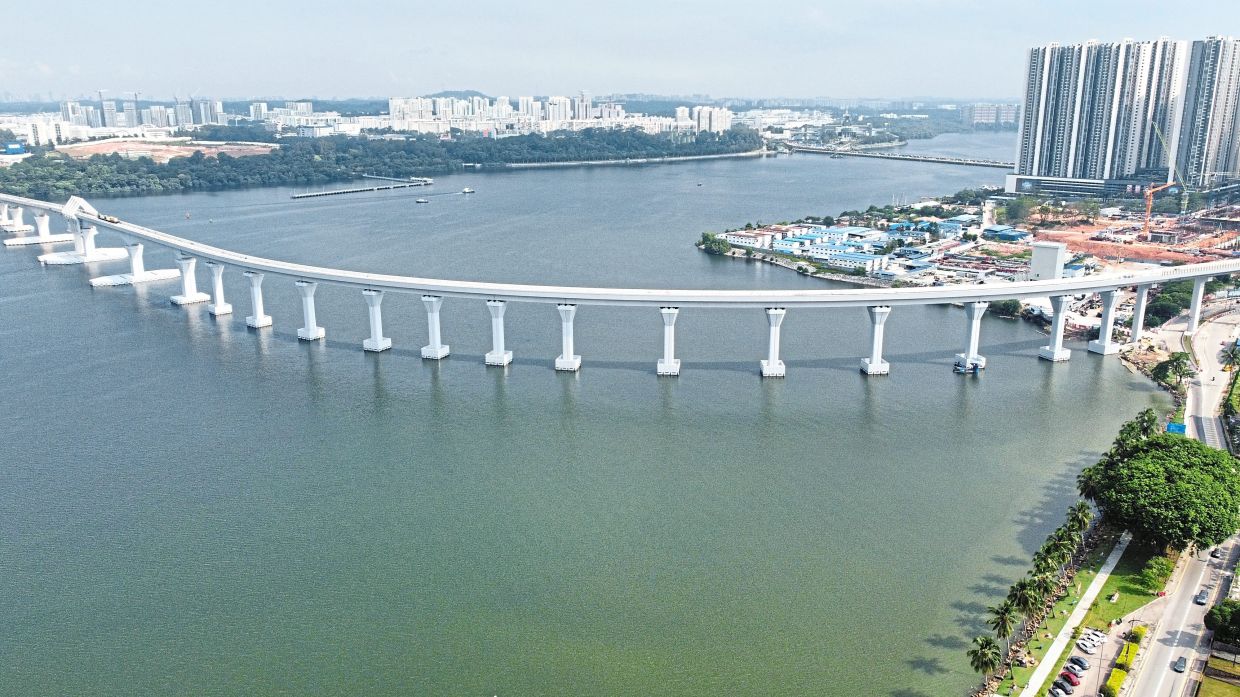
Work on the 4km-long, twin-track rapid transit system finally commenced on the Johor side in November that year, with Singapore following suit shortly after, with expected completion by December 2026.
Overwhelming demand
The RTS is expected to be a huge relief for commuters, especially those who need to enter Singapore for work on a near- daily basis. On an average day, around 450,000 people make the trip over the two physical links; the figure is derived by combining data from the Causeway and Second Link.
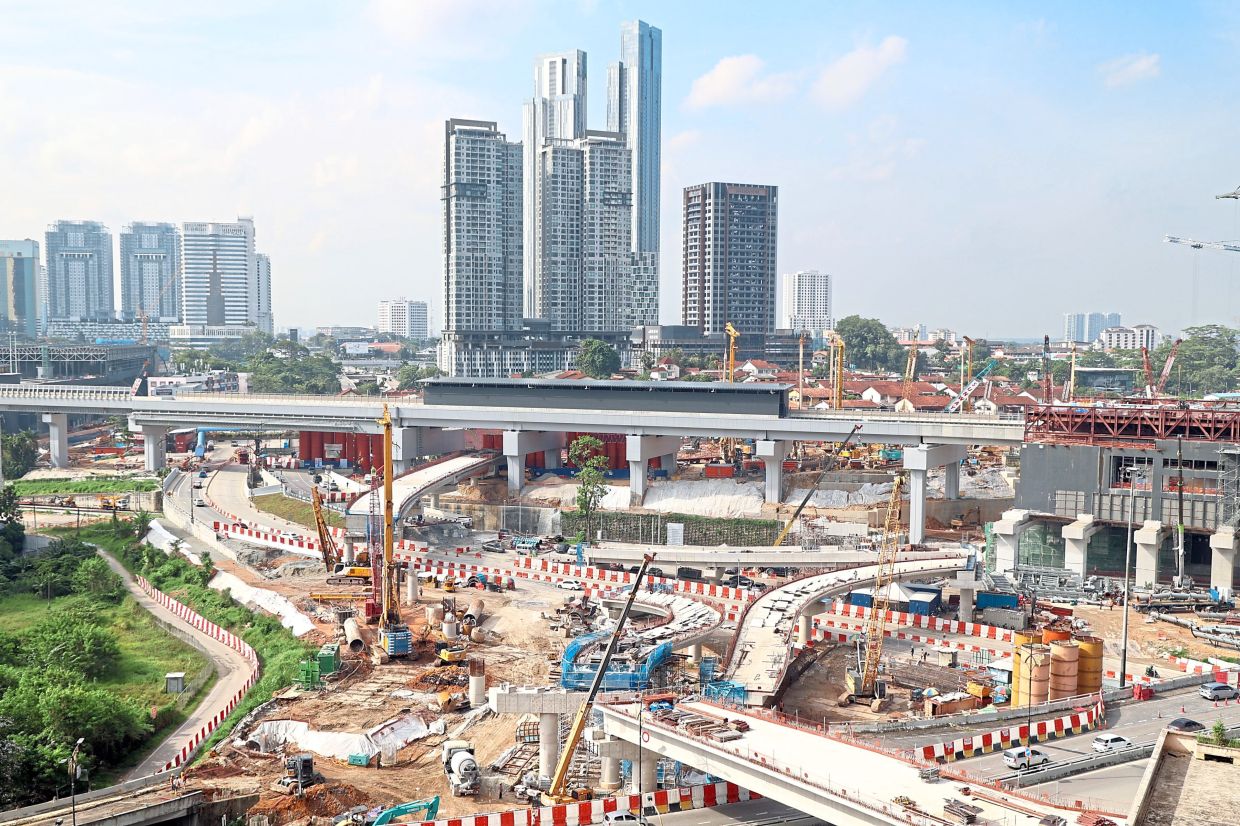
Demand for travel is unlikely to abate even if the Johor-Singapore Special Economic Zone (JS-SEZ) is in full swing; the zone is a collaboration formally established on Jan 7 to boost crossborder trade and investment by optimising the strengths of both countries.
As it is, Johor-based commuters may need close to three hours to reach their workplaces in Singapore, even if they start the journey at 5.30am from Johor Baru.
A huge amount of the time is spent waiting for stage buses on the Johor side during the morning rush hour, with some commuters deciding that doing the 1km walk across the Causeway is a more tenable option at that hour.
KTMB’s Tebrau Shuttle could only do so much, given its limited capacity of only 320 passengers per trip. In any case, under the bilateral agreement with Singapore, the service will have to end within six months after the commencement of RTS services.
The demand for cross-strait mobility is such that on Aug 1 Malaysia proposed that the republic commence its crossborder stage bus services earlier, as early as 4am, to help manage the morning rush.
In a statement on Aug 3, Singapore’s Land Transport Authority (LTA) said it is assessing whether the operating times of these services can be adjusted to help address crowding in the early mornings.
“A key consideration is that the first buses should match the starting time of our local bus and MRT services when they arrive in Singapore,” said LTA.
Singapore’s MRT services typically begin at 6am.
“LTA is exploring with cross- border bus operators the possibility of bringing forward the bus start times slightly, as well as engaging private bus operators on their interest in operating earlier services at higher fares,” it added.
Malaysia and Singapore are also looking at how to improve existing arrangements for legal crossborder taxi services.
“We are also considering increasing the number of boarding and alighting points in each other’s country, and to use ride- hailing apps to book crossborder trips on licensed taxis. In any adjustment to our crossborder point-to-point transport regime, our key priorities are to better meet commuter demand while safeguarding the interests of our taxi and private hire drivers,” said the LTA.
Long gestation periods
The proposal to connect both countries by MRT was first discussed by then prime minister Tun Dr Mahathr Mohamad and his Singaporean counterpart Lee Kuan Yew in 1990. From those talks, it has taken more than 35 years for the RTS to become a reality, showing the complexities of a bilateral rail project, even one that only needs to cross a 1km stretch of sea around Johor Baru.
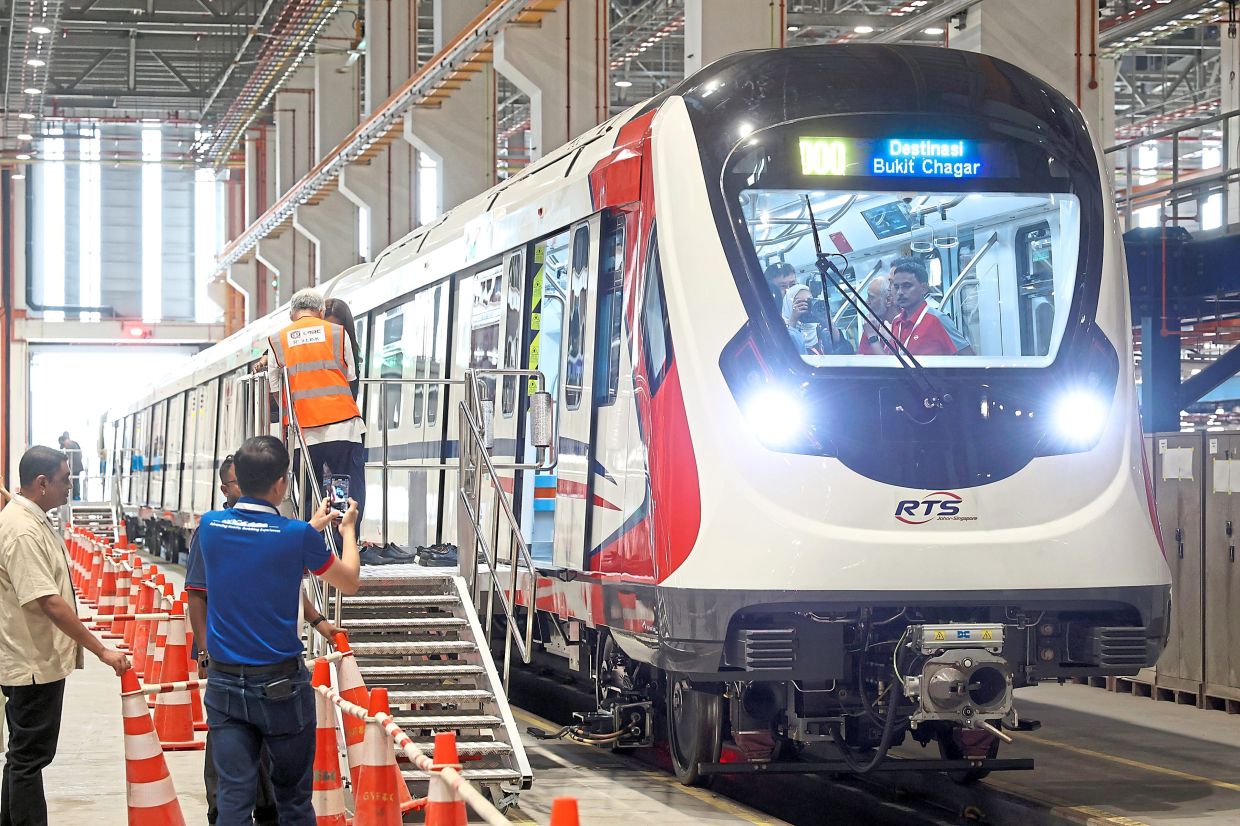
It is a heartening sign that more and more people are seeing the value of rail in supporting overall growth and development.
Just last month, Johor Mentri Besar Datuk Onn Hafiz Ghazi said he has discussed several proposals with Singapore Prime Minister Lawrence Wong during a meeting in Singapore on July 31.
The second rail link (RTS2) is meant to connect Iskandar Puteri in Johor with Tuas in Singapore.
“In line with the Regent of Johor, Tunku Mahkota Ismail’s decree, I have put forward several strategic proposals including connecting Tuas to Iskandar Puteri via the RTS2 system,” he said on Facebook.
Elsewhere, the much-talked about KTMB train from Gemas in Negri Sembilan (passing through Segamat and Kluang in Johor) to JB Sentral is still not on the horizon.
On Wednesday, Transport Minister Anthony Loke said the current target to reach Johor Baru is at the “end of the year” after several timeline revisions since the project’s groundbreaking ceremony on April 3, 2018, by then prime minister Datuk Seri Najib Razak.
However, urban planners and traffic consultants note that while road building can provide some quick relief, it is still akin to “fighting obesity by loosening the belt” as no road construction can keep up with vehicle population growth.
A green alternative
Last year, the KL-Singapore flight sector ranked fourth in the world in terms of number of seats for international flights, demonstrating the healthy demand for travel between the Klang Valley and Singapore.
In the run up to the pandemic years, the KL-Singapore route consistently ranked among the world’s top five busiest air routes.
With 5.4 million seats on offer last year, the KL-Singapore sector lost out on the third spot to the Incheon-Narita (Seoul to Tokyo) route by just 28,293 seats (or 0.5%). In the initial days of the post-pandemic travel rebound, the KL International Airport-Changi Airport route even held the top spot in 2023, showing that this route has a strong latent demand that can withstand the test of time.
With just a 350km distance separating the two cities, bridging this distance using high speed rail (for trains that travel at speeds not slower than 250kph on newly built lines, or at least 200kph on upgraded lines) is a viable option, as is the case in many developed countries.
With the latest generation of high speed rail (HSR) assets, the distance from Kuala Lumpur to Singapore can be covered by a nonstop trip in 90 minutes, while the domestic leg to Iskandar Puteri can be done in two hours after the train makes several stops at major growth centres in Selangor, Putrajaya, Negri Sembilan, Melaka, and Johor.
First proposed by Najib in September 2010, the idea of HSR quickly gained traction, with then Singapore prime minister Lee Hsien Loong formally agreeing to the bilateral project in February 2013, all with the intent of seeing the KL-SG HSR up and running by 2026.
The initial proposal for that would link a new township called Bandar Malaysia with Singapore’s Jurong East.
However, following Najib’s defeat in 2018, subsequent administrations postponed or delayed the project until its eventual termination by both governments on Jan 1, 2021. Datuk Seri Anwar Ibrahim’s Madani government is now relooking at restarting the project by calling for the proposals from the private sector.
On Feb 18, Transport Minister Anthony Loke said in Parliament that the government is finalising key parameters for the proposed project with the “parameters to be presented to the Cabinet for approval”.
“Details regarding the shortlisted consortium, financing methods, and project model study will be reviewed in the next phase, which is the ‘Request For Proposal’ process,” he said in a ministerial written reply to update MPs on the status of the project, which received seven concept proposals following a request for information exercise called in July 2023.
For industry observer Wan Agyl Wan Hassan, founder of transport thinktank My Mobility Vision, the KL-SG HSR goes way beyond speed.
“It’s about reclaiming time and opportunity as we begin transforming the Kuala Lumpur to Johor region into a high-value growth corridor, beyond just the JS-SEZ, as part of the wider Klang Valley-Singapore conurbation.
“This isn’t just a train line; it’s our chance to lead the next Asean economic growth cycle,” he told Sunday Star.
On the local front, HSR, especially as the JS-SEZ takes off, would serve as a vital catalyst in enhancing the southern corridor’s contribution to national growth.
Rapid transit via HSR also attracts higher-value industries, professional talent, and knowledge-based firms, which require high levels of connectivity and mobility to unlock their true potential across geographically- linked regions.
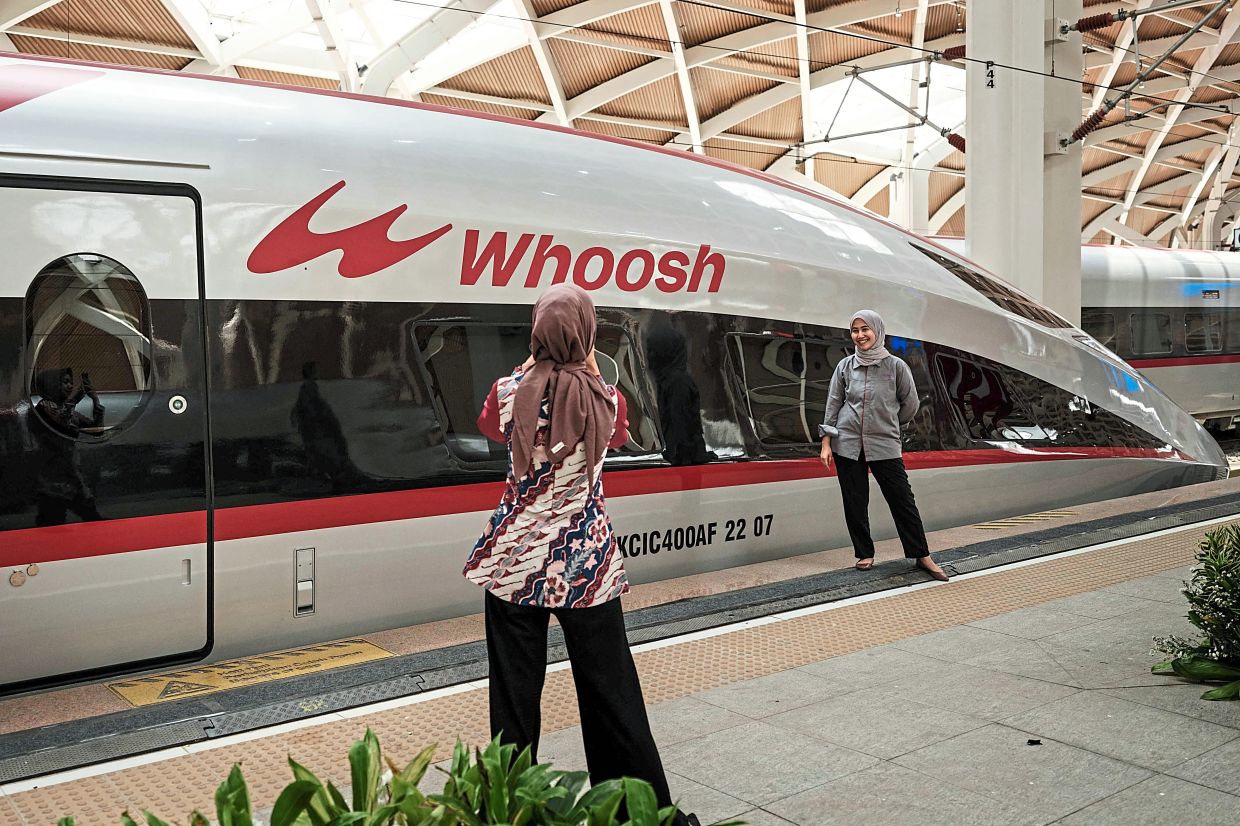
On its part, Singapore remains open to fresh HSR proposals from Kuala Lumpur, a clear indicator that physical connections still matter, even in the era of digitalisation.
In June, even Singapore’s Opposition leader Pritam Singh expressed support for the project, describing the shelving as a missed opportunity to strengthen bilateral ties.
In a Keluar Sekejap podcast co-hosted by former minister Khairy Jamaluddin and politician Shahril Hamdan, Pritam said HSR can transform the way Malaysians and Singaporeans connect, for the better.
“I think what would have been the cherry on the cake is HSR, which changes a lot of things; distances become so much shorter,” he said.