
Alawite Syrians, who fled the violence in western Syria, walking in the water of the Nahr El Kabir River in Akkar, Lebanon. — Reuters
“DON’t wait for her,” the WhatsApp caller told the family of Abeer Suleiman on May 21, hours after she vanished from the streets of Safita, a town in Syria’s coastal heartland. “She’s not coming back.”
The kidnapper and another man, identifying himself as an intermediary, said the 29-year-old would either be killed or trafficked unless her relatives paid a ransom of US$15,000.
“I am not in Syria,” Abeer herself told her family in a call on May 29, using the same Iraqi phone number as her captors. “All the accents around me are strange.”
Reuters reviewed the recording, along with other calls and messages from the abductor and intermediary, who also used a Syrian number.
Abeer is among at least 33 women and girls from Syria’s Alawite sect – aged between 16 and 39 – who have disappeared this year amid the chaos following the fall of Bashar al-Assad. That’s according to the families of every one of them.
The overthrow of Assad in December, after 14 years of civil war, unleashed a wave of revenge against the Alawites, the Muslim minority from which he hails. Armed factions aligned with Syria’s new government turned on Alawite civilians in March, killing hundreds.
The UN Commission of Inquiry on Syria says it is investigating the spike in reports of missing Alawite women.
Its chair, Paulo Sergio Pinheiro, told the UN Human Rights Council in June that the abductions of at least six women had been documented. Two remain missing. The commission has also received credible reports of further cases.
Abeer’s family scraped together her ransom, borrowing from neighbours to transfer US$15,000 in 30 installments via accounts in the Turkish city of Izmir.
Once the money was paid in full on May 28, contact ceased. The kidnappers’ phones went dark. Abeer’s family has heard nothing since.
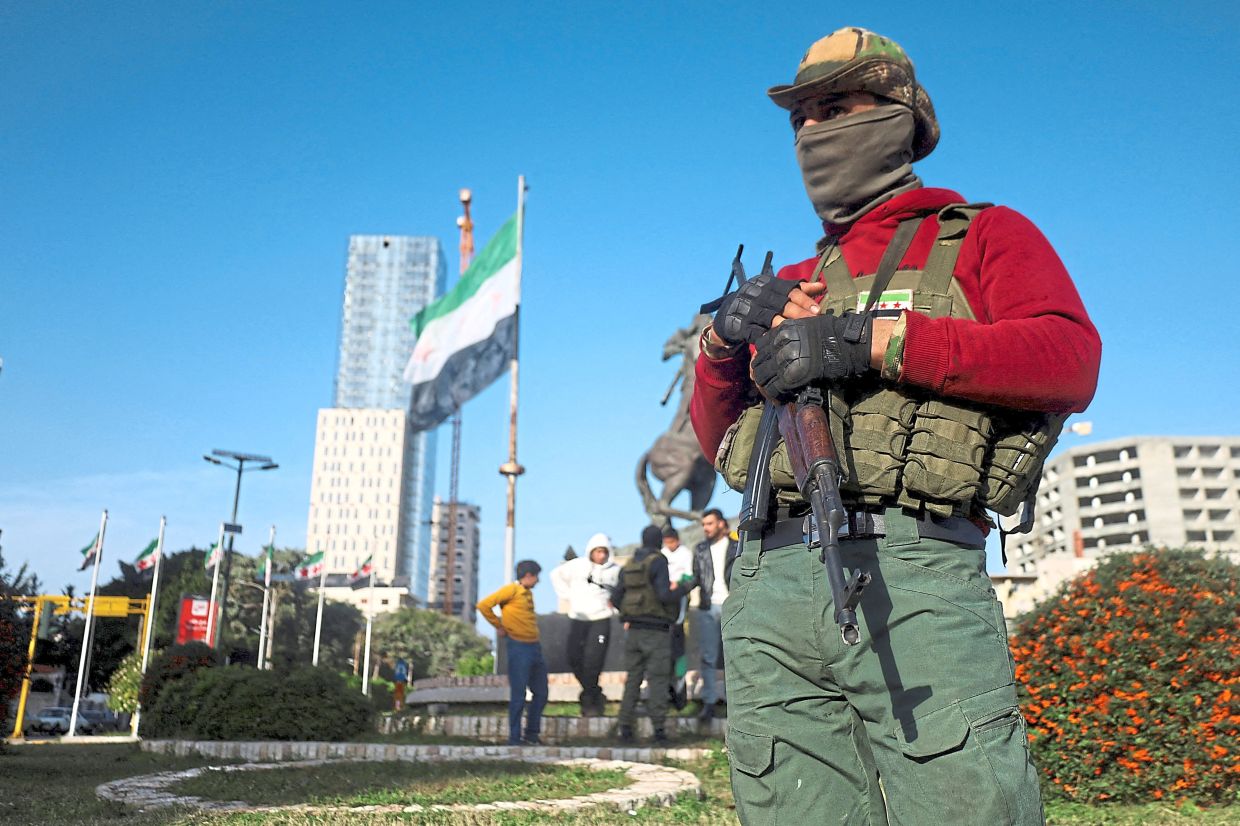 A fighter of the ruling Syrian body standing while holding a weapon, after violence in Tartous province. — Reuters
Interviews with the families of 16 of the missing found that seven were abducted for ransom – demands ranged from US$1,500 to US$100,000.
Three, including Abeer, managed to get messages to their families saying they’d been taken abroad. There’s been no word on the other nine. Many are under 18.
Reuters reviewed messages, calls and ransom receipts linked to the abductions but could not verify every detail or confirm the identities or motives of the perpetrators. All 33 women disappeared in the governorates of Tartous, Latakia and Hama, Alawite community heartlands.
Nearly half have since returned home. None would speak publicly – many cited fears for their safety.
Most families said police dismissed their cases or failed to investigate thoroughly.
Pinheiro confirmed that Syria’s interim authorities had opened some investigations but gave no details. The Syrian government did not respond to requests for comment.
Ahmed Mohammed Khair, a media officer for the Tartous governor, claimed most cases stemmed from family disputes or women running away to avoid forced marriages. A media officer in Latakia echoed this view. Hama’s authorities declined to comment.
A fact-finding committee set up by Syria’s new president, Ahmed al-Sharaa, to probe the March killings of Alawites declined to discuss the missing women.
Rights advocate Yamen Hussein, tracking the disappearances, said the pattern began in earnest after March’s violence.
As far as he knew, only Alawite women were being targeted. The identities and motives of the perpetrators are unclear.
Alawites, who follow an offshoot of Shi’ite Islam, make up about 10% of Syria’s predominantly Sunni population.
Hussein said fear has gripped Alawite communities. Some women now avoid school or college, fearing abduction.
“For sure, we have a real issue here where Alawite women are being targeted,” Hussein said. “Targeting women of the defeated party is a humiliation tactic that was used in the past by the Assad regime.”
Thousands of Alawites have been displaced from Damascus, others fired from their jobs or harassed at checkpoints run by Sunni factions now aligned with the government.
Family accounts suggest most women vanished in daylight, running errands or travelling on public transport.
Zeinab Ghadir, 17, disappeared on her way to school on Feb 27.
Her kidnapper texted the family from her phone: “I don’t want to see a single picture or, I swear to God, I will send you her blood.”
Zeinab made a brief, frightened call saying she didn’t know where she was and felt unwell. She hasn’t been heard from since.
Khozama Nayef, 35, was abducted in rural Hama in March by five men who drugged her and held her for 15 days while they negotiated a US$1,500 ransom.
After her release, her family said she suffered a mental breakdown.
Days later, Doaa Abbas, 29, was grabbed outside her home in Salhab, Hama. A relative chased the abductors’ car on a motorbike but lost them.
Three Alawite women reported missing this year later resurfaced publicly denying abduction.
One, a 16-year-old from Latakia, claimed she ran away to marry a Sunni man. Her family insists she was forced and that authorities coerced her into recanting to protect her kidnappers.
Two others, a 23-year-old woman and a 12-year-old girl, told Arabic TV they had travelled willingly to Aleppo and Damascus respectively. One later claimed she was beaten by a man before escaping.
For decades, Alawites dominated Syria’s political and military elites under the Assad dynasty.
But Assad’s fall ushered in a government led by HTS, a Sunni group with roots in al-Qaeda. It is trying to integrate former rebels, including foreign fighters, into the security forces to fill the void left by Assad’s collapsed army.
Families fear history repeating. Many dread that Alawite women could suffer the fate inflicted on Yazidi women by Islamic State a decade ago: mass abduction, trafficking and sexual slavery.
Nagham Shadi’s family lives in that terror. The 23-year-old vanished in June after leaving home in al-Bayadiyah, Hama, to buy milk.
Her father, Shadi Aisha, said his family had already been forced from their previous village in March’s anti-Alawite violence.
“What do we do? We leave it to God,” he said. — Reuters