THE weapons system atop a drab green US Army Stryker swivels, its camera locking on a white Ford F-150 crawling along the US-Mexico border.
Under the gaze of the 26-tonne armoured vehicle perched on a sand dune, humanitarian volunteers cruise the dirt road beside the border wall, hoping to continue their search for migrant remains in one of two new military zones established by the Trump administration.
Their hopes are short-lived.
An unmarked grey pickup appears, spins around in the sand, flashes a siren. A US Border Patrol agent steps out and tells them they’re no longer allowed there.
James Holman, founder of Battalion Search and Rescue – whose volunteers also hand water through the bars of the barrier to migrants – complies, but fumes.
“We’re ramping up all this military and taking this public land away,” says Holman, 59, a former Marine.
“It doesn’t make sense, and it’s theatre – deadly, deadly theatre.”
They are inside one of two “National Defence Areas” created along 418km of the southern border in New Mexico and Texas, part of Trump’s effort to deploy active-duty troops for border enforcement – a mission traditionally handled by Border Patrol.
The military zones are classified as US Army installations. Troops can now temporarily detain and question migrants or civilians caught inside, a shift towards military policing without invoking the Insurrection Act.
The Army has not disclosed exact boundaries, but in New Mexico the zone appears to stretch nearly 5km inland, according to “restricted area” signs posted along State Road 9.
Within the zones, signs are posted every 100m, about 15m north of the barrier – meaning migrants read them only after crossing.
Yet, crossing here now carries new risks: trespassing charges on top of unlawful entry, with penalties of up to 10 years in prison.
But early attempts to prosecute have largely failed.
Since May, federal judges in Texas and New Mexico have dismissed trespass charges, including one case involving a Peruvian woman, ruling there was no proof the migrants saw the signs before entering.
Despite this, Trump insists the military zones are necessary to repel an “invasion” of traffickers and smugglers, even though illegal crossings are at historic lows following a 2024 asylum crackdown and tighter immigration controls in Mexico.
Border buildup
Since March, Trump has more than tripled active-duty troop levels along the border – from 2,500 under Biden to 8,000, according to the US Army.
Earlier this year, the Bureau of Land Management transferred 44,500ha of public land – seven times the size of Manhattan – to the Army to create the first zone.
In May, a second was added using land from the International Boundary and Water Commission in Texas.
These areas now function as satellites of Fort Huachuca in Arizona and Fort Bliss in Texas.
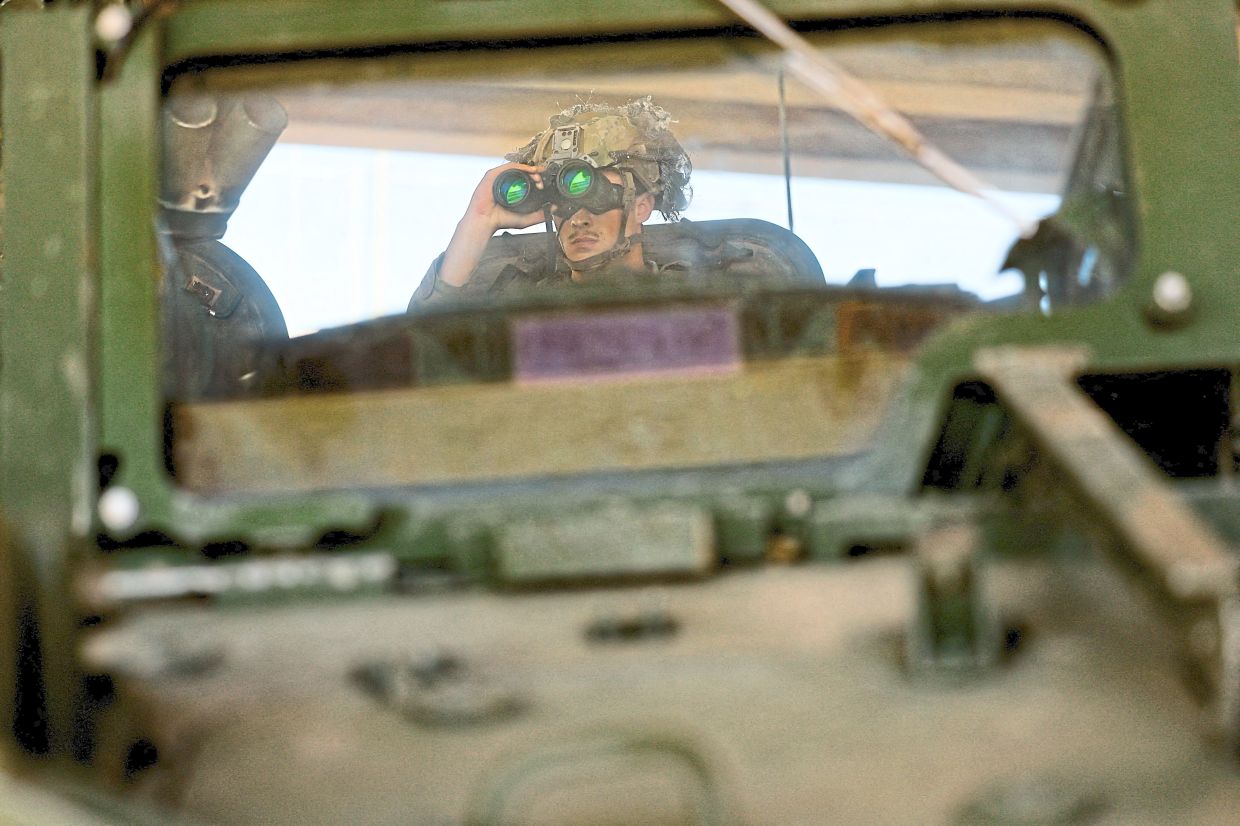
Deployed units include around 2,400 troops and 105 Stryker armoured vehicles from the 4th Infantry Division in Colorado.
The eight-wheeled Strykers – seen in Iraq, Afghanistan, and Ukraine – now patrol stretches from El Paso to Santa Teresa, one of the border’s deadliest crossing zones.
Parked beneath bridges, beside landfills, or overlooking gaps in the wall, their engines hum 24/7 in the 38°C heat to cool crews.
Soldiers are unarmed, but carry personal weapons and operate long-range cameras with night vision.
“Monotonous,” one insider said – but it gives soldiers “a sense of purpose”.
According to Army figures, troops have alerted Border Patrol to 390 crossings since the first zone was created, and made their first detentions in June, handing three migrants over in New Mexico.
A different kind of line
Locals are divided.
In Sunland Park, Harold Gregory says fewer migrants now enter his juice bar or ask customers for rides.
“We feel safer,” he says. “They do kind of intimidate.”
But nearby, in Santa Teresa, trade consultant Jerry Pacheco calls the buildup overkill.
“It’s like killing an ant with a sledgehammer,” he says.
“It’s more of a political splash.”
In rural New Mexico, rancher Russell Johnson welcomes the zone, citing cattle thefts and drug smuggling.
But even he is unsure if his home or ranch – in his family since 1918 – lies inside it.
“I don’t know, I don’t think anyone knows,” says Johnson, a former Border Patrol agent.
The Army is negotiating memoranda of understanding with local authorities to allow hunting, ranching and mining to continue.
“The MOU process is complex,” Army spokesman Nicole Wieman said.
Jenifer Jones, a Republican state lawmaker, insists residents can carry on as before. But in Las Cruces, Democrat Sarah Silva calls it “an occupation” by the US Army.
Vanishing remains
West of Santa Teresa, Abbey Carpenter, 67, stands among sand dunes where her group has found 24 migrant remains in 18 months – mostly women.
She fears the military zone will block future searches.
“Who’s going to look for these remains if we’re not allowed out here?” she asks, gesturing to a woman’s jawbone reported to authorities months ago.
“Will they just be covered up by the desert sands?” — Reuters