BRAZILIAN soy farmers are pushing deeper into the Amazon rainforest, threatening a landmark deal meant to slow deforestation.
Many are capitalising on a loophole in the Amazon Soy Moratorium, a voluntary pact signed in 2006 by the world’s top grain traders, pledging not to buy soy grown on land deforested after 2008.
The moratorium protects old-growth rainforest, but excludes secondary forests – vegetation that regrew after land was previously cleared.
Though crucial to the Amazon’s health, these areas can be legally razed and planted with soy, all without violating the deal’s terms. The resulting crops can even be marketed as “deforestation-free”.
The most recent moratorium report, covering the 2022–2023 season, showed soy planted on virgin forest had nearly tripled since 2018 to reach 250,000ha – 3.4% of all soy grown in the Amazon.
But the actual figure may be much higher.
Xiaopeng Song, a University of Maryland geographer who has tracked soy expansion, found more than 1.04 million hectares – or 16% of soy-planted land in the Brazilian Amazon – had been deforested since 2008. His satellite data suggest four times the forest loss reported.
“I would like to see secondary forest and recovered forest included in the moratorium,” Song said. “It creates loopholes if we only limit it to primary forest.”
Abiove, the soy industry body overseeing the agreement, said the moratorium was designed to curb destruction of old-growth forests.
Broader definitions used by other studies could lead to “inflated interpretations”, it added.
The report’s figures are based on data from Brazil’s National Institute for Space Research, which is internationally recognised and independently monitored.
Abiove admitted some soy is planted on land where regrown forests had been cleared – but has defended the current framework.
Shrinking buffer
The distinction between primary and secondary forests carries serious consequences. Secondary forests may be younger and initially less biodiverse, but they play a critical role in absorbing carbon and restoring damaged ecosystems.
“Secondary forests are crucial to limiting global warming,” said Viola Heinrich, a researcher at the GFZ Helmholtz Centre for Geosciences. “We cannot achieve the goals of the Paris Agreement without actively increasing the carbon sink.”
While they store less carbon than primary forests, secondary forests absorb it faster, making them vital in slowing the Amazon’s drift towards a tipping point – when deforestation, heat and drought could trigger its irreversible transformation into a dry savannah.
Most scientists now argue that stopping deforestation alone isn’t enough; reforestation is essential.
‘Stolen again’
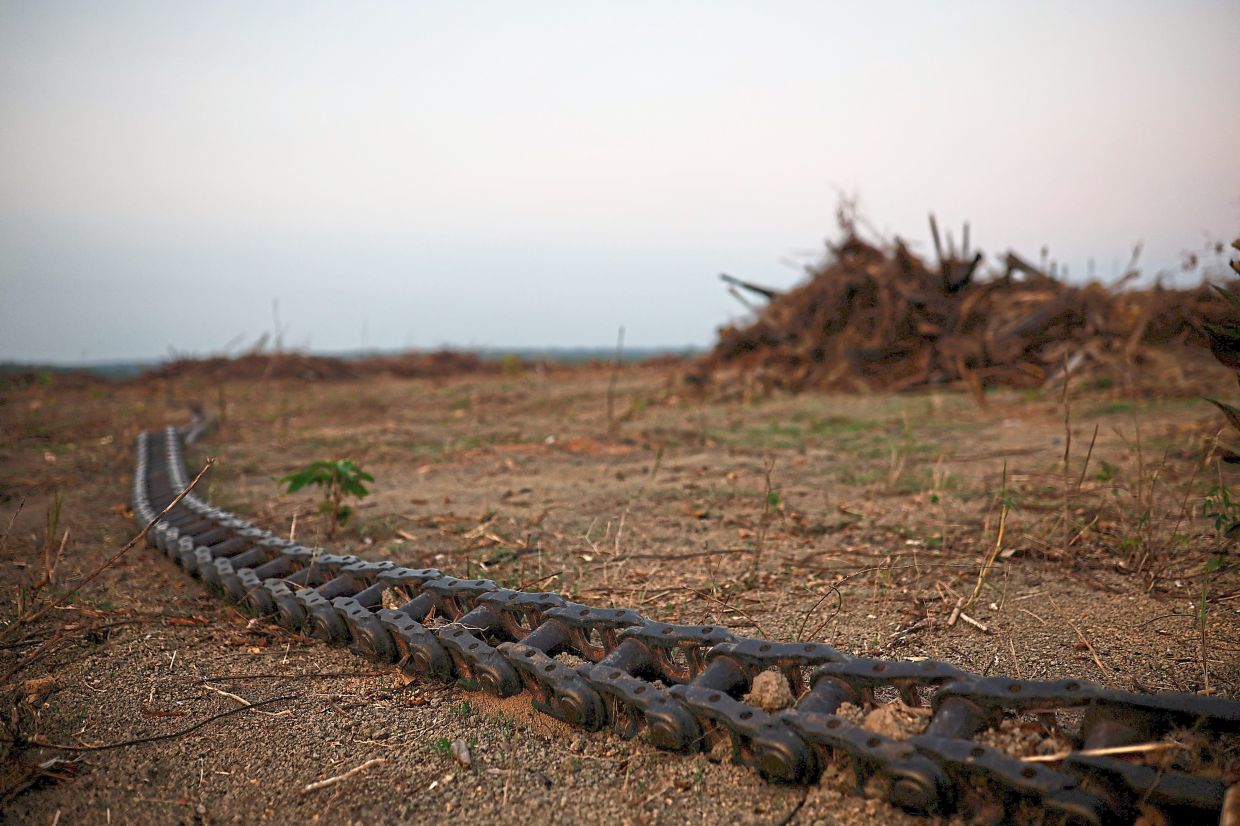
Late last year, under blistering heat on the edge of Santarem, a port city on the Amazon River, farmers were clearing land – stacking tree trunks in neat rows, ready to burn.
Satellite images showed this was once cattle pasture that had regrown into secondary forest over three decades.
“What can be stolen once can be stolen again,” said Gilson Rego, of the Pastoral Land Commission, a church-linked group that works with locals impacted by deforestation.
He pointed to nearby soy fields that had been planted in the past five years.
The area’s rapid transformation is largely due to the Cargill grain terminal, which offers easy export access – cutting logistics costs and fuelling the soy boom. Cargill did not respond to requests for comment.
The surge helped Brazil overtake the United States in 2020 as the world’s top soy exporter.
About two-thirds of Brazil’s soy goes to China, where major buyer Cofco, a signatory to the moratorium, claims it remains committed to the deal.
Nearly all the soy is used as animal feed for global meat production.
Still, Song estimates that without the moratorium and related conservation efforts, an additional six million hectares of forest might have been lost to soy in Brazil.
By comparison, neighbouring Bolivia, which lacks such controls, has become a deforestation hotspot.
Pressure to backslide
Brazilian farmers have long opposed the moratorium, arguing it unfairly penalises them.
Even minor infractions can lead traders to block purchases from entire farms – a policy Abiove is considering relaxing.
Roughly 10% of Amazon soy farmland is currently blacklisted.
“It’s not fair that countries in Europe can deforest to grow, and now we’re held back by laws that aren’t even ours,” said Adelino Avelino Noimann, vice-president of the soy farmers’ association in Para state, which includes Santarem.
Farming groups allied with right-wing politicians have ramped up legal and legislative attacks on the moratorium in Brasilia and across several agricultural states, seeking to dilute its protections.
In April, a Supreme Court justice said Brazil’s largest soy-growing state, Mato Grosso, could withdraw tax breaks from companies that honour the moratorium – a move yet to be confirmed by the full court.
Abiove president Andre Nassar told senators that the agreement’s rules might need to be watered down to placate growers: “The solution is not ending the moratorium or keeping it as it is. Something needs to be done.”
Global traders – including ADM, Bunge, Cargill, Cofco and Louis Dreyfus Company – have remained tight-lipped.
But Greenpeace, which takes part in some discussions, said there’s pressure behind the scenes to weaken the deal.
Even so, environmentalists say the moratorium remains vital.
“We still see the expansion of soy in the Amazon,” said Andre Guimaraes, executive director of IPAM, an environmental research group. “But it could be worse.”
Soy vs schools
The rich soil and ample water of the Amazon have drawn farmers from across Brazil, particularly from Mato Grosso, the soy heartland.
“Here, we can have as many as three harvests,” said Edno Valmor Cortezia, head of the local farmers’ union – rotating soy, maize and wheat on the same plot in a single year.
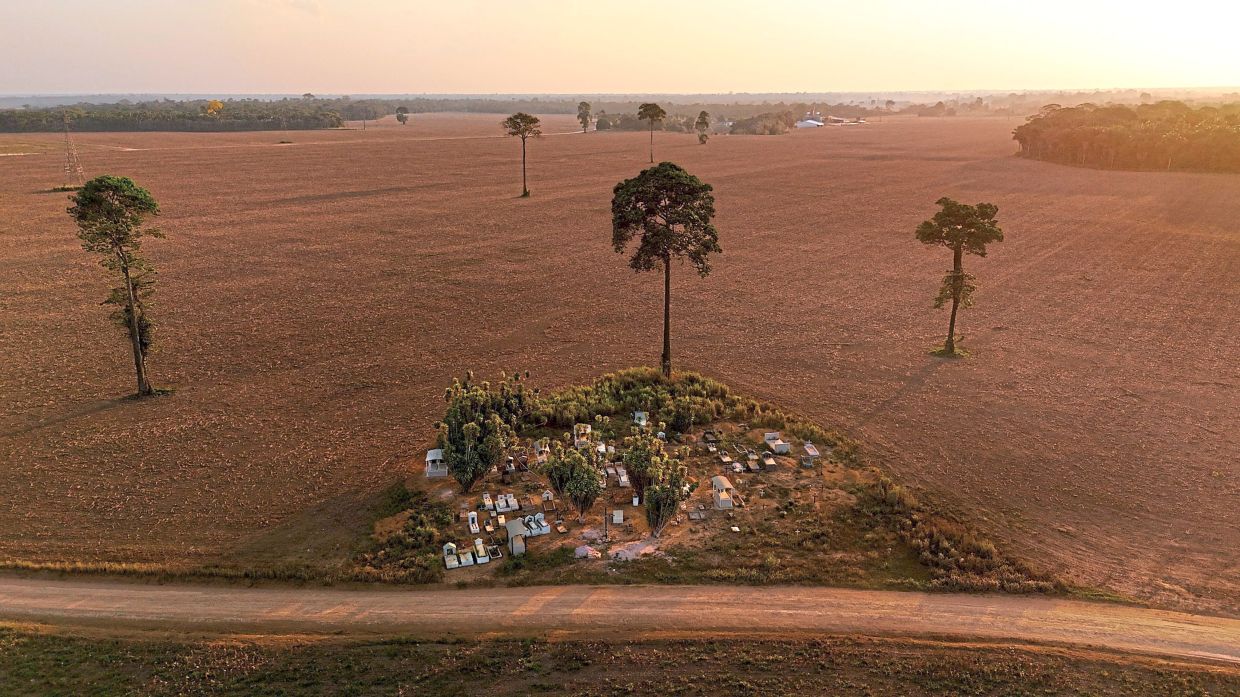
In Belterra, near Santarem, soy fields have crept up to a school and even a cemetery.
Raimundo Edilberto Sousa Freitas, the school principal, showed court records from two pesticide incidents last year that affected 80 students and teachers.
One farmer was fined, but soy continues to sprawl through the area.
Occasionally, a few lone trees – protected by law – stand in vast expanses of soy, the last hints of the vibrant biome that once covered the region. — Reuters